Wednesday, 14 Oct, 2026

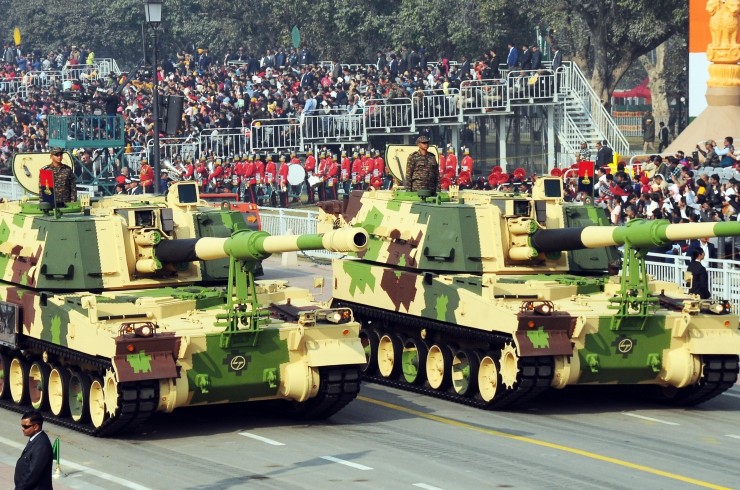
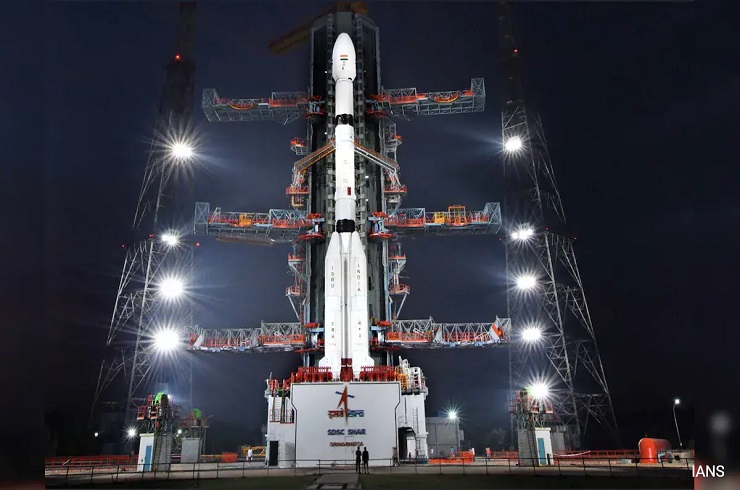
India’s defence production in recent years has rocketed with enhanced private sector participation and policy reforms brought by the Ministry of Defence. Image Source: IANS
Singh recalled his earlier call for increasing the private sector's share in India's total defence production from approximately 24 percent to 50 percent.
Raksha Mantri Rajnath Singh recently presented the Society of Indian Defence Manufacturers (SIDM) Champion Awards 2026 at the 8th Annual Session of the SIDM in New Delhi. While speaking at the event, he called upon the Indian defence industry to increase private sector participation in defence production, strengthen defence research and development and enhance production capacity. He reiterated that India’s journey from a major defence importer to a major defence producer and exporter is a truly remarkable one and should be taken forward with a greater momentum. Singh recalled his earlier call for increasing the private sector's share in India's total defence production from approximately 24 percent to 50 percent. He said that the private sector's contribution had grown significantly over the past 12 years and urged industry leaders to set progressive milestones to achieve this shared national objective.
India’s defence production in recent years has rocketed with enhanced private sector participation and policy reforms brought by the Ministry of Defence. India’s defence production reached a historic high of Rs 1.78 lakh crore in Financial Year 2025-26, marking a significant milestone in the country’s efforts to strengthen indigenous defence manufacturing capabilities. The achievement reflects a robust year-on-year growth of 15.6 percent from the Rs 1.54 lakh crore recorded in FY 2024-25. Over a longer timeframe, the progress has been even more remarkable, with defence production more than doubling since FY 2020-21, when the output stood at Rs 84,643 crore. Compared to FY 2013-14, when domestic defence production was valued at just Rs 43,746 crore, the sector has expanded nearly fourfold, highlighting the transformational changes that have taken place in India’s defence industrial ecosystem over the past decade.
India’s Defence production (INR Crore)

Source: Department of Defence Production, Ministry of Defence
A notable feature of this growth has been the increasing participation of the private sector. While Defence Public Sector Undertakings (DPSUs) and other government-owned entities continued to dominate production, accounting for nearly 76 percent of the total output, the private sector’s contribution rose to an all-time high of around Rs 42,000 crore, representing approximately 24 percent of overall production. This marks a steady increase from its 22 percent share in the previous fiscal year and reflects the growing confidence of private industry in defence manufacturing opportunities. The rising involvement of private firms is indicative of a broader shift towards a more diversified and competitive defence production base, supported by policy reforms aimed at encouraging industry participation.
The Department of Defence Production (DDP) under the Ministry of Defence recently notified the sixth Positive Indigenisation List (PIL), comprising 405 strategically important defence items with an estimated business potential of Rs 3,070 crore. The move marks another significant step in the government's efforts to reduce India's dependence on imported military equipment and expand the country's domestic defence manufacturing base.
Of the 405 items included in the latest list, 16 are meant for the Indian Coast Guard (ICG), while 389 relate to Defence Public Sector Undertakings (DPSUs). The list covers a wide range of equipment and components, including line-replaceable units, sub-systems, sub-assemblies, spares, components and critical raw materials required for various defence platforms and systems. By bringing these items under the indigenisation framework, the government is seeking to gradually replace imports with products manufactured within India.
The scope of the sixth PIL extends across several major categories of military equipment. It includes components associated with key air platforms such as the Advanced Light Helicopter, Light Utility Helicopter, Su-30MKI, Light Combat Aircraft and the AL-31FP engine. Armoured platforms, including the T-72, T-90 and BMP-II, have also been covered. The list further encompasses equipment and components linked to warships, Konkurs-M and Invar missile systems, MRSAM, radars, sonars, fire-control systems and satellite communication systems, besides High Explosive Anti-Tank ammunition and other critical defence equipment.
A key instrument supporting this effort is the SRIJAN Defence Portal, launched by the DDP in August 2020. The portal functions as a dedicated platform connecting DPSUs and service headquarters with Indian industry for the indigenous development and production of defence equipment. Up to June 2026, more than 33,000 defence items had been offered for indigenisation through the portal by DPSUs and Service Headquarters. Of these, 5,012 items were notified under the first five Positive Indigenisation Lists.
The wider indigenisation programme has already produced measurable results. More than 15,700 defence items have been successfully indigenised over the past five years, generating an estimated import substitution value of around Rs 9,000 crore. In addition, DPSUs had placed procurement orders, including through in-house production, worth approximately Rs 10,000 crore with domestic vendors up to March 2026. These developments point to the growing integration of Indian suppliers into the country's defence manufacturing ecosystem.
The strengthening of domestic manufacturing has also translated into record export performance. India's defence exports reached an all-time high of Rs 38,424 crore during FY 2025-26, reflecting growing international acceptance of Indian defence equipment, platforms and technologies. Improved manufacturing standards, enhanced product quality and expanding production capacity have enabled Indian companies to access new overseas markets while consolidating their presence in existing ones. Rising exports not only generate valuable foreign exchange earnings but also enhance India's reputation as an emerging supplier of reliable and cost-effective defence systems.
India’s Defence exports (INR Crore)

Source: Department of Defence Production, Ministry of Defence
This transformation has been driven largely by the government's Aatmanirbhar Bharat initiative, which seeks to reduce dependence on imported military equipment while strengthening indigenous capabilities across the defence value chain. Policy measures such as positive indigenisation lists, procurement reforms favouring domestic manufacturers, expanded opportunities for private sector participation and dedicated support for defence innovation and start-ups have collectively reshaped the country's defence industrial landscape. These initiatives have encouraged investments in research and development, fostered technological advancement and created a more resilient domestic manufacturing ecosystem capable of meeting the armed forces' future requirements. During FY 2025-26 alone, the Defence Acquisition Council granted Acceptance of Necessity for 55 acquisition proposals collectively valued at approximately Rs 6.73 lakh crore, representing one of the most active procurement phases in India's defence history.
The Defence Acquisition Procedure (DAP) 2020 and Defence Procurement Manual (DPM) 2025 have further sought to simplify procurement processes, increase indigenous content and expand opportunities for Indian private companies and MSMEs. At the technology development end, the Defence Research and Development Organisation (DRDO) has continued to play a central role in developing advanced defence technologies and working with industry to translate these technologies into operational systems. On the top of this, the Defence Acquisition Procedure (DAP) 2026 has fruther made significant improvements to the lengthy defence procurement process. The procurement categories have been reduced to four from five and the requirement of indigenous Content has been raised from 50 percent to 60 percent in Buy Indigenous Design, Development & Manufacturer category.
The government's push for indigenous defence production has also been backed by a substantial increase in defence spending. India's overall defence budget has risen from Rs 2.53 lakh crore in FY 2013-14 to Rs 7.85 lakh crore in FY 2026-27, reflecting the sustained focus on military preparedness, modernisation and strategic self-reliance. Capital expenditure has increased from Rs 94,587.95 crore in 2014-15 to Rs 2.19 lakh crore in 2026-27. Capital expenditure represents the investment component of the defence budget, supporting the acquisition, modernisation and creation of major military assets and thereby contributing to the development of future defence capabilities.

Source: Union Budget Documents
Taken together, the expansion of defence production, rising exports, growing private-sector participation and successive policy reforms indicate a broader shift in India's defence industrial strategy. The focus is increasingly moving beyond simply purchasing military equipment to developing the domestic industrial capacity required to design, manufacture, maintain and upgrade it.