Thursday, 08 Oct, 2026

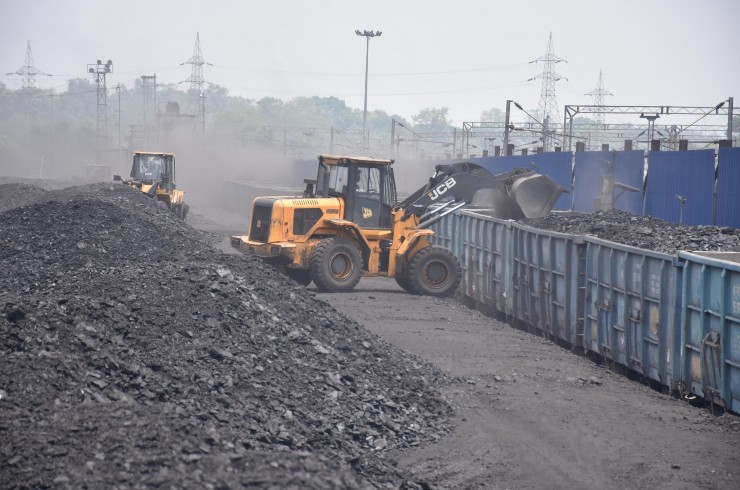
CIL’s total coal supplies rose 12.04 per cent to 186.04 mt in Q2, compared with 166.04 mt in the same quarter of the previous financial year. Image Source: IANS
The widening difference between production and supplies during the period underlines the importance of inventory management and evacuation infrastructure in maintaining fuel availability. CIL’s performance is therefore not simply a story of higher mining output; it also reflects an effort to move coal more efficiently from mines to end-users
Coal India Limited (CIL) significantly stepped up its coal supplies in September 2026, as rising electricity demand and pressure on thermal power generation continued to keep coal at the centre of India’s energy supply chain. The company’s total coal supplies increased 12.5 per cent year-on-year to 61.2 million tonnes (mt) in September of financial year 2026-27, compared with 54.4 mt during the corresponding month of the previous financial year. The acceleration in dispatches comes at a time when India’s power sector has been facing elevated demand and seasonal constraints on domestic coal production and evacuation.
The power sector remained the principal beneficiary of the increase. CIL supplied 48.9 mt of coal to power producers during September, up 10.63 per cent from 44.2 mt a year earlier. Supplies to the non-regulated sector (NRS), which includes industries outside the regulated power segment, also increased by 19.41 per cent during the month, indicating that the rise in coal availability was not restricted to electricity generation alone.
The increase in supplies was accompanied by a 9.18 per cent rise in CIL’s September coal production, which reached 53.5 mt compared with 49 mt in September 2025. The stronger production performance marks a recovery from the disruptions caused by the monsoon, when heavy rainfall in several coal-producing regions affected mining, handling and evacuation operations. The Ministry of Coal had earlier noted that prolonged rains had made coal beds wet and sticky, affecting the ease with which freshly mined coal could be handled and transported. With rainfall easing, mining and evacuation conditions have begun to improve.
However, the September numbers also highlight an important aspect of CIL’s supply strategy: the company has been able to increase dispatches at a faster pace than production by drawing down accumulated pithead inventories. During the first six months of FY27, CIL liquidated around 63 mt of pithead coal stocks. This enabled the company to maintain higher supplies to consumers even during periods when production was constrained by the monsoon. The strategy has helped bridge the temporary gap between production and demand while preventing accumulated stocks from becoming a bottleneck in the supply chain.
The improvement became particularly pronounced during the second quarter of FY27. CIL’s total coal supplies rose 12.04 per cent to 186.04 mt in Q2, compared with 166.04 mt in the same quarter of the previous financial year. Supplies to the power sector increased by 11 per cent to 148.2 mt from 133.5 mt. Coal production, meanwhile, grew 3.81 per cent to 151.37 mt during the quarter, against 145.82 mt in Q2 of FY26.

Source: Coal India Limited
The widening difference between production and supplies during the period underlines the importance of inventory management and evacuation infrastructure in maintaining fuel availability. CIL’s performance is therefore not simply a story of higher mining output; it also reflects an effort to move coal more efficiently from mines to end-users. The Ministry of Coal has increasingly emphasised faster evacuation, mechanised coal handling and predictable deliveries, with investments in Coal Handling Plants, First Mile Connectivity, rapid loading systems and digital monitoring forming part of this strategy. CIL currently has 46 CHP-silos with a combined mechanised, closed-loop evacuation capacity of about 432 mt.
The timing of the increase in supplies is particularly important for the power sector. India witnessed an unusually strong increase in electricity demand during September. Power demand rose sharply, while thermal power plants continued to operate at elevated levels. Peak demand touched around 269 GW on September 10, the highest recorded level for the month and only marginally below the year’s peak of 270 GW recorded in May. At the same time, lower hydropower generation and weather conditions placed additional pressure on coal-based generation.
The pressure on the electricity system was reflected in power shortages as well. India recorded its highest power shortfall in more than three years in September, despite coal-fired plants operating at relatively high utilisation levels. This highlights the continuing importance of coal as a stabilising source of electricity, particularly during periods when renewable generation is unable to fully meet demand during evening and peak-load hours.
Against this backdrop, CIL’s first-half performance assumes greater significance. Between April and September 2026, the company supplied 384.2 mt of coal, representing a 7.6 per cent increase over the 357 mt supplied during the corresponding period of FY26. Supplies to the power sector rose 6.1 per cent to 302.8 mt from 285.4 mt. This means that nearly 79 per cent of CIL’s total first-half offtake went to the power sector, reaffirming the company’s central role in maintaining fuel availability for India’s thermal power fleet.
The performance also points to a shift in the way CIL’s operational efficiency is being assessed. While production remains a critical indicator, the ability to synchronise mining, stock management, transportation and final dispatch is becoming equally important. CIL has set a production target of approximately 815 mt and a supply target of around 850 mt for FY27. The higher supply target indicates that the company expects to supplement current production with inventories and improve evacuation efficiency to meet demand across both power and non-power sectors.
The challenge for CIL in the remaining months of FY27 will therefore be to convert the improvement in September into a sustained trend. The end of the monsoon should provide more favourable conditions for mining and transportation, allowing production to accelerate. At the same time, replenishing stocks at power plants and managing demand during the post-monsoon and winter periods will remain important, particularly if industrial activity and electricity consumption continue to grow.
Overall, CIL’s September performance suggests that India’s coal supply chain is gaining momentum after the seasonal disruption caused by the monsoon. The 12.5 per cent increase in monthly supplies, coupled with stronger production and the liquidation of 63 mt of pithead stocks during the first half of the fiscal, has provided additional support to the power sector at a time of elevated electricity demand. The larger question, however, is whether CIL can sustain this supply momentum while simultaneously rebuilding inventories and moving closer to its ambitious FY27 production target of 815 mt and supply target of 850 mt. The coming post-monsoon months will be crucial in determining whether the September acceleration represents a temporary recovery or the beginning of a sustained improvement in coal production and dispatches.