Monday, 05 Oct, 2026

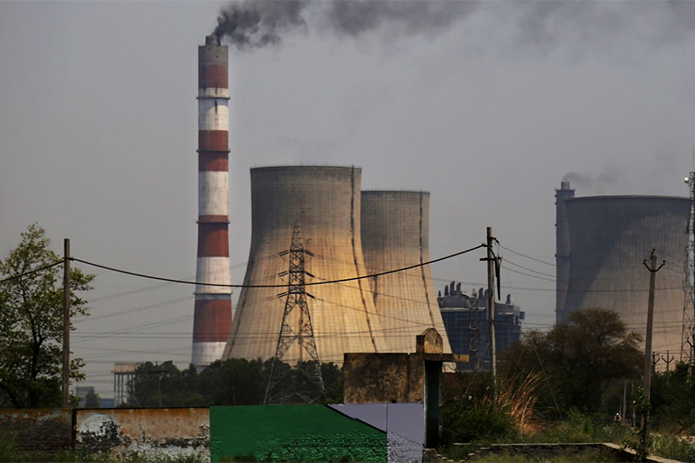
Photo courtesy: Pixabay
The world needs India to decarbonise, but New Delhi also needs the global climate framework to recognise its development needs. With 8.3 per cent of global emissions and 17.82 per cent of the world’s population, India’s case for a fair transition is hard to ignore
India is too large to be ignored in the global climate debate. But it is also too populous and still developing, on a per-person basis, to be judged simply by the size of its aggregate emissions.
That is the distinction Prime Minister Narendra Modi sought to underline recently when he said the responsibility for carbon emissions had been “wrongly placed” on developing countries. India’s per-capita carbon emissions, he said, remain less than half the global average, while those of developed countries are six times higher.
The numbers strengthen that argument. India accounts for 8.3 per cent of global greenhouse-gas emissions, making it the world’s third-largest emitter. Along with China and the US, it accounts for about half of total global emissions. On the face of it, that is a substantial share. But the picture changes sharply when emissions are measured against population. India ranks 131st in the world on per-capita emissions.
India has a large aggregate footprint partly because it has a very large population. Its share of the world’s population has risen from 16.32 per cent in 1990 to 17.82 per cent in 2025. The comparison with other large economies is revealing. China’s share of the world population fell from 21.42 per cent in 1990 to 17.12 per cent in 2025. The US’ share declined from 4.71 per cent to 4.16 per cent. India, meanwhile, has continued to carry a much larger share of the global population while millions of its people are still moving towards higher incomes, better housing, greater mobility and wider access to electricity.

That development story cannot simply be separated from the emissions story.
India’s greenhouse-gas emissions have grown at a compound annual rate of 3.6 per cent since 1990, more than twice the global rate of 1.5 per cent. But the faster growth also reflects an economy that has expanded from a much lower base and continues to build the infrastructure and productive capacity needed to raise living standards.
This is where the international climate debate can become unfair to India. The country is being asked to decarbonise while it is still in the process of providing many of its citizens with the consumption levels that developed economies achieved much earlier.
The per-capita comparison makes the imbalance clearer. Palau, the Falkland Islands, Qatar, Kuwait and Bahrain are among the world’s highest per-capita emitters. India, despite being the third-largest emitter in absolute terms, is nowhere near that group when emissions are allocated across its population.
India’s case, therefore, is not that it should escape climate responsibility. It is that responsibility has to be measured fairly. The same argument applies within the country. Agriculture is often singled out when India’s emissions are discussed, particularly because farming produces methane and nitrous oxide. But the bigger source of emissions is the energy system.
India’s own greenhouse-gas inventory shows that the energy sector accounted for 71 per cent of total emissions in 2010, while agriculture accounted for 18 per cent. The energy category includes electricity generation, fuel combustion in industry and transport, as well as fugitive emissions.

The power sector overtook agriculture as the larger source in 2010, and the gap has widened since. That is an important distinction because electricity is also the foundation of India’s development. Factories need it. Railways need it. Cities need it. Homes need it. Digital infrastructure needs it. A rapidly growing economy cannot reduce energy consumption simply to improve its emissions statistics.
The more relevant question is how India produces that energy.
And here, the Indian story is changing. The Centre has pointed to the country’s rapid expansion of renewable energy, electric mobility and other clean-energy technologies. I India has met its Paris Agreement commitments ahead of schedule. Electric mobility offers one illustration of the shift. Annual electric-vehicle sales in India had risen to 25 lakh last year from just 3,000 in 2014.
The point is important. India’s climate transition cannot be modelled on the experience of rich economies that industrialised decades ago. It has to accommodate a population whose energy requirements are still rising and an economy that needs faster growth.
That makes India’s position different, not exceptional.
The country will remain a major contributor to global emissions because of its size. There is no escaping that arithmetic. But judging climate responsibility only by aggregate emissions would overlook the other half of the picture: India’s 17.82 per cent share of the global population, its 131st position on per-capita emissions and the continuing gap between Indian consumption and that of richer economies.

The strongest Indian argument, therefore, is not that India has no emissions problem. It is that the climate burden must be distributed according to both capacity and per-capita reality, while allowing developing economies enough room to grow.
India can and should cut the carbon intensity of that growth. The power sector is where the largest gains can be made. Cleaner electricity, more renewables, nuclear power, greater efficiency and electric mobility can allow India to expand energy access without locking itself permanently into a high-carbon model.
The global climate debate needs India to decarbonise. India needs the global climate framework to recognise its development needs.
Both can be true. And for a country that accounts for 8.3 per cent of global greenhouse-gas emissions but 17.82 per cent of the world’s population, that distinction is central to the case India is making.