Thursday, 12 Nov, 2026

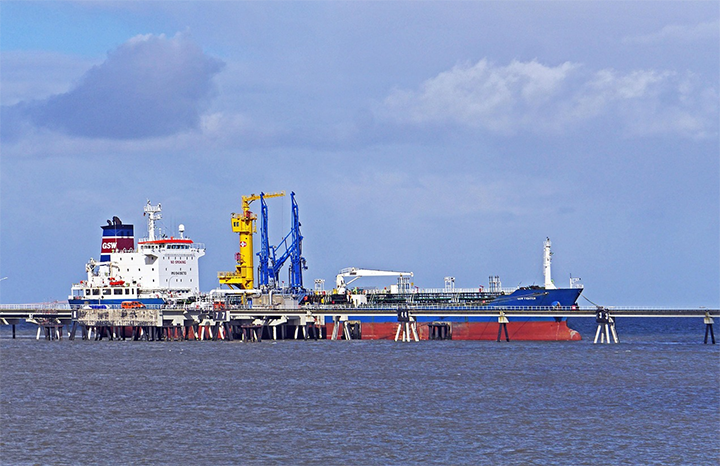
Photo courtesy: Pixabay
New Delhi is paying more to secure energy supplies amid West Asia crisis, pushing up its import bill without a corresponding rise in volumes. The higher costs strain the trade balance and domestic finances without necessarily boosting output
India paid 47 per cent more for crude oil in September, with its import bill climbing to $15.4 billion, even as the volume purchased rose by just 7 per cent. The disparity exposes the economic cost of the West Asian crisis: New Delhi is spending far more for a relatively modest increase in supplies. For an economy heavily dependent on imported energy, dearer oil threatens to fuel inflation, widen the trade deficit and erode the gains from growth.
Data from the Petroleum Planning & Analysis Cell (PPAC) show that India imported 21.7 million tonne (mt) of crude oil in September, against 20.3 mt a year earlier. Higher imports can indicate stronger economic activity, as expanding industry, transport and consumption require more energy. However, import volumes alone cannot prove that the economy is growing faster; refinery demand, stockpiling and changes in domestic production also influence purchases.

The price movement over three months shows the scale of the problem. The Indian basket of crude averaged $82.04 a barrel in July, $90.19 in August and $116.09 in September. September’s average was 41.5 per cent higher than July’s and 28.7 per cent above August’s. It was also well above the $69.61 recorded in September 2025. The import bill rose far faster than volumes because crude became substantially more expensive.
Crude accounts for around 20 per cent of India’s merchandise import bill. Higher prices increase demand for dollars, potentially weakening the rupee and making imports costlier still. They also raise operating costs for transport, aviation, manufacturing and agriculture. Businesses must either absorb the increase, squeezing margins, or pass it on to consumers, adding to inflation and reducing household purchasing power.
Supply disruptions in West Asia have aggravated the pressure. The blockage of traffic through the Strait of Hormuz and threats to Bab-el-Mandeb, which connects the Red Sea and the Gulf of Aden, have heightened concerns over energy supplies. India must secure sufficient crude to keep its economy running, but doing so at elevated prices carries a wider cost. If retail fuel prices are held down, oil marketing companies may face pressure on their margins, while the government must consider the cost of any relief measures.
India’s net oil and gas import bill—imports of crude, petroleum products and gas, less earnings from petroleum product exports—rose almost 40 per cent year on year to $13.4 billion in September. Crude imports accounted for $15.4 billion and liquefied natural gas (LNG) imports for $1.2 billion, while petroleum product exports earned $4.8 billion. Petroleum exports fell 24.6 per cent year on year, reducing the cushion provided by overseas sales.
The dependence on a relatively small group of suppliers adds to its vulnerability. Russia accounted for 35 per cent of crude imports in September, remaining the largest supplier, according to maritime intelligence firm Kpler. Iraq, Saudi Arabia, the UAE and Kuwait were the other leading suppliers. Together, the five countries supplied about 70 per cent of India’s crude. Diversification can reduce supply risks, but it cannot shield the country from a global price shock.

The first-half figures show that the pressure is not confined to one month. India’s crude oil import bill rose 46.4 per cent to $90.6 billion during April-September 2026-27, while the net oil and gas import bill increased 35 per cent to $81.1 billion. The figures measure different things because imports of petroleum products and gas, along with export earnings, affect the overall balance. Both, however, show the rising cost of meeting India’s energy needs.
The policy challenge is to secure reliable supplies while reducing exposure to international price swings. Diversifying suppliers, strengthening domestic exploration, improving energy efficiency and expanding renewable energy can help, though none can replace crude overnight.
India’s September figures offer a clear warning. Higher oil imports may reflect stronger demand, but they do not prove faster growth. When the import bill rises much faster than the volume purchased, the economy pays more without necessarily producing more. At present, the task is to sustain growth without allowing expensive oil to undermine price stability, the rupee and the trade balance.