Thursday, 08 Oct, 2026

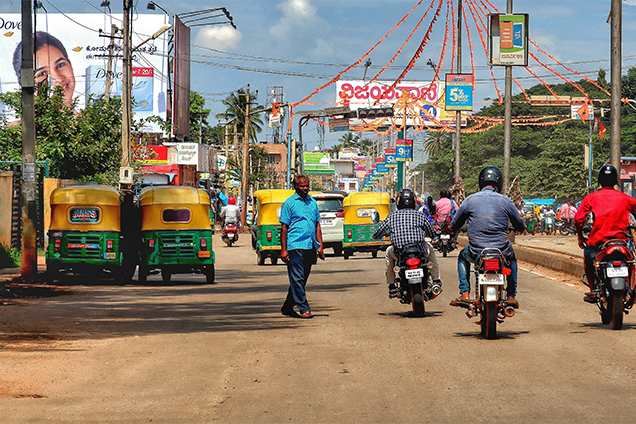
Those travelling to fixed workplaces spend an average of ₹785 per month on commuting, with expenditure reaching ₹1,044 per month in urban areas compared with ₹612 in rural India. Image Source: Pixabay
The findings show a clear rural-urban divide in commuting distances and expenditure, a significant gender gap in work-related travel, and a strong dependence on two-wheelers for employment and other daily activities.
The National Statistics Office (NSO) under the Ministry of Statistics and Programme Implementation (MoSPI) has released the key findings of India’s first-ever National Household Travel Survey (NHTS), conducted between July 2025 and June 2026. The survey provides a detailed picture of how Indians travel for education, employment, social activities and other purposes, covering aspects such as mobility patterns, travel duration, peak commuting hours, expenditure and overnight journeys. For the purpose of the survey, a trip has been defined as travel covering a distance of more than one kilometre.
The findings highlight significant differences in travel behaviour between rural and urban India, while also revealing the continued importance of walking, buses and two-wheelers in meeting the country’s everyday mobility needs.
Student mobility
Education-related travel accounts for a significant share of daily mobility among students. According to the survey, 66.4 percent of students aged six years and above undertake trips of more than one kilometre within a travel day to reach their educational institutions. The proportion is marginally higher in urban areas, at 68.1 percent, compared with 65.6 percent in rural India. Since trips covering less than one kilometre were not recorded under the survey methodology, the actual proportion of students travelling to educational institutions may be higher.
Travel patterns also vary considerably across age groups. Students between 15 and 29 years record the highest participation in regular educational trips, with 79.1 percent of students in rural areas and 73.3 percent in urban areas undertaking such journeys. This reflects the greater mobility associated with secondary, higher-secondary, undergraduate and other forms of higher education, where students are more likely to travel longer distances to access institutions.

Walking remains the most common mode of transport for students across the country, accounting for 37.0 percent of educational trips. Buses are the second-largest mode at 29.5 percent, followed by bicycles at 15.8 percent. Together, these three modes constitute the overwhelming majority of student travel, highlighting the continuing importance of affordable and accessible transport for educational mobility.
The survey also points to a growing role for motorised personal and intermediate public transport, particularly in urban areas. Auto-rickshaws are used by 10.5 percent of students nationally, with their share rising to 14.4 percent in urban areas. Two-wheelers account for 6.7 percent of student trips across India, but their usage increases significantly to 11.5 percent in urban areas. Travel times are relatively low in several north-eastern states, including Assam and neighbouring states, where students generally spend around 15 to 19 minutes commuting to educational institutions.
Work-related mobility
Employment-related mobility presents a somewhat different picture. Around 57.6 percent of workers aged 15 years and above undertake trips exceeding one kilometre to reach either fixed or non-fixed workplaces within a travel day. The share is significantly higher in urban areas, at 64.1 percent, compared with 54.5 percent in rural India, reflecting the greater concentration of workplaces and longer commuting distances associated with urban employment.
The survey also reveals a substantial gender gap in work-related mobility. While 61.9 percent of male workers undertake daily trips of more than one kilometre for work, the corresponding share among female workers is only 41.9 percent. The disparity points to differences in labour-force participation, occupational patterns, workplace accessibility and mobility requirements between men and women.
Two-wheelers emerge as the dominant mode of transport for workers, accounting for 42.6 percent of workplace trips nationally. Their use is particularly pronounced in urban India, where 52.3 percent of workers rely on two-wheelers as their primary mode, compared with 37.1 percent in rural areas. This underlines the importance of private two-wheelers in providing flexible and relatively affordable mobility, particularly where public transport connectivity may not adequately meet workers’ requirements.

At the same time, mass public transport plays a particularly important role in certain urban centres. Monorails, metro systems, suburban railways and trams together account for 5.0 percent of urban worker commutes nationally. However, their importance is considerably higher in states and regions with established mass-transit networks. Maharashtra records the highest share at 20.7 percent, followed by West Bengal at 16.5 percent and Delhi at 14.4 percent. These figures reflect the concentration of large metropolitan economies around established rail and metro networks.
Travel times also vary geographically. Rajasthan, Gujarat and Madhya Pradesh record average work-related travel times of around 20 to 23 minutes, while several parts of southern India report comparatively longer journeys. The differences indicate the influence of urban structure, workplace concentration, road connectivity and the availability of public transport on daily commuting patterns.
Cost of daily mobility
The survey provides an important insight into the financial burden associated with everyday commuting. Students across India spend an average of ₹443 per month on travel to and from educational institutions. However, the difference between rural and urban students is substantial. While rural students spend an average of ₹361 per month, the corresponding expenditure in urban areas rises to ₹617.

Workers face a higher commuting burden. Those travelling to fixed workplaces spend an average of ₹785 per month on commuting, with expenditure reaching ₹1,044 per month in urban areas compared with ₹612 in rural India. The higher cost in cities is consistent with longer commuting distances, greater reliance on paid transport and the higher cost of public and private mobility.
The survey also identifies a gender-based difference in commuting expenditure among workers. Male workers travelling to fixed workplaces spend an average of ₹835 per month, while female workers spend ₹533. The lower expenditure among women is likely linked to differences in travel frequency, distance, mode of transport and workplace patterns.
Overnight travel
The NHTS also sheds light on household travel that extends beyond a single day. Buses and inter-city railways dominate overnight journeys, together accounting for 73.5 percent of such trips. Buses constitute the largest share at 55.8 percent, followed by inter-city railways at 17.7 percent. Cars account for 15.1 percent, while two-wheelers contribute another 8.8 percent.
The preference for rail is considerably stronger among urban households. Around 22.7 percent of urban households use railways for overnight journeys, compared with approximately 14.0 percent among rural households. This difference is likely influenced by better access to railway networks in urban and metropolitan centres, as well as the greater availability of long-distance rail services.
Interestingly, social, communication and religious activities constitute the principal reasons for overnight household travel. These purposes account for 70.2 percent of overnight journeys nationally, with the proportion standing at 69.7 percent in rural areas and 70.9 percent in urban India. The findings underline the continued importance of family, community and religious networks in shaping domestic travel patterns.
Tourism and healthcare-related journeys form smaller but significant components of overnight travel. Culture, leisure, sports and tourism account for 7.4 percent of overnight household trips, with the share rising to 9.3 percent in urban areas. Travel related to self-care and maintenance accounts for another 6.5 percent of such journeys and is relatively more prominent in rural areas, where it accounts for 7.6 percent.
Mobility beyond education and employment
Travel within a day is not limited to commuting for education or employment. The survey shows that Indians undertake a substantial number of other daily trips for shopping, personal activities, social purposes and other requirements. Two-wheelers are the most widely used mode for these journeys, accounting for 32.2 percent of trips, followed by walking at 24.9 percent.
Auto-rickshaws account for 18.9 percent of such trips, while bicycles contribute 12.6 percent and buses another 8.5 percent. The pattern demonstrates that despite the rapid expansion of private vehicles and modern public transport infrastructure, walking, intermediate public transport and two-wheelers continue to form the backbone of everyday mobility for a large section of the population.
Overall, the first National Household Travel Survey offers a broad snapshot of how mobility is shaping everyday life in India. The findings show a clear rural-urban divide in commuting distances and expenditure, a significant gender gap in work-related travel, and a strong dependence on two-wheelers for employment and other daily activities. At the same time, buses and railways remain central to longer-distance travel, while walking continues to be the most important mode for a large proportion of students. The data therefore highlights the need for transport planning that goes beyond expanding road infrastructure and also focuses on affordable public transport, safe pedestrian infrastructure, efficient mass-transit systems and improved connectivity between residential areas, educational institutions and employment centres.