Friday, 16 Oct, 2026

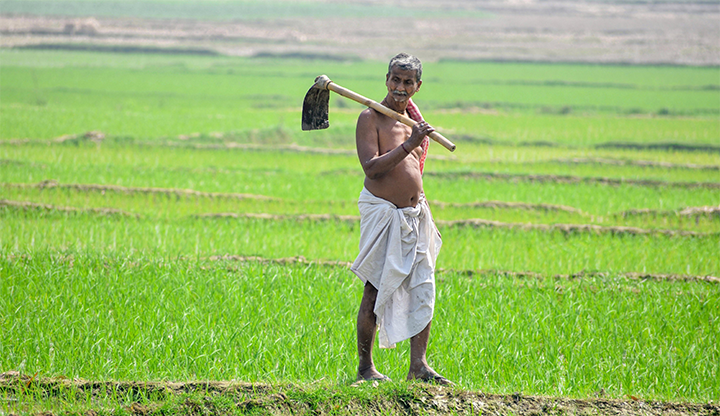
Photo courtesy: Pixabay
A weak monsoon can dampen rural demand, lift food prices and complicate inflation. This year, risks are amplified by the West Asia conflict, which is already driving up energy costs and disrupting supply chains
Private forecaster Skymet has delivered an early, cautionary signal on India’s most critical economic variable — the monsoon. Its first outlook for 2026 pegs all-India rainfall during the June–September season at 94 per cent of the long-period average (LPA), effectively 6 per cent below normal, with the shadow of El Niño looming over the forecast.
In absolute terms, rainfall is expected to average 817 mm across the four-month season, with a model error margin of plus/minus 5 per cent. The probabilistic assessment adds another layer of concern: a 30 per cent chance of drought and a 40 per cent likelihood of below-normal rainfall. These numbers underscore not just uncertainty but a skewed risk profile tilted towards deficiency.
The official word from the India Meteorological Department is awaited later this month, but Skymet’s projections offer an early template for policymakers and markets.
A front-loaded monsoon, then a fade
The temporal distribution of rainfall suggests a monsoon that begins on a relatively firm footing but weakens as the season progresses. June rainfall is projected at 101 per cent of LPA (with LPA at 165.3 mm), with equal 40 per cent probabilities of being normal or below normal—a statistical balance that hints at fragility despite the headline “normal” tag.

From there, the outlook deteriorates. July rainfall is estimated at 95 per cent of LPA (LPA: 280.5 mm), again with 40 per cent probability each for normal and below-normal outcomes. August—the backbone of the monsoon—is expected to slip further to 92 per cent of LPA (LPA: 254.9 mm), with a sharply higher around 60 per cent probability of below-normal rainfall.
By September, the retreat intensifies. Rainfall is forecast at just 89 per cent of LPA (LPA: 167.9 mm), with a striking 79 per cent probability of below-normal conditions. In effect, June stands as the only month likely to meet normal benchmarks, while the rest of the season trends weaker.
Agriculture on a tightrope
The timing of the projected shortfall raises red flags for the farm economy. July and August are the most crucial months for sowing kharif crops, and any deficit during this window can have outsized consequences for output.
That said, rainfall quantum is only part of the story. Experts emphasise that spatial distribution and temporal spread are equally decisive. Even a below-normal monsoon can sustain agricultural output if rains are well distributed and avoid prolonged dry spells. Conversely, erratic rainfall—marked by clustering and gaps — can prove more damaging than an evenly spread deficit.
Macro risks begin to build
The economic implications extend beyond agriculture. A weak monsoon can dampen rural demand, pressure food prices, and complicate inflation management. This year, the risks are amplified by external headwinds, particularly the ongoing tensions in West Asia, which already weigh on energy prices and supply chains.
A deficient monsoon, therefore, risks becoming a force multiplier— aggravating existing vulnerabilities rather than acting as an isolated shock.
The spatial pattern outlined by Skymet points to a patchy monsoon. In June, above-normal rainfall is expected over the Indo-Gangetic plains and the Western Ghats, offering some early-season relief.
However, July is likely to see below-normal rainfall across north, west, and central India. The weakness broadens in August, covering Northwest, Central, and Southern India. By September, only parts of South and East India may receive normal rainfall, with the rest of the country experiencing deficits.
This uneven spread suggests divergent regional outcomes, with some pockets insulated while others face acute stress — a pattern that could complicate both agricultural planning and policy responses.
A cautious start to the season
Taken together, Skymet’s forecast sketches a monsoon that is not catastrophic, but distinctly subpar, with risks concentrated in the latter half of the season. The early strength in June offers limited comfort if the core months falter.
For an economy where the monsoon still influences inflation, consumption, and growth, the message is clear: watch the skies, but watch the distribution even more closely.