Friday, 23 Oct, 2026

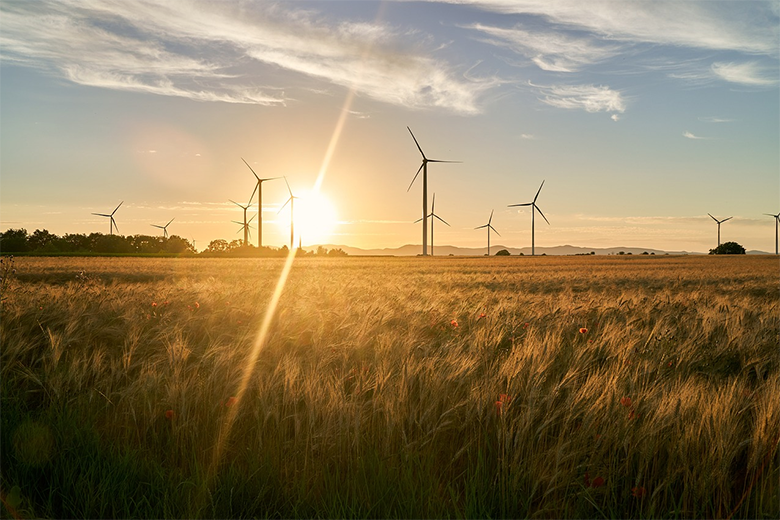
India is rapidly scaling up energy storage solutions that are vital for integrating rising shares of intermittent renewable energy. Image Source: PixaBay
India’s transmission infrastructure is undergoing a major upgrade as well, with new transmission lines and substations being developed under the Green Energy Corridor scheme to ensure smooth evacuation of renewable power.
As of 31 October 2025, India’s total installed electricity generation capacity has risen to 5,05,023 MW (5.05 GW), marking a significant shift in the country’s energy landscape. Of this, 2,45,600 MW (245.6 GW) comes from fossil-fuel-based sources, while 2,59,423 MW (259.4 GW) is generated from non-fossil sources, including an impressive 2,50,643 MW (250.6 GW) from renewable energy alone. This milestone arrives at a crucial moment in India’s pursuit of its long-term climate commitments, particularly the goal of achieving 500 GW of non-fossil energy capacity by 2030. The installed electricity generation capacity in 2014 was 249 GW.
To accelerate progress, the government has rolled out an array of initiatives spanning regulatory reforms, new infrastructure, financial incentives and ambitious missions. One of the key measures has been the waiver of Inter State Transmission System charges for the sale of solar and wind power for projects commissioned by June 2025, along with extended waivers for green hydrogen projects and offshore wind projects into the next decade. The government has also issued standard bidding guidelines for competitive procurement of power from grid-connected solar, wind, hybrid and firm renewable projects, alongside permitting 100 percent foreign direct investment through the automatic route to boost sectoral inflows.
India’s transmission infrastructure is undergoing a major upgrade as well, with new transmission lines and substations being developed under the Green Energy Corridor scheme to ensure smooth evacuation of renewable power. A detailed transmission expansion plan has been prepared up to 2032 to support the steep renewable energy trajectory. Simultaneously, large-scale solar parks and ultra-mega solar power projects are being set up to provide land and transmission infrastructure to developers, enabling utility-scale deployment of renewable energy.

A series of flagship schemes is also playing a critical role in expanding clean energy adoption across rural and urban landscapes. Programmes such as PM-KUSUM, PM Surya Ghar Muft Bijli Yojana, the National Programme on High Efficiency Solar PV Modules, and the new solar power scheme for tribal and PVTG habitations under PM JANMAN, together with the Dharti Aabha Janjatiya Gram Utkarsh Abhiyan, are driving decentralised and equitable access to renewables.
The National Green Hydrogen Mission, supported by viability gap funding for offshore wind energy projects, aims to position India as a global hub for green hydrogen production. To enhance renewable energy consumption, the government has notified a Renewable Purchase Obligation and the new Renewable Consumption Obligation trajectory until 2029-30, introducing penalties for non-compliance and mandating specific consumption from decentralised renewable sources. Measures such as the launch of the Green Term Ahead Market for renewable energy trade and the Production Linked Incentive scheme for high-efficiency solar PV modules are further strengthening India’s clean energy ecosystem.
June 2025 marked a defining moment when India achieved 50 percent of its installed electricity capacity from non-fossil sources, more than five years ahead of its Paris Agreement target under its Nationally Determined Contributions. This achievement signals not only India’s accelerating energy transition but also its intent to balance climate goals with affordable, accessible and secure energy for a growing economy on the path to achieving net-zero emissions by 2070.
As part of its efforts to diversify its clean energy portfolio, India is placing renewed emphasis on nuclear power. Seen as a clean, reliable, round-the-clock baseload source with lifecycle emissions comparable to hydro and wind, nuclear energy is set to play a central role in India’s long-term strategy. The government has launched a dedicated Nuclear Energy Mission with an allocation of ₹20,000 crore to develop at least five indigenously designed small modular reactors by 2033 and foster advanced nuclear technologies. Amendments to the Atomic Energy Act and the Civil Liability for Nuclear Damage Act are being pursued to encourage greater private sector participation. Bharat Small Reactors of 220 MW capacity, based on proven PHWR technology, are being upgraded for deployment in industrial hubs and remote locations, while BARC is working on new small modular reactor designs for repurposing retiring coal plants.

India’s fuel security is being strengthened through new uranium discoveries, including a major find that will extend the life of the Jaduguda mine by over half a century, and progress in the closed fuel cycle through advancements in the Prototype Fast Breeder Reactor. To accelerate nuclear expansion, NPCIL and NTPC have formed a joint venture, ASHVINI, to develop nuclear power projects within the current legal framework.
Complementing these developments, India is rapidly scaling up energy storage solutions that are vital for integrating rising shares of intermittent renewable energy. The government has approved viability gap funding for battery energy storage systems, with 13.22 GWh already under implementation and an additional 30 GWh sanctioned under a new scheme supported by the Power System Development Fund. Pumped storage projects are also receiving policy support, with ten such projects totaling 11,870 MW currently under construction to enhance grid stability.
Offshore wind energy is set for its next phase with the issuance of a national strategy and the allocation of viability gap funding for the initial one-gigawatt capacity. Meanwhile, the National Green Hydrogen Mission, targeting at least five million tonnes of production annually backed by around 125 GW of associated renewable capacity by 2030, is expected to significantly contribute to decarbonisation while generating economic and employment opportunities.
Together, these developments reflect India’s determined, multi-sectoral push toward a cleaner, more secure and resilient energy future, one that aligns its development ambitions with its global climate commitments.