Saturday, 24 Oct, 2026


Source: Shutterstock.
The air in Delhi has once again crossed the limits of endurance. After Diwali, pollution readings hit hazardous levels, sparking political clashes, data controversies, and renewed scrutiny over how India’s capital keeps failing its clean-air promises.
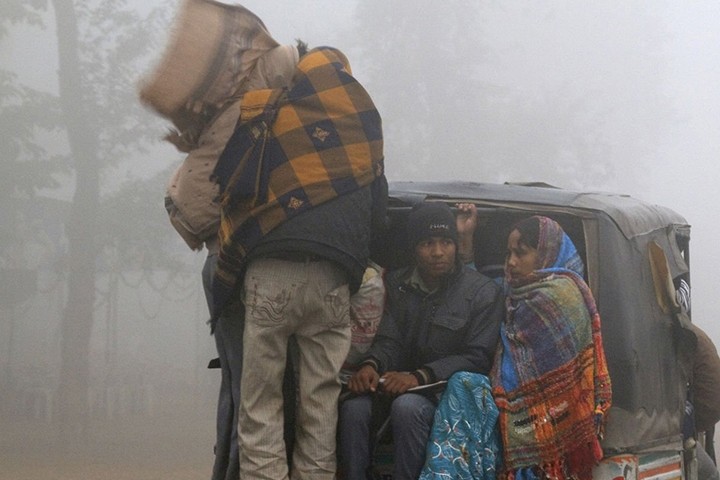
Delhi’s air quality plunged to hazardous levels after Diwali 2025, with pollution concentrations spiking to several times above the World Health Organisation’s safe limits. As a thick blanket of smog enveloped the national capital, it reignited both political confrontation and public health concerns.
The Aam Aadmi Party (AAP) alleged that several monitoring stations went offline during the pollution spike, accusing the BJP-led Delhi government of “data theft.” According to AAP leader Saurabh Bharadwaj, dozens of AQI monitoring stations run by the CPCB, DPCC, IMD, and IITM were shut down on Diwali night and restarted only the next morning — allegedly to underreport pollution levels. The party called it an attempt to “cheat citizens” suffering from respiratory diseases by showing lower AQI readings.
In response, Delhi Environment Minister Manjinder Singh Sirsa countered that AAP was scapegoating Diwali and using the pollution crisis to “appease a particular vote bank” by attacking traditional celebrations.
The BJP and AAP also clashed over stubble burning, with Sirsa accusing the Punjab government of deliberately encouraging farm fires to worsen Delhi’s air, while Punjab Health Minister Balbir Singh termed the allegation “ignorant” and stressed that the crisis was a national emergency requiring coordinated action.
The Supreme Court’s decision to lift the blanket ban on firecrackers and allow “green crackers” under controlled conditions has further divided opinion. Critics argue that the ruling legalised a relapse into old habits in the name of cultural tradition, while supporters call it a balanced approach between faith and environmental responsibility.
Amitabh Kant, G20 Sherpa and former NITI Aayog CEO, criticised the move, saying the Court had prioritised the “right to burn crackers over the right to live and breathe.” The ruling permitted green crackers between limited hours, but many parts of Delhi-NCR witnessed fireworks long past midnight.
Delhi had first introduced green firecrackers in 2018 following Supreme Court directives and CSIR–NEERI’s development of low-emission variants. However, enforcement and certification remain weak. Experts warn that even “green” versions emit around 70% of the pollutants released by traditional crackers. Doctors in Delhi hospitals have reported spikes in cases of asthma, breathlessness, and chest pain, warning that even marginal increases in PM2.5 levels can severely harm those with respiratory or heart conditions.
According to the Central Pollution Control Board (CPCB), several areas recorded “very poor” air quality through the week. At 7 a.m. on October 22, the AQI stood at 380 in RK Puram, 355 in Anand Vihar, 376 in Bawana, 394 in Nehru Nagar, and 360 near Akshardham. These readings paint a consistent picture of Delhi’s suffocating air, unaffected by temporary measures or political rhetoric.

The Air Quality Life Index (AQLI) 2025 report by the University of Chicago’s Energy Policy Institute underscores the magnitude of the crisis. It found that air pollution has shortened India’s average life expectancy by three and a half years — nearly twice the impact of childhood malnutrition and five times that of unsafe water or poor sanitation.
Even as debates around firecrackers and stubble burning dominate headlines, experts highlight Delhi’s failure to act against its largest pollution source — vehicular emissions. The transport sector remains the capital’s biggest contributor to toxic air but continues to be overlooked in both planning and enforcement.
The administrative response is equally fragmented. The Commission for Air Quality Management (CAQM), pollution control boards, and municipal agencies operate with overlapping mandates and limited coordination. Confusion across jurisdictions — Delhi, Haryana, Punjab, and Uttar Pradesh — has left enforcement weak and accountability diffuse. Each winter, the same cycle of press conferences, court orders, and temporary bans repeats, with no lasting policy coherence.
Behind the numbers lie severe health consequences. Hospitals have reported surges in respiratory and cardiac cases, especially among children and the elderly. The WHO calls air pollution the world’s largest environmental health risk, linked to seven million premature deaths annually. Exposure to current air levels in Delhi could shorten life expectancy by nearly 12 years, while India as a whole loses up to 1.4% of GDP each year due to health and productivity losses.
Seasonal interventions — such as odd-even schemes, school closures, and fireworks bans — provide only temporary relief. The real solutions lie in coordinated governance, real-time data transparency, and market-driven incentives for cleaner technology. Mechanisms like emissions trading, satellite-based monitoring, and adoption of clean public transport can help bridge the gap between policy and enforcement.
Each winter, Delhi’s skyline turns into a warning sign — not just of pollution, but of policy paralysis. The city’s crisis underscores that clean air cannot remain a seasonal concern or a subject of political blame. Until accountability becomes year-round and data-driven, Delhi will continue to choke between faith, festival, and fragmented governance.