Sunday, 20 Sep, 2026

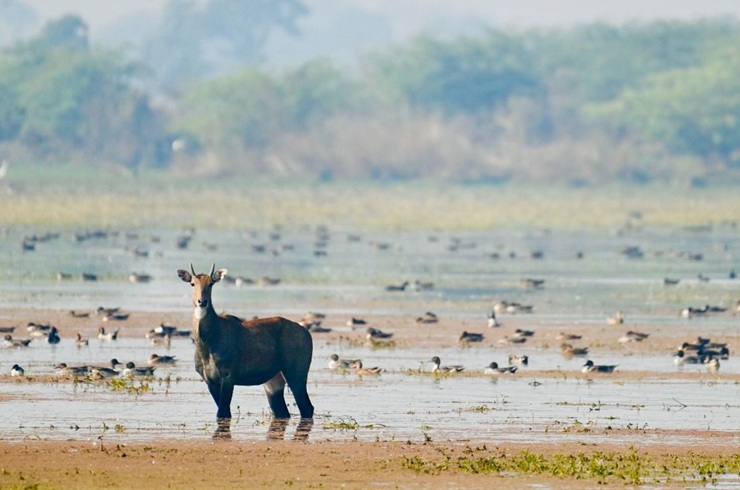
World Wetlands Day is observed every year on 2 February with the aim of increasing public awareness about the vital role wetlands play in supporting ecosystems and human well-being. Image Source: PIB
At present, there are more than 2,400 designated Ramsar Sites across the globe. Together, these sites span an area exceeding 2.5 million square kilometres, which is larger than the total land area of countries such as Mexico.
On the occasion of World Wetlands Day 2026, Union Minister for Environment, Forest and Climate Change Bhupender Yadav said that wetlands nurture not only ecosystems, but also communities, culture and livelihoods. He said that India has made communities and culture central to its approach to wetland conservation. He noted that under the environmentally conscious leadership, India’s Ramsar network has expanded to 98 sites from 26 in 2014.
Earlier, on January 31, the Minister announced the inclusion of two additional wetlands in India’s Ramsar network. In a post on the social media platform X, the Minister confirmed that Patna Bird Sanctuary, located in Etah district of Uttar Pradesh, and Chhari-Dhand in the Kutch district of Gujarat, have been designated as Ramsar Sites. With these additions, India’s commitment to conserving internationally important wetlands has been further reinforced.
The Minister noted that both wetlands serve as vital habitats for a large number of migratory as well as resident bird species, making them significant for avian conservation. In addition to rich birdlife, these landscapes also support diverse wildlife, including species such as chinkara, wolves, caracal, desert cats, and desert foxes, along with several endangered bird species. The recognition of these sites under the Ramsar Convention highlights their ecological significance and underscores the need for sustained conservation efforts involving local communities and traditional knowledge systems.

Source: Ministry of Environment, Forest and Climate Change; Press Information Bureau
To commemorate World Wetlands Day this year, the Ministry organised a special programme at the Asola Bhatti Wildlife Sanctuary, centred on the theme “Wetlands and Traditional Knowledge: Celebrating Cultural Heritage.” The event underlined the ecological importance of wetlands while also drawing attention to the deep connections between these ecosystems, indigenous knowledge systems, and local communities that have traditionally played a key role in their protection and sustainable use.
The programme began with senior dignitaries inaugurating an exhibition that showcased the work of various institutions and organisations engaged in wetland conservation, biodiversity protection, and broader environmental initiatives. This exhibition highlighted ongoing efforts across the country to conserve fragile wetland ecosystems and promote awareness about their ecological and cultural value. A key segment of the event was the felicitation of States for the designation of new Ramsar Sites, recognising their contribution to strengthening India’s wetland conservation framework under the Ramsar Convention.
On the occasion, the Ministry also released a publication titled Cultural Wonders of Ramsar Sites. The document brings to light the often-overlooked cultural dimensions of Ramsar Sites, illustrating how wetlands are closely linked to local traditions, livelihoods, folklore, and other forms of intangible cultural heritage. By documenting these connections, the publication seeks to broaden the understanding of wetlands beyond their ecological functions, emphasising their role as living cultural landscapes.
World Wetlands Day is observed every year on 2 February with the aim of increasing public awareness about the vital role wetlands play in supporting ecosystems and human well-being. The date also commemorates the signing of the Convention on Wetlands, an important international agreement dedicated to the protection of wetlands across the globe.
Formally known as the Convention on Wetlands, the treaty was adopted in 1971 in the Iranian city of Ramsar and came into effect in 1975. It serves as an intergovernmental framework that promotes the conservation, sustainable management, and responsible use of wetlands and their natural resources. Over time, the Convention has gained near-universal acceptance, with close to 90 percent of United Nations member states from all geographic regions joining as Contracting Parties.
The Convention supports wetland conservation through several mechanisms, including the designation of protected wetland areas, the development and implementation of sound national policies, and the exchange of scientific, technical, and traditional knowledge among member countries. Through these collective efforts, countries are encouraged to safeguard wetland ecosystems while ensuring their sustainable use. To date, 172 countries have adopted the Convention, and each participating nation is required to nominate at least one wetland for inclusion in the List of Wetlands of International Importance, commonly referred to as Ramsar Sites.
The purpose of the Ramsar List is to create and sustain a worldwide network of wetlands that are crucial for conserving global biodiversity and for supporting human societies by safeguarding the ecological components, natural processes, and benefits that wetlands provide. By recognising wetlands of international importance, the Ramsar framework seeks to ensure that these ecosystems continue to deliver essential services such as water regulation, food security, climate resilience, and livelihoods for millions of people.
At present, there are more than 2,400 designated Ramsar Sites across the globe. Together, these sites span an area exceeding 2.5 million square kilometres, which is larger than the total land area of countries such as Mexico. This extensive network encompasses a wide variety of wetland types, including both coastal and inland ecosystems such as marshes, mangroves, lakes, rivers, floodplains, peatlands, and coral reefs, reflecting the diversity of wetland landscapes found worldwide.
Through this global network, the Convention on Wetlands actively works to address and reverse the widespread loss and degradation of wetlands. It encourages countries to adopt sustainable management practices, strengthen legal and policy frameworks, and promote international cooperation. By doing so, the Convention aims not only to protect wetlands from further decline but also to restore their ecological health, ensuring that they continue to support biodiversity and human well-being for present and future generations.