Tuesday, 24 Nov, 2026

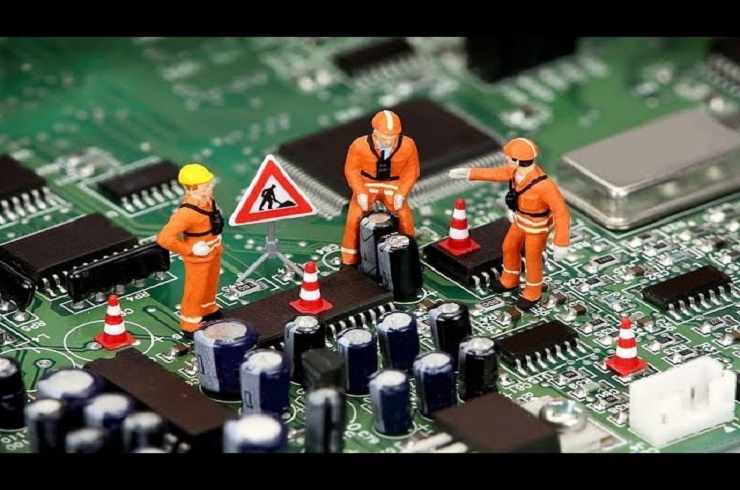
Among the major product categories, exports of parts and accessories of mounted printed circuit boards recorded an exceptional increase, rising from US$ 63.3 million to US$ 2.10 billion. Image Source: ELE Times
Non-smartphone electronics emerged as a particularly strong growth driver, with exports increasing by 56.5 percent, from US$ 8.81 billion in April-September 2025-26 to US$ 13.79 billion in the corresponding period of 2026-27.
India’s electronic goods exports registered robust growth during the first half of FY 2026-27, rising by 44 percent to US$ 31.97 billion during April-September, compared with US$ 22.20 billion in the corresponding period of the previous financial year. The growth reflects the strengthening of India’s electronics manufacturing ecosystem, expanding production capacities and an increasing presence in global supply chains. While smartphones continued to account for the largest share of electronics exports, the faster expansion of non-smartphone electronics points to a gradual diversification of the country’s export basket.
Smartphone exports increased by 35.8 percent, from US$ 13.38 billion to US$ 18.17 billion during the period. Although smartphones remained the principal contributor to overall electronics exports, their share declined from 60.3 percent to 56.8 percent. This moderation was not indicative of weakening smartphone exports; rather, it reflected the comparatively faster growth of other electronics segments, which are steadily increasing their contribution to India’s export performance.
Non-smartphone electronics emerged as a particularly strong growth driver, with exports increasing by 56.5 percent, from US$ 8.81 billion in April-September 2025-26 to US$ 13.79 billion in the corresponding period of 2026-27. Their share in total electronic goods exports consequently increased from 39.7 percent to 43.2 percent. The expansion was supported by rising shipments of printed circuit boards (PCBs), network transmission and routing equipment, memory integrated circuits and storage devices, indicating that India’s electronics export base is gradually moving beyond finished consumer products towards a wider range of components and technology-intensive products.
Among the major product categories, exports of parts and accessories of mounted printed circuit boards recorded an exceptional increase, rising from US$ 63.3 million to US$ 2.10 billion. Singapore accounted for the bulk of these shipments at US$ 1.87 billion, followed by China at US$ 111.5 million. Exports of populated, loaded or stuffed printed circuit boards also registered substantial growth of 304 percent, increasing from US$ 213.7 million to US$ 864.1 million. China remained the largest destination, accounting for US$ 789.2 million, while shipments to Hong Kong rose from US$ 5.9 million to US$ 25.3 million.
Network transmission and routing equipment was another significant contributor to the expansion. Exports of these products nearly doubled, increasing by 98 percent from US$ 732.9 million to US$ 1.45 billion. Hong Kong emerged as the leading destination, with shipments rising from US$ 264.7 million to US$ 857.7 million. The United States and the Netherlands also remained important markets, receiving exports worth US$ 130.9 million and US$ 124.4 million, respectively. The growth across these categories, alongside rising exports of memory and storage products, indicates an expanding role for Indian manufacturers in the global electronics components and communications equipment supply chains.

The expansion of India’s electronics exports has been supported by a series of government initiatives aimed at strengthening domestic manufacturing, attracting global investments, improving domestic value addition and integrating Indian manufacturers into international supply chains. The policy approach has gradually shifted from encouraging the assembly of finished electronic products towards developing a comprehensive manufacturing ecosystem covering components, semiconductors, sub-assemblies, raw materials and manufacturing equipment.
A key initiative in this regard has been the Production Linked Incentive (PLI) Scheme for Large Scale Electronics Manufacturing, launched in 2020 with an approved outlay of ₹40,951 crore. The scheme provides eligible manufacturers with incentives linked to incremental production and sales, encouraging them to expand manufacturing operations, improve economies of scale and enhance export competitiveness. It has played an important role in attracting major global electronics manufacturers and strengthening India's position as a manufacturing base for smartphones. As of March 2026, the scheme had facilitated cumulative production of more than ₹11.6 lakh crore and exports exceeding ₹6.5 lakh crore, substantially surpassing its initial production and export targets. The scheme has also helped establish India as the world's second-largest mobile phone manufacturer.
Recognising the importance of developing capabilities beyond final product assembly, the government has also introduced targeted incentives for the domestic production of electronic components. The Electronics Components Manufacturing Scheme (ECMS), notified in April 2025 with an initial outlay of ₹22,919 crore, seeks to develop a stronger domestic ecosystem for manufacturing components, sub-assemblies and critical materials. It provides incentives through turnover-linked, capital expenditure and hybrid mechanisms, depending on the category of products. The scheme covers components such as printed circuit boards, capacitors, connectors, display assemblies, camera modules and other critical inputs used in electronic products. By encouraging domestic and international companies to establish component manufacturing facilities in India, ECMS aims to reduce dependence on imported inputs, increase domestic value addition and strengthen the country's participation in global electronics supply chains. The Union Budget 2026-27 subsequently increased its allocation to ₹40,000 crore to support the expansion of the component manufacturing ecosystem.
The scheme has already attracted considerable industry interest. In November 2026, the government approved an additional 12 applications under ECMS, involving projected investments of ₹7,503 crore and expected production of ₹39,045 crore. These approvals cover products including multilayer printed circuit boards, relays, heat sinks, specialty ceramics, copper foil, anode and cathode materials, and other supply-chain inputs. The projects are expected to generate 7,127 direct employment opportunities across seven states, including Maharashtra, Gujarat, Karnataka, Tamil Nadu and Uttar Pradesh. The inclusion of multilayer PCBs and other component categories is particularly relevant to the growing diversification of India's electronics exports, as it can help strengthen domestic production capabilities in segments that are increasingly contributing to export growth.
Another important intervention is the PLI Scheme 2.0 for IT Hardware, which seeks to expand domestic manufacturing of products such as laptops, tablets, servers and other computing equipment. The scheme is intended to attract investments in high-value electronics manufacturing, strengthen domestic supply chains and improve India's competitiveness in the global IT hardware market. Alongside this, the Semicon India Programme, initially approved with an outlay of ₹76,000 crore, provides fiscal support for semiconductor fabrication, assembly, testing, marking and packaging facilities, as well as semiconductor design. The development of domestic semiconductor capabilities is particularly important because chips are fundamental inputs for smartphones, communication equipment, computers, automotive electronics and several other technology-intensive products.
The government has also focused on developing the physical infrastructure required to support large-scale electronics manufacturing. The Modified Electronics Manufacturing Clusters (EMC 2.0) Scheme aims to create dedicated manufacturing clusters with common infrastructure, industrial facilities and plug-and-play arrangements. Such clusters can reduce operational costs, improve access to logistics and utilities, and encourage component manufacturers, suppliers and assembly units to establish operations in close proximity. Other measures, including the Scheme for Promotion of Manufacturing of Electronic Components and Semiconductors (SPECS), the Phased Manufacturing Programme and 100 percent Foreign Direct Investment (FDI) under the automatic route in the electronics sector, have sought to encourage investment, deepen domestic manufacturing capabilities and facilitate technology transfer.
Taken together, these policy interventions reflect India's broader ambition to transition from an assembly-led electronics manufacturing model towards a more integrated and technology-intensive industrial ecosystem. The initial emphasis on scaling up finished-product manufacturing, particularly smartphones, is now being complemented by efforts to establish domestic capabilities in components, semiconductors, communication equipment and other critical inputs. This transition is important for increasing domestic value addition, reducing supply-chain vulnerabilities and enabling Indian manufacturers to capture a larger share of the value generated across the global electronics industry.
The latest export figures offer an indication of this gradual transformation. While smartphones continue to provide a strong foundation for India's electronics export performance, the 56.5 percent growth in non-smartphone electronics exports suggests that other segments are beginning to gain greater prominence. The sharp increase in printed circuit boards, network transmission equipment and other electronic components is particularly significant in this regard. However, sustaining this momentum will depend on the timely implementation of manufacturing projects, greater access to advanced technologies, improvements in component-level domestic production and the ability of Indian manufacturers to meet international standards of cost, quality and scale.
India's electronics export growth, therefore, represents more than an increase in shipments of finished smartphones. The expanding contribution of components, communication equipment, memory products and storage devices points towards a gradual broadening of the country's manufacturing capabilities. If supported by sustained investment, deeper domestic value addition and stronger integration with global supply chains, this diversification could strengthen India's position as a competitive electronics manufacturing and export hub.