Saturday, 03 Oct, 2026

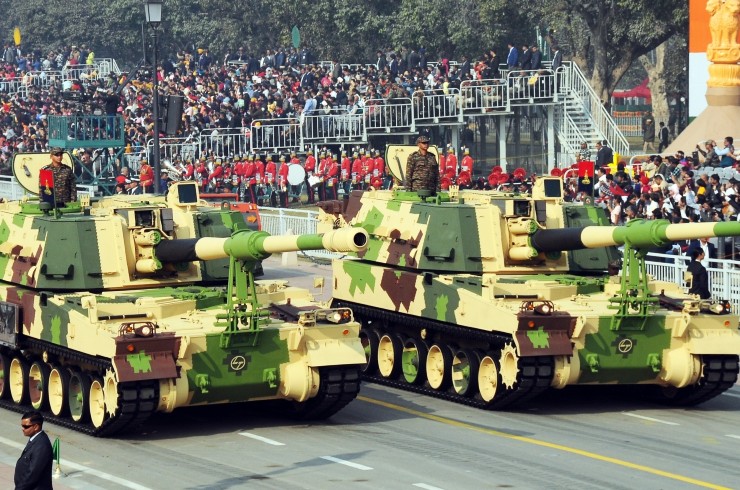
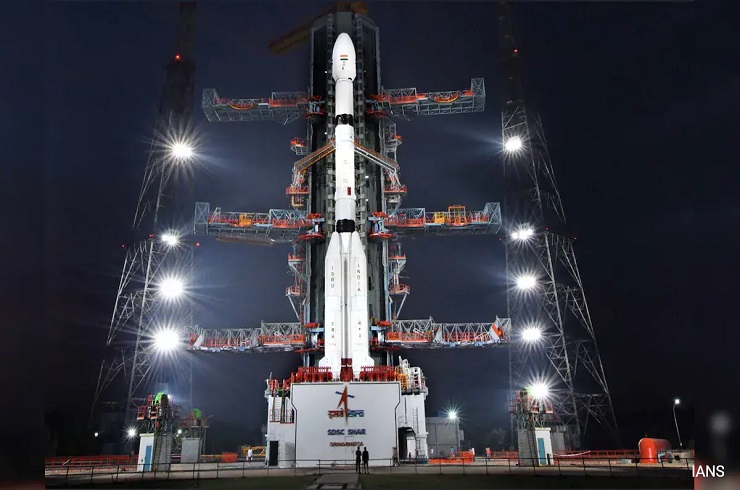
Over a longer timeframe, the progress has been even more remarkable, with defence production more than doubling since FY 2020-21, when the output stood at Rs 84,643 crore. Image Source: IANS
With an allocation of Rs 7.85 lakh crore, the defence budget has reached an unprecedented scale, reflecting the government’s assessment of a more contested and unpredictable security environment.
India’s defence production reached a historic high of Rs 1.78 lakh crore in Financial Year 2025-26, marking a significant milestone in the country’s efforts to strengthen indigenous defence manufacturing capabilities. The achievement reflects a robust year-on-year growth of 15.6 percent from the Rs 1.54 lakh crore recorded in FY 2024-25. Over a longer timeframe, the progress has been even more remarkable, with defence production more than doubling since FY 2020-21, when the output stood at Rs 84,643 crore. Compared to FY 2013-14, when domestic defence production was valued at just Rs 43,746 crore, the sector has expanded nearly fourfold, highlighting the transformational changes that have taken place in India’s defence industrial ecosystem over the past decade.
A notable feature of this growth has been the increasing participation of the private sector. While Defence Public Sector Undertakings (DPSUs) and other government-owned entities continued to dominate production, accounting for nearly 76 percent of the total output, the private sector’s contribution rose to an all-time high of around Rs 42,000 crore, representing approximately 24 percent of overall production. This marks a steady increase from its 22 percent share in the previous fiscal year and reflects the growing confidence of private industry in defence manufacturing opportunities. The rising involvement of private firms is indicative of a broader shift towards a more diversified and competitive defence production base, supported by policy reforms aimed at encouraging industry participation.
India’s Defence production (INR Crore)

Source: Department of Defence Production, Ministry of Defence
Note- Figure for FY 2025-26 has not been updated.
The expansion of domestic manufacturing capabilities has also played a crucial role in strengthening India’s defence export performance. In FY 2025-26, defence exports reached a record Rs 38,424 crore, underscoring the growing international acceptance of Indian defence products and technologies. The increasing production capacity, combined with improvements in quality standards, technological sophistication, and manufacturing efficiency, has enabled Indian companies to access new markets and strengthen their presence in existing ones.
This growth trajectory has been driven by a series of government initiatives introduced under the vision of Aatmanirbhar Bharat (Self-Reliant India). Key measures include the implementation of positive indigenisation lists that restrict imports of specific defence equipment, reforms to procurement procedures favouring domestic manufacturers, the opening of greater opportunities for private sector participation, and the promotion of innovation through dedicated defence technology and startup initiatives. These reforms have sought to reduce dependence on foreign suppliers while simultaneously creating a more vibrant domestic defence industrial base.
The record production figures highlight India’s broader strategic objective of emerging as a major global defence manufacturing hub. Beyond the economic benefits of industrial growth, employment generation, and export earnings, enhanced indigenous production strengthens national security by reducing external dependencies and ensuring greater self-sufficiency in critical defence capabilities. With sustained policy support, expanding industrial infrastructure, increased private sector involvement, and growing export demand, India’s defence manufacturing sector is expected to maintain its upward momentum and play an increasingly important role in both the country’s economic development and its strategic preparedness.
Talking about the defence exports, at present, Indian defence manufacturers from both the public and private sectors are exporting a wide range of defence equipment and systems to nearly 100 countries across the globe. This steady rise in exports signals a broader transformation in India’s defence industrial base, pointing to the gradual maturation and expansion of the country’s military-industrial complex. The significance of this shift extends beyond economic gains or the need to address mounting security challenges along India’s borders. It is closely tied to New Delhi’s larger strategic objective of consolidating its position as a major power in the international system.
India’s defence exports reached a record high of Rs 38,424 crore in Financial Year 2025-26, registering a remarkable growth of 62.66 percent over the previous year’s figure of Rs 23,622 crore. The sharp increase underscores the growing global demand for Indian-made defence equipment and reflects the success of the country’s efforts to strengthen indigenous manufacturing capabilities under the Aatmanirbhar Bharat initiative. The milestone also highlights India’s emergence as an increasingly important player in the international defence market, supported by expanding production capacity, improved technological capabilities, and a more export-oriented defence industry.
A key contributor to this achievement was the exceptional performance of Defence Public Sector Undertakings (DPSUs), whose exports surged by 151 percent during the year. DPSU exports rose from Rs 8,389 crore in FY 2024-25 to Rs 21,071 crore in FY 2025-26, accounting for the largest share of India’s total defence exports. The private sector also maintained a strong presence in overseas markets, recording exports worth Rs 17,353 crore, up from Rs 15,233 crore in the previous fiscal year, reflecting a healthy growth of 14 percent. The combined performance of public and private sector firms demonstrates the growing depth and maturity of India’s defence industrial ecosystem.
India’s Defence exports (INR Crore)

Source: Department of Defence Production, Ministry of Defence
The record export figures are the result of sustained policy support, greater industry participation, streamlined export procedures, and increasing investments in defence research and development. Indian defence manufacturers are now supplying a diverse range of products, including ammunition, artillery systems, naval platforms, aerospace components, radar systems, and electronic equipment to a growing number of countries. Beyond generating economic benefits and foreign exchange earnings, rising defence exports enhance India’s strategic influence and strengthen defence partnerships worldwide, positioning the country as a reliable supplier of military equipment and technologies in the global market.
Recently, the Defence Acquisition Council (DAC), led by Defence Minister Rajnath Singh, approved a series of major defence procurement proposals with a combined estimated value of around Rs 2.38 lakh crore. Among these are key acquisitions such as the S-400 long-range surface-to-air missile system and the overhaul of Su-30 aircraft engine aggregates. Over the course of FY26, the DAC has granted Acceptance of Necessity (AoN) for 55 proposals amounting to Rs 6.73 lakh crore, reflecting an unprecedented level of defence procurement activity.
A significant portion of these approvals is aimed at strengthening the capabilities of the Indian Air Force. This includes the procurement of Medium Transport Aircraft to replace the ageing AN-32 and IL-76 fleets, thereby enhancing the Air Force’s ability to meet strategic, tactical, and operational airlift requirements. Additional approvals cover Remotely Piloted Strike Aircraft and upgrades to existing platforms, ensuring improved operational readiness and technological advancement. The DAC has also approved the acquisition of Heavy Duty Air Cushion Vehicles, designed for versatile maritime and coastal roles. These platforms will support high-speed patrolling, reconnaissance missions, search and rescue operations, and logistics transport, thereby enhancing coastal security and operational flexibility.
The Union Budget for FY 2026–27, presented in the immediate aftermath of Operation Sindoor, marks a decisive inflection point in India’s defence planning and resource prioritisation. With an allocation of Rs 7.85 lakh crore, the defence budget has reached an unprecedented scale, reflecting the government’s assessment of a more contested and unpredictable security environment. This allocation amounts to nearly 2 percent of the estimated GDP for the forthcoming financial year and represents a substantial 15.19 percent increase over the Budget Estimates of FY 2025–26. At 14.67 percent of total Central Government expenditure, defence once again commands the largest share among all ministries, underscoring its centrality in national policy at a time of heightened geopolitical uncertainty.

Source: Union Budget Documents
A defining feature of the FY 2026–27 budget is the sharp rise in capital expenditure, which has been increased to Rs 2.19 lakh crore from Rs 1.80 lakh crore in FY 2025–26, amounting to a growth of 21.84 percent. This expansion reflects a strategic recognition that force modernisation can no longer proceed at a gradual pace, given the rapid evolution of military technologies and the increasingly blurred distinction between peace, crisis, and conflict. Out of the total capital outlay, Rs 1.85 lakh crore has been earmarked for capital acquisitions alone, marking an increase of nearly 24 percent over the previous year. This enhanced allocation is intended to support the induction of next-generation fighter aircraft, advanced naval platforms including ships and submarines, smart and precision-guided weapons, unmanned aerial systems, drones, specialist vehicles, and network-enabled battlefield systems that are critical for future multi-domain operations.
The scale of ongoing and planned acquisitions is reflected in the Ministry of Defence’s recent procurement activity. During FY 2025–26, contracts worth approximately Rs 2.10 lakh crore were concluded up to the third quarter, while Acceptance of Necessity approvals exceeding Rs 3.50 lakh crore have already been accorded. This pipeline indicates a sustained acceleration in capital procurement that is likely to continue over the medium term, driven by operational lessons, force restructuring, and the imperative to maintain technological parity with potential adversaries.