Friday, 16 Oct, 2026

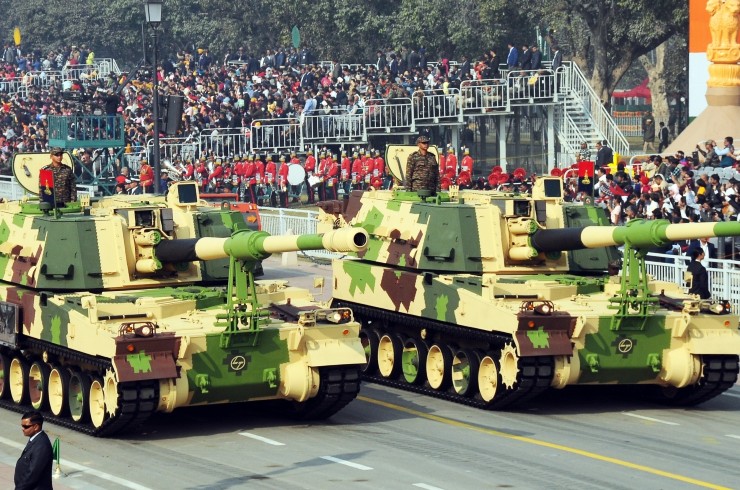
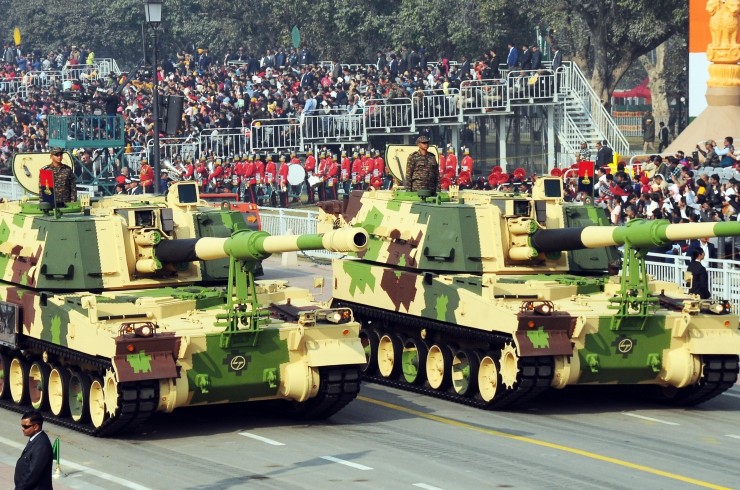
The latest AoN approvals generated an immediate positive response in financial markets, with defence-related stocks witnessing strong gains. Image Source: IANS
The latest approvals represent another major step in strengthening the operational capabilities of the Indian Army, Navy and Air Force while reinforcing the government's long-term objective of building a technologically advanced and self-reliant military.
India's defence modernisation drive has gathered significant momentum with the Defence Acquisition Council (DAC), chaired by Defence Minister Rajnath Singh, granting Acceptance of Necessity (AoN) for capital acquisition proposals worth nearly Rs 52,000 crore. The latest approvals represent another major step in strengthening the operational capabilities of the Indian Army, Navy and Air Force while reinforcing the government's long-term objective of building a technologically advanced and self-reliant military. The approvals also signal a sustained commitment to indigenous defence manufacturing, ensuring that modernisation efforts contribute not only to military preparedness but also to the growth of India's domestic defence industrial ecosystem.
For the Indian Army, the approved acquisitions cover a wide spectrum of critical combat capabilities designed to address evolving battlefield requirements. Among the most significant is the procurement of the Anti-Unmanned Aerial Vehicle Electronic Warfare System, Akash Tarang, which is intended to counter the rapidly expanding threat posed by hostile drones. With unmanned aerial systems playing an increasingly prominent role in modern conflicts, Akash Tarang is expected to provide robust electronic warfare capabilities by detecting, tracking and neutralising enemy drones before they can threaten military assets or formations.
The Council has also cleared the procurement of the Man Portable Anti-Tank Guided Missile (MPATGM), an indigenous missile system that will substantially enhance the infantry's ability to engage and destroy enemy armoured vehicles. Complementing this capability is the approval for the Medium Range Surface-to-Air Missile (MRSAM) weapon system, which will significantly strengthen India's layered air defence architecture by providing protection against aircraft, helicopters, drones and other aerial threats operating at medium ranges.
Further reinforcing battlefield survivability, the DAC has approved the acquisition of Very Short Range Air Defence Systems (V-SHORADS) equipped with advanced multi-spectral sensing technology. These systems are designed to remain effective even against sophisticated countermeasures, thereby improving protection for forward-deployed forces. In addition, Active Protection Systems for tanks will improve the survivability of India's armoured fleet by intercepting incoming anti-tank missiles and projectiles before impact. The procurement of jet-powered Kamikaze drone systems adds another important capability by providing precision strike options with enhanced electronic warfare functionality, delivering greater operational effectiveness at comparatively lower costs.
The Indian Navy's modernisation plans also received a significant boost through the approval of several key acquisitions. These include Multi Influence Ground Mines (MIGM), which will strengthen India's sea denial capabilities by limiting the movement of hostile naval forces in strategically important maritime areas. The Navy will also procure Naval Shipborne Unmanned Aerial Systems (NSUAS), enabling persistent maritime surveillance, intelligence gathering and improved situational awareness through advanced sensor technologies. Additionally, the establishment of a Land Based Testing Facility (LBTF) for Electric Propulsion Systems marks an important investment in future naval technologies. The facility will serve as a dedicated platform for testing and validating next-generation electric propulsion systems, supporting the development of more efficient and technologically advanced naval vessels.
For the Indian Air Force, the DAC has approved the acquisition of Fixed-Wing High Altitude Pseudo Satellites (FW-HAPS), a capability that bridges the gap between conventional aircraft and satellites. These platforms are capable of remaining airborne for extended durations at very high altitudes, providing continuous intelligence, surveillance and reconnaissance (ISR), secure telecommunications and remote sensing capabilities. Their long-endurance operational profile will substantially enhance the Air Force's ability to maintain persistent situational awareness over vast operational areas while reducing dependence on space-based assets for certain missions.
The latest AoN approvals generated an immediate positive response in financial markets, with defence-related stocks witnessing strong gains. Investor sentiment was buoyed by expectations that the large procurement pipeline would translate into substantial business opportunities for domestic manufacturers. Shares of companies such as Paras Defence and Space Technologies, Bharat Electronics Limited, Mazagon Dock Shipbuilders Limited and Hindustan Aeronautics Limited registered gains, while the Nifty India Defence Index also advanced, reflecting investor confidence in the sector's long-term growth prospects.
Market optimism was further reinforced after JM Financial reiterated its 'Buy' rating on Bharat Heavy Electricals Limited (BHEL). The brokerage maintained that the government's decision to permit four Chinese electrical equipment manufacturers to participate in PSU tenders for high-voltage transformers and gas-insulated switchgear would have only a limited impact on BHEL's competitive position. More importantly, the DAC's approval for the Land Based Testing Facility for Electric Propulsion Systems is viewed as a potential growth opportunity for the company, given its extensive expertise in power generation and propulsion technologies. JM Financial also expects BHEL to deliver strong financial performance during the June quarter, supported by rising revenues, improved operating margins and a return to profitability after several years of first-quarter losses.
The procurement approvals come against the backdrop of an unprecedented expansion in India's domestic defence manufacturing capabilities. Defence production reached a record Rs 1.78 lakh crore during FY 2025-26, representing a robust annual growth of 15.6 percent over the previous year's output of Rs 1.54 lakh crore. The progress becomes even more striking when viewed over a longer period. Since FY 2020-21, when defence production stood at Rs 84,643 crore, domestic output has more than doubled. Compared to FY 2013-14, when production was valued at just Rs 43,746 crore, India's defence manufacturing sector has expanded almost fourfold, reflecting the transformative impact of sustained policy reforms and industrial investments.
India’s Defence production (INR Crore)

Source: Department of Defence Production, Ministry of Defence
Note- Figure for FY 2025-26 has not been updated.
A particularly noteworthy feature of this expansion has been the growing contribution of the private sector. Although Defence Public Sector Undertakings (DPSUs) continue to account for nearly three-fourths of total production, private companies contributed approximately Rs 42,000 crore during FY 2025-26, representing around 24 percent of overall defence manufacturing. This marks a steady increase from the previous year and illustrates the increasing confidence of private industry in India's evolving defence ecosystem. Greater private participation has broadened the industrial base, encouraged competition, accelerated technological innovation and improved manufacturing efficiency, all of which are essential for sustaining long-term growth.
The strengthening of domestic manufacturing has also translated into record export performance. India's defence exports reached an all-time high of Rs 38,424 crore during FY 2025-26, reflecting growing international acceptance of Indian defence equipment, platforms and technologies. Improved manufacturing standards, enhanced product quality and expanding production capacity have enabled Indian companies to access new overseas markets while consolidating their presence in existing ones. Rising exports not only generate valuable foreign exchange earnings but also enhance India's reputation as an emerging supplier of reliable and cost-effective defence systems.
This transformation has been driven largely by the government's Aatmanirbhar Bharat initiative, which seeks to reduce dependence on imported military equipment while strengthening indigenous capabilities across the defence value chain. Policy measures such as positive indigenisation lists, procurement reforms favouring domestic manufacturers, expanded opportunities for private sector participation and dedicated support for defence innovation and start-ups have collectively reshaped the country's defence industrial landscape. These initiatives have encouraged investments in research and development, fostered technological advancement and created a more resilient domestic manufacturing ecosystem capable of meeting the armed forces' future requirements.
The latest approvals also form part of a much larger procurement cycle currently underway. During FY 2025-26 alone, the Defence Acquisition Council granted Acceptance of Necessity for 55 acquisition proposals collectively valued at approximately Rs 6.73 lakh crore, representing one of the most active procurement phases in India's defence history. A significant share of these approvals is focused on modernising the Indian Air Force, including the acquisition of Medium Transport Aircraft to replace the ageing AN-32 and IL-76 fleets. These new aircraft will substantially enhance India's strategic and tactical airlift capabilities while improving operational flexibility across diverse mission profiles.
Additional approvals include the procurement of Remotely Piloted Strike Aircraft, upgrades to existing platforms and Heavy Duty Air Cushion Vehicles capable of undertaking maritime patrol, reconnaissance, search and rescue, logistics support and rapid coastal deployment. Together, these acquisitions are intended to strengthen India's overall military preparedness across multiple operational domains while ensuring that the armed forces remain equipped to address both conventional and emerging security challenges.

Source: Union Budget Documents
The government's commitment to defence modernisation is equally evident in the Union Budget for FY 2026-27. Presented in the aftermath of Operation Sindoor, the Budget allocated a record Rs 7.85 lakh crore for defence, representing an increase of over 15 percent compared with the previous financial year. Accounting for nearly two percent of India's estimated GDP and close to 15 percent of total Central Government expenditure, defence continues to receive the largest allocation among all ministries. The increased spending reflects New Delhi's assessment of an increasingly complex regional and global security environment and underscores the importance of sustained investments in military capability, technological superiority and strategic preparedness.
The pace of procurement further highlights the scale of India's ongoing military modernisation. Contracts worth approximately Rs 2.10 lakh crore were concluded during FY 2025-26 up to the third quarter, while AoN approvals exceeding Rs 3.50 lakh crore were already in place during the same period. Combined with the latest approvals, this robust procurement pipeline indicates that capital acquisitions are likely to remain elevated over the coming years. Driven by operational lessons, evolving threat perceptions, force restructuring and the need to maintain technological parity with potential adversaries, India is steadily building a modern, self-reliant and globally competitive defence ecosystem capable of supporting both national security objectives and long-term economic growth.