Thursday, 17 Sep, 2026

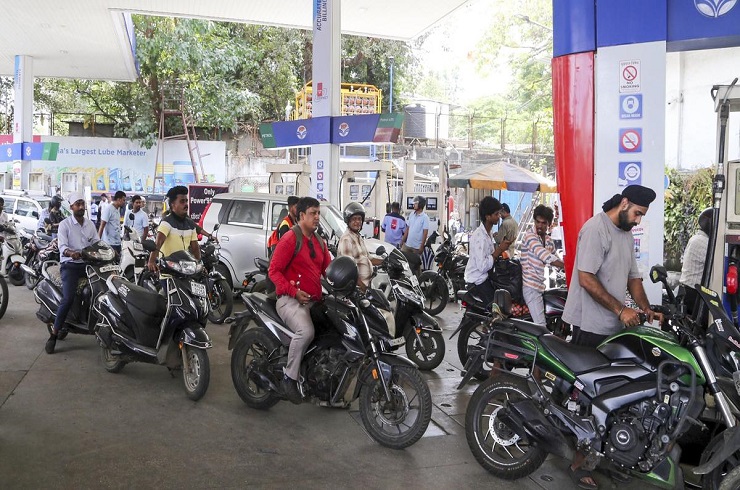
Despite the optimism surrounding E100, the transition from ethanol blending to ethanol-powered mobility presents a series of complex challenges that could slow widespread adoption.
E85 and E100 are high-ethanol fuel blends containing significantly larger proportions of anhydrous, or water-free, ethanol than conventional blended fuels.
In a significant development for India's biofuel and transportation sectors, Union Road Transport and Highways Minister Nitin Gadkari has announced that regulations permitting the use of E100 fuel for vehicles have been formally approved. The decision creates the legal and regulatory framework necessary for automobile manufacturers to develop and market flex-fuel vehicles capable of running on high-ethanol blends, marking a major expansion of India's ethanol strategy beyond conventional fuel blending programmes.
Speaking at the Sugar, Ethanol & Bio-Energy India Conference in Nagpur, Gadkari revealed that he had signed the file authorising the use of 100 per cent ethanol fuel. "Last night, at 8 pm, I signed the file, finalising the regulations to legally authorise the use of 100 per cent ethanol," he said. The announcement comes only weeks after the introduction of E85 fuel in Delhi and signals the government's intention to accelerate the transition towards alternative fuels as part of a broader effort to strengthen energy security, reduce crude oil imports, and lower carbon emissions.
The approval represents a major step beyond India's ongoing E20 programme, which focuses on blending 20 per cent ethanol with petrol. By enabling E100 fuel, the government has effectively opened the door for ethanol to emerge as a primary transportation fuel rather than merely a blending component. This places ethanol alongside electric mobility, compressed natural gas (CNG), liquefied natural gas (LNG), hydrogen and hybrid technologies in India's evolving clean transportation ecosystem.
E85 and E100 are high-ethanol fuel blends containing significantly larger proportions of anhydrous, or water-free, ethanol than conventional blended fuels. E85 contains 85 per cent ethanol and 15 per cent petrol, while E100 contains between 93 and 95 per cent ethanol. These fuels are intended for use in Flex-Fuel Vehicles (FFVs), which are designed to operate on a wide range of ethanol-petrol mixtures, from E20 to E100, without requiring any manual intervention by the driver.
Unlike conventional vehicles, FFVs are equipped with specialised sensors capable of detecting the ethanol concentration in the fuel tank. The vehicle's engine control unit automatically adjusts ignition timing, fuel injection patterns and combustion parameters to optimise performance based on the fuel composition. These vehicles also use corrosion-resistant materials and specially designed fuel-system components to withstand the higher ethanol concentrations that would otherwise damage conventional engines and fuel delivery systems.
The announcement is part of a broader and sustained push by the Union Government to transform ethanol into a key pillar of India's energy security strategy. In June 2021, the Prime Minister launched the "Roadmap for Ethanol Blending in India 2020-25," which outlined a comprehensive plan to achieve 20 per cent ethanol blending in petrol. The programme has exceeded expectations, with Public Sector Oil Marketing Companies achieving the 10 per cent blending target in August 2022, ahead of the original deadline.

Source: Ministry of Consumer Affairs, Food & Public Distribution and Ministry of Petroleum and Natural Gas
India's ethanol production capacity has expanded rapidly over the past few years. Ethanol manufacturing capacity has increased from 423 crore litres in 2019-20 to nearly 1,623 crore litres in 2024-25, reflecting substantial investments by both the sugar and grain-based distillery sectors. To facilitate this expansion, the government has introduced several policy reforms, including amendments to the Industries (Development & Regulation) Act to allow the free movement of ethanol across the country. It has also reduced the Goods and Services Tax (GST) on ethanol supplied under the Ethanol Blended Petrol Programme from 18 per cent to 5 per cent, significantly improving the economic viability of ethanol production.
According to government estimates, the ethanol blending programme has generated significant economic and environmental benefits since Ethanol Supply Year (ESY) 2014-15. The programme has helped save approximately ₹1.84 lakh crore in foreign exchange by reducing crude oil imports, enabled the substitution of nearly 302 lakh metric tonnes of crude oil, and contributed to a reduction of around 909 lakh metric tonnes of carbon dioxide emissions. These achievements are particularly important for India, which remains heavily dependent on imported crude oil and is vulnerable to global energy price volatility and supply disruptions.
Despite the optimism surrounding E100, the transition from ethanol blending to ethanol-powered mobility presents a series of complex challenges that could slow widespread adoption. The most immediate obstacle is vehicle availability. Existing E20-compatible vehicles cannot simply switch to E100 fuel. The substantially higher ethanol concentration requires extensive modifications to engine architecture, fuel injectors, pumps, seals, storage tanks and electronic control systems. This means that consumers wishing to use E100 will need dedicated flex-fuel vehicles, which are currently available only in limited numbers in the Indian market.
The development of a nationwide fuel distribution network represents another major challenge. While the government plans to make E85 fuel available at around 500 retail outlets by December 2026 and approximately 5,000 outlets by December 2027, establishing a robust E100 ecosystem will require considerably greater investment. Oil Marketing Companies will need to install specialised storage tanks, dispensing systems and transportation infrastructure capable of handling high-ethanol fuels. Ethanol's tendency to absorb moisture and its corrosive nature create additional logistical and technical requirements that are not encountered with conventional petroleum fuels.
Economic considerations could also influence consumer acceptance. Ethanol contains less energy per litre than petrol, meaning vehicles operating on E100 generally consume more fuel to travel the same distance. Although ethanol may be cheaper than petrol and can offer performance advantages in certain engine configurations due to its higher octane rating, the lower energy density could affect fuel economy and influence purchasing decisions. Consumer confidence will ultimately depend on the comparative cost of ethanol, the availability of refuelling infrastructure, and the long-term operating costs of flex-fuel vehicles.
There are also broader questions regarding feedstock availability and sustainability. India's ethanol programme has traditionally relied heavily on sugarcane-based feedstocks, although grain-based ethanol production has expanded significantly in recent years. As demand for ethanol continues to rise, policymakers will need to balance fuel production with food security concerns, agricultural sustainability and water resource management. Sugarcane cultivation is particularly water-intensive, raising concerns about the environmental implications of scaling up ethanol production in water-stressed regions. Any substantial increase in ethanol demand will therefore require careful planning to ensure that energy objectives do not come at the expense of agricultural or environmental priorities.
Automobile manufacturers, fuel retailers and consumers will all need to adapt to an evolving regulatory and technological landscape. Vehicle manufacturers must invest in new production lines and technologies, fuel retailers will need to upgrade infrastructure, and consumers will have to evaluate the economic and practical benefits of transitioning to flex-fuel vehicles. The success of E100 will therefore depend not only on regulatory approval but also on coordinated action across the automotive, energy and agricultural sectors.
Nevertheless, the approval of E100 regulations marks an important milestone in India's efforts to diversify its transportation energy mix. It reflects the government's determination to leverage domestically produced biofuels to reduce import dependence, strengthen rural economies, and support climate objectives. While significant technological, economic and infrastructure challenges remain, the decision lays the foundation for the emergence of a flex-fuel vehicle ecosystem that could play an increasingly important role in India's long-term energy transition.