Friday, 16 Oct, 2026


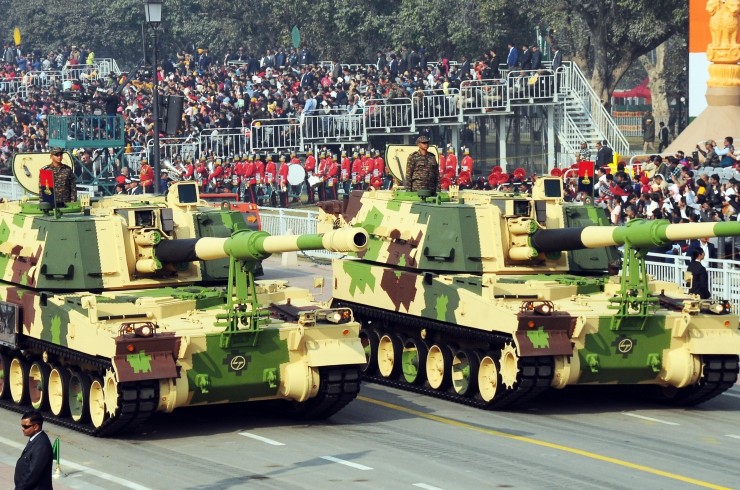
Defence exports registered a new high in FY 2025-26, reaching Rs 38,424 crore. Image Source: PIB
The consignment consists of a substantial quantity of components used in 155mm artillery ammunition, the calibre that serves as the standard for most NATO and many non-NATO artillery systems around the world.
In a major development for India’s rapidly expanding defence export industry, a large consignment of more than 60,000 units of 155mm artillery ammunition components is currently being transported for overseas shipment through Chennai Port. The scale and sophistication of the operation reflect India’s growing stature as a dependable supplier of critical munitions and defence hardware to international markets at a time when global demand for artillery ammunition remains exceptionally high.
The consignment consists of a substantial quantity of components used in 155mm artillery ammunition, the calibre that serves as the standard for most NATO and many non-NATO artillery systems around the world. These components are being shipped in specially designed 20-foot containers that comply with the International Maritime Dangerous Goods (IMDG) Code, the globally accepted framework for the safe transport of hazardous materials by sea. The containers are engineered to meet stringent safety specifications and are being moved under armed escort, ensuring a highly secure chain of custody from the manufacturing site to the port terminal.
Such meticulous planning highlights the strict protocols and regulatory safeguards that govern India’s defence exports. Every stage of the process, from packaging and documentation to transportation and port handling is carried out in accordance with international norms, underscoring India’s ability to manage sensitive military cargo with the professionalism and reliability expected by overseas customers.
This shipment is emblematic of a broader transformation underway in India’s defence industrial ecosystem. Over the past few years, Indian manufacturers, particularly private sector companies, have significantly expanded their capabilities in producing key artillery ammunition components, including shell bodies, fuzes, propellant systems, and explosive subassemblies. These firms are increasingly integrating advanced manufacturing techniques and quality assurance standards that allow them to compete effectively with established suppliers in North America and Europe.
The timing of this export surge is particularly significant. The 155mm artillery round has become one of the most sought-after categories of military ammunition globally, driven by ongoing conflicts and the urgent need among many countries to replenish depleted stockpiles. Governments and defence contractors across the world are seeking new and diversified sources of supply to reduce dependence on traditional manufacturing hubs. India, with its competitive production costs, skilled engineering base, and improving regulatory ecosystem, is emerging as an attractive alternative.
Recent contracts awarded to Indian companies for the supply of 155mm ammunition components to clients in North America and other regions underscore the momentum behind this trend. These orders, worth several million dollars, involve the export of empty shell casings, filled and unfilled fuzes, and other specialized hardware. Such deals demonstrate that India is no longer confined to the role of a defence importer but is steadily establishing itself as a credible exporter in strategically important segments of the global arms market.
The use of Chennai Port for this high-value consignment is also noteworthy. As one of India’s most capable maritime gateways, the port has developed the infrastructure and operational expertise required to handle sensitive and hazardous defence cargo efficiently. Its role in facilitating large-scale military exports points to the increasing readiness of Indian logistics and port systems to support the country’s ambitious defence manufacturing and export goals. This development aligns closely with the Government of India’s flagship initiatives such as Make in India and Atmanirbhar Bharat, which seek to strengthen domestic manufacturing, reduce reliance on imports, and position India as a major global supplier of advanced industrial and defence products. Defence exports have become a central pillar of this strategy, with policymakers actively encouraging private sector participation, technology development, and international partnerships.
As the global market for artillery ammunition continues to expand, India appears well placed to capture a larger share of this multi-billion-dollar opportunity. With increasing production capacity, adherence to international standards, and growing confidence among foreign buyers, the country is steadily moving toward becoming a significant node in the global supply chain for 155mm artillery ammunition and related systems.

Source: Department of Defence Production, Ministry of Defence
Defence exports registered a new high in FY 2025-26, reaching Rs 38,424 crore. In FY 2025-26, the private sector contributed Rs 17,330 crore to defence exports, while Defence Public Sector Undertakings accounted for Rs 21,017 crore, compared to contributions of Rs 13,968 crore and Rs 8,389 crore respectively in the previous year. Building on this upward trend, the Government has set an ambitious defence exports target of Rs 50,000 crore by 2029, reinforcing India’s growing stature as a reliable exporter of defence equipment and technologies.
At present, Indian defence manufacturers from both the public and private sectors are exporting a wide range of defence equipment and systems to nearly 100 countries across the globe. This steady rise in exports signals a broader transformation in India’s defence industrial base, pointing to the gradual maturation and expansion of the country’s military-industrial complex. The significance of this shift extends beyond economic gains or the need to address mounting security challenges along India’s borders. It is closely tied to New Delhi’s larger strategic objective of consolidating its position as a major power in the international system.
The development of stronger indigenous defence capabilities enhances India’s ability to project influence, deepen strategic partnerships, and reduce long-term dependence on foreign suppliers. A more capable and competitive defence industry also provides India with an important instrument of statecraft, enabling it to support friendly countries, shape regional security dynamics, and counterbalance rival powers through both deterrence and cooperation. In this sense, defence exports are not merely commercial transactions but also tools that can reinforce India’s geopolitical standing and strategic autonomy.
At the same time, despite the impressive growth in defence exports achieved in recent years, significant hurdles remain before India can be counted among the world’s leading arms suppliers. These include intense competition from established global players, the need to consistently deliver high-end and combat-proven systems, challenges related to scale, after-sales support, and long-term sustainment, as well as the necessity of aligning export policies with foreign policy priorities. Addressing these constraints will be critical if India is to translate its expanding defence industrial capacity into enduring influence and credibility in the global arms market.