Friday, 16 Oct, 2026

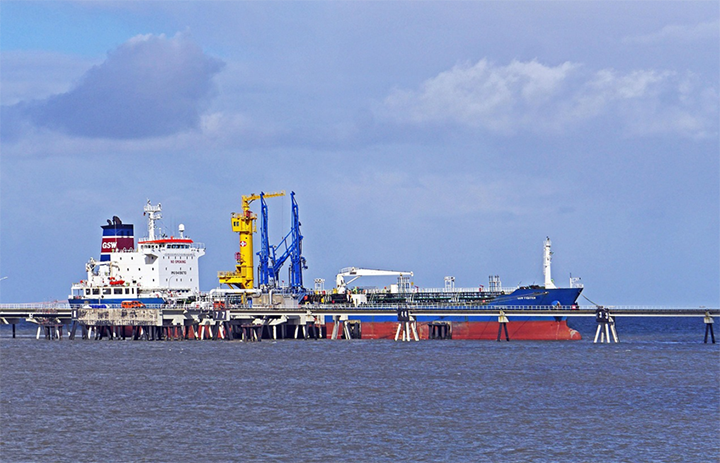
Photo courtesy: Pixabay
For now, the message is clear: crude will remain essential in the near term, anchoring energy supply. But over time, India’s energy security will increasingly hinge on solar power, nuclear capacity and innovation, reducing reliance on imported oil
The ongoing West Asian conflict—particularly the escalation involving Iran—has once again exposed India’s structural vulnerability to imported energy. With nearly 85 per cent of its crude oil needs met through imports, any disruption in supply chains or spike in prices transmits quickly into domestic inflation, fuel costs and fiscal stress. Yet, even as oil markets turn volatile, a parallel shift is underway: India is accelerating its transition towards solar, renewables and nuclear energy to structurally reduce its dependence on crude imports.
The immediate impact of the conflict has been visible in fuel markets. Concerns over disruptions in the Strait of Hormuz—a critical artery through which nearly a fifth of global oil supplies pass—have tightened global supply expectations. The International Energy Agency recently described the current disruption as “unprecedented”, underscoring the scale of uncertainty confronting energy-importing nations like India.
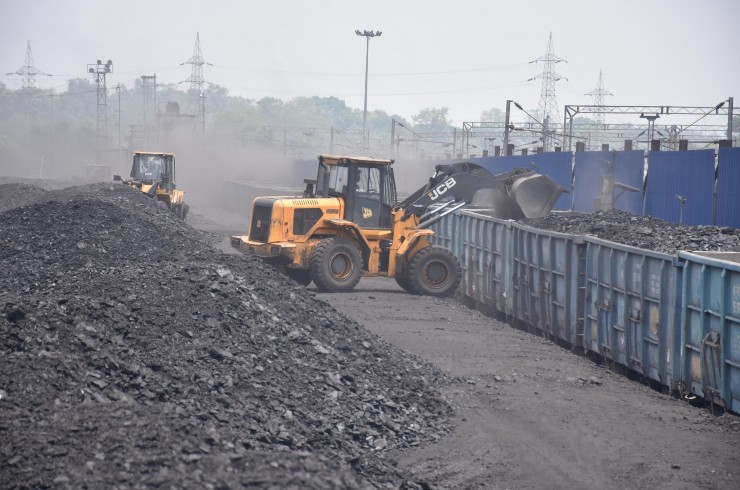
However, unlike previous oil shocks, India’s power sector has remained relatively insulated. A key reason is coal. Domestic coal production has crossed the landmark one billion tonnes for the second consecutive year in 2026, sharply reducing reliance on imports. Data from the Ministry of Coal show that while India produced 639 million tonnes (MT) of coal in FY16 with imports at 204 MT (32 per cent of output), production rose to over 1,000 MT in FY25, with imports moderating to about 244 MT—just 23 per cent of domestic output.

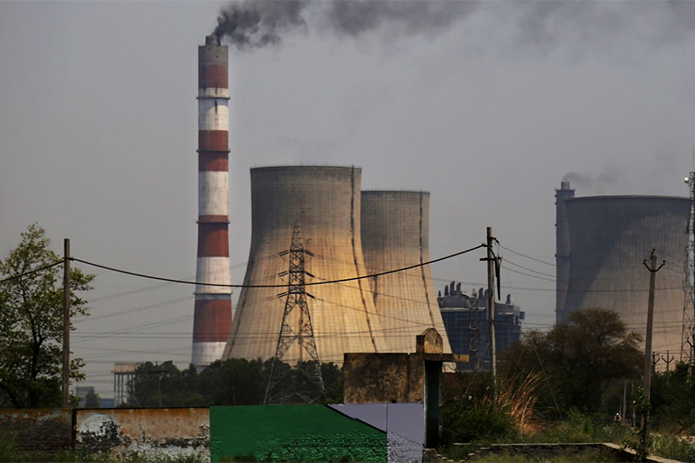
This expansion has strengthened energy security in electricity generation, where coal continues to dominate. According to the Central Electricity Authority, thermal sources still accounted for nearly 74 per cent of power generation in February 2026, despite representing less than half of installed capacity. In contrast, renewables—while comprising over 50 per cent of installed capacity—contributed only around 23 per cent of actual generation, reflecting intermittency challenges.
Yet, it is precisely this crisis that is accelerating India’s longer-term structural shift. Policymakers are increasingly viewing renewable energy not just as a climate imperative but as a strategic necessity. Solar capacity additions have surged over the past decade, supported by falling costs and government incentives. India’s total non-fossil fuel capacity has already crossed 210 GW in early 2025 and is projected to exceed 500 GW by 2030 under official plans.
Prime Minister Narendra Modi has repeatedly emphasised solar adoption as a mass movement, with rooftop solar and decentralised energy systems gaining traction. The economic logic is compelling: every unit of solar power generated domestically displaces imported fossil fuels, insulating the economy from external shocks.
Beyond solar and wind, nuclear energy is re-emerging as a critical pillar of India’s energy diversification strategy. Unlike intermittent renewables, nuclear power provides stable baseload electricity, making it an attractive complement in a decarbonising grid. India aims to expand its nuclear capacity significantly over the next decade, aligning with its broader goal of achieving net-zero emissions by 2070.
Simultaneously, alternative fuels are gaining policy momentum. India has ramped up ethanol blending in petrol, expanded compressed biogas programmes, and unveiled an ambitious green hydrogen roadmap. Government estimates indicate a potential $67 billion investment pipeline in hydrogen by 2030, aimed at reducing dependence on imported liquefied natural gas and oil in industrial sectors.
The conflict has also sharpened focus on upstream exploration. India plans to double its oil and gas exploration acreage from 0.5 million square kilometres to 1 million by 2030, including new offshore developments. While these efforts may not eliminate import dependence, they can moderate it over time.

However, structural realities remain. Despite diversification efforts, India’s oil demand is expected to continue rising, driven by economic growth, urbanisation and mobility needs. Projections by the International Energy Agency suggest that India’s oil demand could increase from about 5.6 million barrels per day in 2024 to around 6.6 million barrels per day by 2030, making it the largest contributor to global demand growth.
This underscores a crucial point: the transition away from crude imports will be gradual, not abrupt. Even by the end of the decade, India is likely to import over four-fifths of its oil requirements. What will change, however, is the composition of its energy mix. The share of oil in final energy consumption is expected to decline as electrification, renewables and alternative fuels gain ground.
The current geopolitical crisis is also prompting a rethink of energy security infrastructure. Experts have flagged gaps such as the absence of strategic LPG reserves, limited crude storage capacity and over-reliance on specific maritime routes. Strengthening strategic reserves, diversifying suppliers and enhancing naval protection for energy shipments are emerging as policy priorities.
At a broader level, the Iran-linked disruption marks a turning point in India’s energy strategy. It reinforces the need to move beyond reactive measures—such as diversifying crude suppliers—to a more fundamental shift towards domestic, sustainable and resilient energy systems.
In effect, the crisis is accelerating an ongoing transition. Coal continues to anchor short-term stability, but the future lies in scaling up renewables, nuclear and alternative fuels. If executed effectively, this shift could gradually reduce India’s exposure to oil shocks, even as its economy expands.
For now, the message is clear: while crude will remain indispensable in the near term, India’s long-term energy security will increasingly be powered not by imported oil, but by sunlight, atoms and innovation.