Friday, 16 Oct, 2026

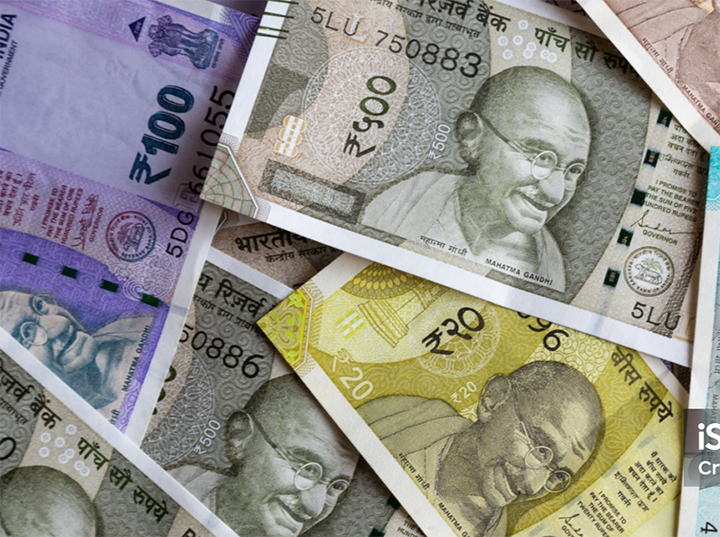
Photo courtesy: Pixabay
The gap between India’s top private firm and global leaders remains stark. OpenAI leads with a valuation of $852 billion, followed by SpaceX at $400 billion and Anthropic at $350 billion, with ByteDance, Databricks and xAI also far ahead
India’s presence in the global league of high-value private companies remains limited, but a new ranking underscores both its progress and its constraints in the venture-backed economy. Reliance Retail has emerged as the country’s most prominent player, ranking seventh among the world’s top 100 privately held, venture capital-backed companies with a post-money valuation of over $100 billion, as reported by Business Standard.
The ranking, compiled by the Venture Capital Initiative at Stanford Graduate School of Business using data up to January 2026, places the Mukesh Ambani-led retailer among a small group of hectacorns companies valued above $100 billion. It is one of just seven firms globally to cross that threshold.
Yet the gap between India’s top private company and global leaders remains striking. OpenAI tops the list with a post-money valuation of $852 billion following a recent funding round, followed by SpaceX at $400 billion and Anthropic at $350 billion. Other major names include ByteDance at $300 billion, Databricks at $134 billion and xAI at $113 billion.

Reliance Retail stands out not only as India’s most valuable private company but also as the only retail business among the top seven globally. Its valuation reflects strong backing from global investors such as Qatar Investment Authority, Abu Dhabi Investment Authority, KKR, Silver Lake, GIC, TPG and Mubadala, highlighting the scale of foreign capital flowing into India’s consumer market.
Beyond Reliance Retail, India has just two other companies in the top 100. NSE India ranks 27th with a valuation of $24 billion, while Tata EV Mobility is placed 93rd at $9 billion. Together, the three Indian companies have a combined post-money valuation of $133 billion.
This aggregate figure highlights India’s relative position in the global hierarchy. China, with 21 companies in the top 100, accounts for a combined valuation of $634 billion nearly five times India’s total. The US remains dominant, hosting 65 of the top 100 companies, while the UK and India have three each and Germany has two.
The study draws on a broader universe of more than 1,700 privately held unicorns with a combined valuation of $7.3tn. The top 100 alone account for $3.7 trillion more than half of the total. Within this, the top three companies OpenAI, SpaceX and Anthropic represent roughly one-third of the value, underscoring the concentration of capital in a narrow set of technology-driven firms.
Artificial intelligence is a defining theme. Two of the three most valuable companies are AI-focused, while several others operate in adjacent technology segments. This reflects investor preference for scalable, high-margin platforms with global reach areas where India still has relatively few players at comparable scale.
The positioning of India’s other entrants offers further insight. NSE India’s valuation exceeds that of Epic Games at $23 billion and Perplexity at $20 billion. The latter has an Indian-origin co-founder, Aravind Srinivas, highlighting the global footprint of Indian talent even when companies are not headquartered in India.
Similarly, Tata EV Mobility’s valuation is comparable to Neuralink at $10 billion and matches that of HKC Corporation at $9 billion. These comparisons suggest that while Indian firms are gaining ground in emerging sectors such as electric mobility, they remain clustered in the lower tiers of the global valuation spectrum.
The broader picture is one of uneven participation. India’s consumer market and financial infrastructure have produced large-scale businesses such as Reliance Retail and NSE India. However, the country has yet to build a comparable pipeline of high-value technology firms, particularly in frontier sectors such as artificial intelligence, where valuations have surged.
This gap is partly structural. Venture capital flows into India, while significant, remain smaller than those into the US and China. Regulatory complexity, capital constraints and the relative maturity of domestic markets also shape the pace at which companies can scale.
At the same time, Reliance Retail’s presence in the top tier points to a distinct model of value creation driven by domestic consumption and backed by large conglomerates rather than pure venture-led innovation. Whether this model can produce more $100 billion companies remains uncertain.
For now, India’s footprint in the global private company landscape is expanding but still modest. The data underline both the progress made and the distance yet to be covered, particularly in sectors attracting the bulk of global capital.