Friday, 16 Oct, 2026

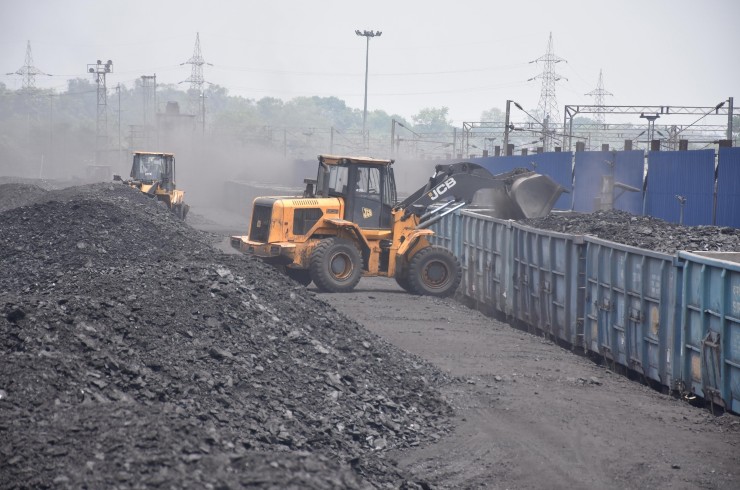
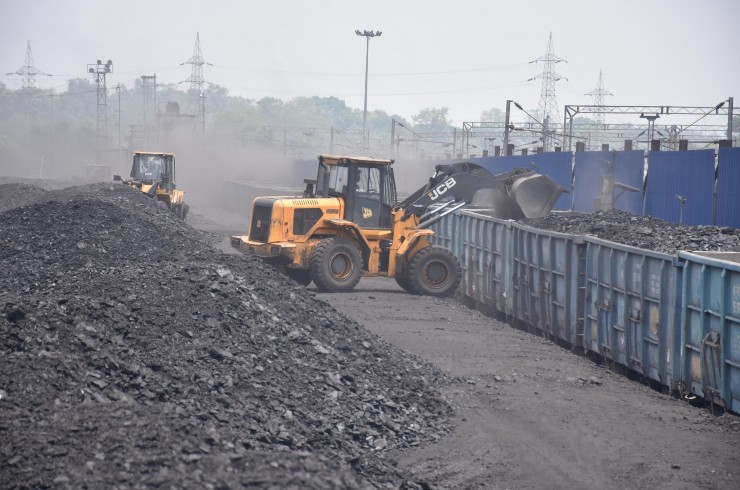
Sustained growth in coal production has played a vital role in meeting rising energy demands, while also enabling coal-based thermal power plants to maintain historically high stock levels. Image Source: IANS
As of March 31, 2026, coal production from captive and commercial blocks reached 210.46 MT, representing a strong year-on-year increase of 10.22 percent compared to 190.95 MT in the previous financial year.
The Ministry of Coal has identified FY 2025–26 as a defining phase in the evolution of India’s coal sector, particularly due to the unprecedented performance of captive and commercial mining operations. For the first time, the combined output and dispatch from these mines has crossed the 200 million tonnes (MT) threshold, reflecting a major advancement in operational scale, efficiency, and their contribution to the country’s energy ecosystem.

Source: Ministry of Coal
As of March 31, 2026, coal production from captive and commercial blocks reached 210.46 MT, representing a strong year-on-year increase of 10.22 percent compared to 190.95 MT in the previous financial year. Dispatch volumes also rose significantly to 204.61 MT, marking a growth of 7.35 percent over the 190.42 MT recorded in FY 2024–25. These achievements highlight improvements in mining efficiency, better logistics coordination, and the sector’s enhanced capability to meet growing domestic energy requirements. A notable milestone was also achieved on March 20, 2026, when India crossed the landmark of 1 billion tonne (BT) coal production for the second consecutive year, underscoring the country’s increasing self-reliance in energy production and its ability to ensure a stable fuel supply for key industries.

Source: Ministry of Coal
Sustained growth in coal production has played a vital role in meeting rising energy demands, while also enabling coal-based thermal power plants to maintain historically high stock levels. This progress reflects strong planning, effective execution, and better coordination across the entire coal value chain, contributing positively to the nation’s broader economic growth. In FY 2024–25, India’s total coal production reached a provisional 1047.57 MT, up from 997.83 MT in FY 2023–24, registering a growth of 4.99 percent.
At the same time, coal imports have shown a notable decline, falling by 8.4 percent to 183.42 MT during April–December 2024, compared to 200.19 MT in the corresponding period of the previous year. This reduction resulted in foreign exchange savings of approximately $5.43 billion (₹42,315.7 crore). The non-regulated sector experienced an even sharper drop in imports at 12.01 percent, while imports for blending purposes by thermal power plants declined by 29.8 percent, despite a 3.53 percent increase in coal-based power generation. These trends indicate a growing shift toward domestic sourcing and improved supply management.
Government-led initiatives such as commercial coal mining and the Mission Coking Coal program have contributed to a 6.11 percent rise in domestic coal output during this period, further reducing dependence on imports. Despite these gains, coal continues to be indispensable for core industries like power, steel, and cement. However, domestic shortages of certain types of coal, especially coking coal and high-grade thermal coal, mean that imports remain necessary to bridge the gap.
Coal also plays a crucial role in India’s transportation economy, particularly for the railways. It accounts for nearly 49 percent of total freight income, contributing around ₹82,275 crore in FY 2022–23, which is more than one-third of the railways’ total earnings. In addition, the coal sector generates over ₹70,000 crore annually for central and state governments through royalties, taxes, and other levies, supporting infrastructure development and socio-economic progress in mining regions.
To further boost domestic production, the Ministry of Coal has introduced several measures. These include regular monitoring to accelerate coal block development, amendments to the Mines and Minerals (Development and Regulation) Act, 2021, which allow captive mine operators to sell up to 50 percent of their output in the open market after meeting their own requirements, and the establishment of a Single Window Clearance system to streamline approvals. A Project Management Unit has also been set up to assist coal block allottees in navigating regulatory processes and expediting mine operationalization.
Efforts to reduce import dependence have also focused on improving domestic coal availability. The Annual Contracted Quantity for power plants has been restored to 100 percent of normative requirements, compared to earlier reduced levels for coastal and non-coastal plants. Long-term supply security has been strengthened by extending the tenure of coking coal linkages for the non-regulated sector up to 30 years. Since 2022, coal companies have been directed to fully meet the requirements of existing linkage holders in the power sector, irrespective of their contracted quantities, further reducing reliance on imports.
In addition, the government has launched a dedicated Coking Coal Mission aimed at increasing domestic production for the steel sector. Imported coal-based power plants have also been allowed to procure coal under the Revised SHAKTI Policy, 2025, which is expected to ease their dependence on imported fuel.
Overall, coal continues to serve as the backbone of India’s industrial economy, supporting critical sectors and ensuring energy security. While the country has made significant progress in enhancing domestic production and reducing imports, challenges remain in meeting the demand for specific coal grades. To address this, the government is pursuing long-term strategies focused on expanding production capacity, improving resource quality, and strengthening the overall coal supply chain in alignment with India’s broader energy security goals.