Sunday, 25 Oct, 2026

AFP
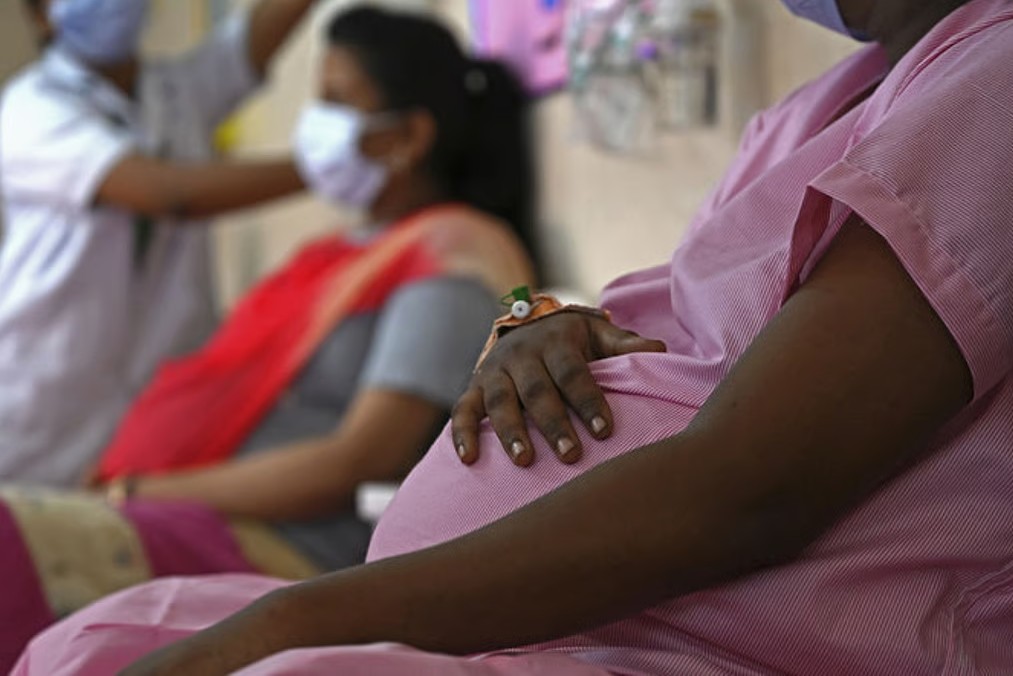
Nearly 2.4 lakh women died globally in 2023 due to pregnancy-related causes, with India accounting for about 24,700 of these deaths. A new Lancet study shows that while maternal mortality has declined over the decades, progress has slowed significantly in recent years.
A recent study published in The Lancet has flagged a slowdown in global progress on reducing maternal deaths, with India continuing to remain one of the highest-burden countries. The Global Burden of Disease 2023 analysis estimates that around 2.4 lakh women died globally in 2023 due to pregnancy and childbirth-related causes, with India accounting for nearly 24,700 deaths, or roughly one in every ten maternal deaths worldwide.
India’s long-term trend shows a significant decline, but the pace has begun to slow. Maternal deaths have reduced from about 1.19 lakh in 1990 to 36,900 in 2015 and further to 24,700 in 2023, while the maternal mortality ratio (MMR) has dropped from 508 in 1990 to 116 deaths per one lakh live births in 2023. Despite these gains, India still falls short of the Sustainable Development Goal (SDG) target of bringing MMR below 70 by 2030. According to the study, India remains in the 100–140 MMR bracket, alongside countries such as Ethiopia, Nigeria and Pakistan, even as 104 out of 204 countries globally have not yet met the SDG threshold.
The global picture reflects a similar slowdown. The MMR stood at around 190 deaths per one lakh live births in 2023, down from over 320 in 1990, but still nearly three times higher than the SDG target. While progress accelerated between 2000 and 2015, it has since plateaued or reversed in several regions. Maternal mortality also remains concentrated, with five countries- India, Nigeria, Ethiopia, Pakistan and Cameroon- accounting for 36% of global deaths, underlining the unequal burden across regions.
A large share of maternal deaths continues to arise from preventable causes. The study finds that haemorrhage and hypertensive disorders together account for over 40% of maternal deaths globally, and an even higher share in India. In India specifically, haemorrhage alone accounted for around 33.7% of maternal deaths in 2023, down from 45% in 1990, while deaths due to hypertensive disorders have increased to about 12.1% from 10% over the same period. Other causes include infections, unsafe abortions and complications during labour, often worsened by delays in accessing care and gaps in service quality.

Within India, national averages conceal sharp regional disparities. According to the Sample Registration System (SRS) data, India’s MMR declined from 122 in 2015–17 to 88 in 2021–23, but several large states continue to lag behind. Assam’s MMR dropped from 215 to 110, while Uttar Pradesh improved from 197 to 141, both still well above the national average. States such as Odisha (153), Chhattisgarh (146), Madhya Pradesh (142) and Uttar Pradesh (141) remain far from the SDG target. In contrast, southern states have performed significantly better, with Kerala and Andhra Pradesh at 30, Tamil Nadu at 35, Telangana at 59 and Karnataka at 68.
India’s earlier gains were driven by improvements in healthcare access, particularly the rise in institutional deliveries, which increased to 88.6% in 2019–21 from 78.9% in 2015–16, alongside expanded antenatal care and public health programmes. However, recent trends suggest that structural issues- including uneven access, gaps in quality of care and delays in treatment- are now limiting further progress. The Covid-19 pandemic also disrupted maternal health services, contributing to a temporary rise in deaths during 2020 and 2021.
At the same time, experts point out that India’s large population, with over 23 million births annually, makes comparisons based on absolute deaths less meaningful, even though the burden remains significant. Differences in estimation methods, such as between global datasets and SRS figures (which place India’s MMR at around 80–88 in recent years), further highlight the complexity of measurement.
With less than five years remaining to meet the SDG target, the findings suggest that India would need to accelerate the pace of reduction substantially. Strengthening primary healthcare systems, improving emergency obstetric care and extending postnatal care beyond the immediate postpartum period are likely to be critical.