Friday, 16 Oct, 2026


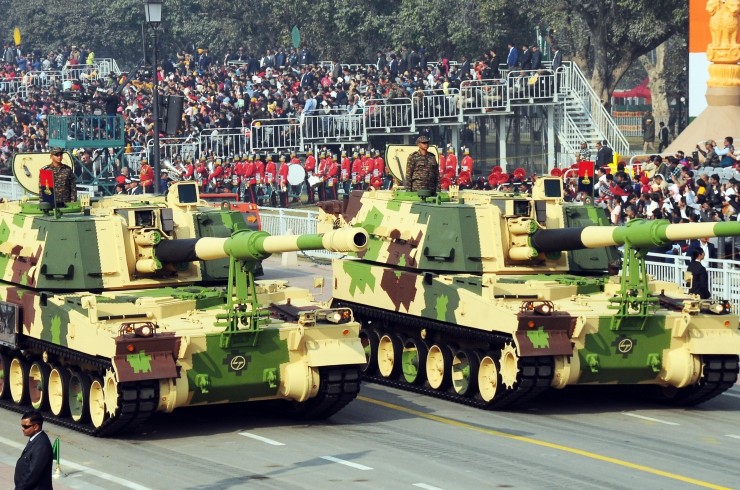
India’s defence production sector has also witnessed substantial growth, reaching a record Rs 1.54 lakh crore in FY 2024–25. Image Source: PIB
In terms of financial progress, the Ministry of Defence has signed capital procurement contracts for 503 proposals worth Rs 2.28 lakh crore during the current fiscal year.
The Defence Acquisition Council (DAC), led by Defence Minister Rajnath Singh, has approved a series of major defence procurement proposals with a combined estimated value of around Rs 2.38 lakh crore. Among these are key acquisitions such as the S-400 long-range surface-to-air missile system and the overhaul of Su-30 aircraft engine aggregates. Over the course of FY26, the DAC has granted Acceptance of Necessity (AoN) for 55 proposals amounting to Rs 6.73 lakh crore, reflecting an unprecedented level of defence procurement activity.
A significant portion of these approvals is aimed at strengthening the capabilities of the Indian Air Force. This includes the procurement of Medium Transport Aircraft to replace the ageing AN-32 and IL-76 fleets, thereby enhancing the Air Force’s ability to meet strategic, tactical, and operational airlift requirements. Additional approvals cover Remotely Piloted Strike Aircraft and upgrades to existing platforms, ensuring improved operational readiness and technological advancement. The DAC has also approved the acquisition of Heavy Duty Air Cushion Vehicles, designed for versatile maritime and coastal roles. These platforms will support high-speed patrolling, reconnaissance missions, search and rescue operations, and logistics transport, thereby enhancing coastal security and operational flexibility.
In terms of financial progress, the Ministry of Defence has signed capital procurement contracts for 503 proposals worth Rs 2.28 lakh crore during the current fiscal year. By December 2025, contracts worth Rs 1.82 lakh crore had already been finalized, with approximately 80 percent of the capital acquisition budget, around Rs 1.2 lakh crore, utilized. This indicates a rapid pace of spending focused on modernisation and capability enhancement. Overall capital expenditure has reached about 76 percent, covering not just acquisitions but also infrastructure development, land purchases, and research and development initiatives.
To sustain this momentum, the government has introduced several reforms to streamline procurement processes and reduce delays. These include simplifying the iDEX framework, easing defence export regulations, upgrading the Defence EXIM Portal, improving policies related to technology transfer, and decentralizing decision-making through revised financial delegation and procurement guidelines.
India’s Defence production

Source: Department of Defence Production, Ministry of Defence
India’s defence production sector has also witnessed substantial growth, reaching a record Rs 1.54 lakh crore in FY 2024–25. This marks an 18 percent increase from the previous year and nearly doubles the production level recorded in FY 2019–20. Public sector undertakings continue to dominate, contributing about 77 percent of total output, while the private sector accounts for 23 percent. Notably, the private sector’s share has been steadily rising, indicating its growing importance in the defence manufacturing ecosystem. Building on this upward trend, the government has set an ambitious goal of increasing defence production to Rs 3 lakh crore by 2029, signaling a strong push toward self-reliance and expansion of domestic defence capabilities.
The Union Budget for FY 2026–27, presented in the immediate aftermath of Operation Sindoor, marks a decisive inflection point in India’s defence planning and resource prioritisation. With an allocation of Rs 7.85 lakh crore, the defence budget has reached an unprecedented scale, reflecting the government’s assessment of a more contested and unpredictable security environment. This allocation amounts to nearly 2 percent of the estimated GDP for the forthcoming financial year and represents a substantial 15.19 percent increase over the Budget Estimates of FY 2025–26. At 14.67 percent of total Central Government expenditure, defence once again commands the largest share among all ministries, underscoring its centrality in national policy at a time of heightened geopolitical uncertainty.

Source: Union Budget Documents
The enhanced outlay goes well beyond routine expenditure for salaries, maintenance, and incremental modernisation. A significant portion of the increase has been necessitated by emergency procurements undertaken following Operation Sindoor, as the Armed Forces sought to rapidly replenish stocks of arms, ammunition, and critical platforms under both capital and revenue heads. These procurements highlighted the enduring requirement for flexibility and fiscal headroom in defence budgeting, especially in scenarios involving short-notice operations and prolonged force deployment.
A defining feature of the FY 2026–27 budget is the sharp rise in capital expenditure, which has been increased to Rs 2.19 lakh crore from Rs 1.80 lakh crore in FY 2025–26, amounting to a growth of 21.84 percent. This expansion reflects a strategic recognition that force modernisation can no longer proceed at a gradual pace, given the rapid evolution of military technologies and the increasingly blurred distinction between peace, crisis, and conflict. Out of the total capital outlay, Rs 1.85 lakh crore has been earmarked for capital acquisitions alone, marking an increase of nearly 24 percent over the previous year. This enhanced allocation is intended to support the induction of next-generation fighter aircraft, advanced naval platforms including ships and submarines, smart and precision-guided weapons, unmanned aerial systems, drones, specialist vehicles, and network-enabled battlefield systems that are critical for future multi-domain operations.
The scale of ongoing and planned acquisitions is reflected in the Ministry of Defence’s recent procurement activity. During FY 2025–26, contracts worth approximately Rs 2.10 lakh crore were concluded up to the third quarter, while Acceptance of Necessity approvals exceeding Rs 3.50 lakh crore have already been accorded. This pipeline indicates a sustained acceleration in capital procurement that is likely to continue over the medium term, driven by operational lessons, force restructuring, and the imperative to maintain technological parity with potential adversaries.

Source: Union Budget Documents
The emphasis on domestic procurement has broader economic and strategic implications. Increased participation of Indian industry in defence production is expected to generate multiplier effects across ancillary sectors, including metallurgy, electronics, propulsion, software, and advanced materials. It also contributes to employment generation and skill development while strengthening supply-chain resilience. Over time, this approach is intended to transform India from a predominantly import-dependent military power into a country with a robust and competitive defence industrial base capable of sustaining prolonged operations and supporting future force modernisation.
On the revenue side, the defence budget has made a provision of Rs 3,65,478.98 crore, representing a 17.24 percent increase over FY 2025–26. Of this, Rs 1,58,296.98 crore has been allocated for operational and sustenance-related expenditure, ensuring that the Armed Forces retain high levels of readiness, mobility, and endurance. The remaining allocation caters to salaries and allowances, reflecting the continued importance of personnel welfare in a force that remains manpower-intensive even as it adopts greater automation and technological sophistication.
India’s Defence Exports

Source: Department of Defence Production, Ministry of Defence
Talking about the defence exports, at present, Indian defence manufacturers from both the public and private sectors are exporting a wide range of defence equipment and systems to nearly 100 countries across the globe. This steady rise in exports signals a broader transformation in India’s defence industrial base, pointing to the gradual maturation and expansion of the country’s military-industrial complex. The significance of this shift extends beyond economic gains or the need to address mounting security challenges along India’s borders. It is closely tied to New Delhi’s larger strategic objective of consolidating its position as a major power in the international system.
The development of stronger indigenous defence capabilities enhances India’s ability to project influence, deepen strategic partnerships, and reduce long-term dependence on foreign suppliers. A more capable and competitive defence industry also provides India with an important instrument of statecraft, enabling it to support friendly countries, shape regional security dynamics, and counterbalance rival powers through both deterrence and cooperation. In this sense, defence exports are not merely commercial transactions but also tools that can reinforce India’s geopolitical standing and strategic autonomy.