Friday, 23 Oct, 2026


Photo courtesy: Pixabay
A weak monsoon can hit rural incomes and consumption, a key growth driver, as lower farm output curbs demand for consumer goods, tractors and two-wheelers
The inflation trajectory and rural economy could face fresh pressure this year after the India Meteorological Department (IMD) signalled a weaker-than-usual monsoon, raising concerns over food prices and agricultural output.
The IMD has forecast that the southwest monsoon in 2026 is likely to be 92 per cent of the Long Period Average (LPA), placing it in the “below normal” category. If realised, this would mark the first sub-par monsoon since 2023 and comes with an error margin of plus/minus 5 per cent, leaving room for further downside risks.
The projection is largely linked to the expected emergence of El Niño conditions during the June–September season, typically associated with weaker rainfall over India. The IMD also flagged that most regions—barring parts of the Northeast, Northwest, and southern peninsula—are likely to receive deficient precipitation.
With the LPA pegged at 87 cm, the forecast implies actual rainfall of roughly 80 cm this season. The IMD assigns a 35 per cent probability of a deficient monsoon (below 90 per cent of LPA) and a 31 per cent chance of below-normal rainfall, indicating a skew toward weaker outcomes.
Inflation risks rise
For policymakers, the bigger concern lies in inflation. A weaker monsoon directly affects crop output, particularly in rain-fed areas, and can trigger food price volatility—a key driver of India’s overall inflation.
While past trends show that below-normal rainfall does not automatically translate into poor harvests, the distribution and timing of rains remain critical. Uneven rainfall can damage sowing cycles and reduce yields even if aggregate rainfall appears adequate.

The risks are especially pronounced for pulses and oilseeds, which are largely cultivated in non-irrigated regions. Lower output in these categories could push up domestic prices and increase reliance on imports, widening the agricultural trade deficit.
Higher pulses and edible oil prices have historically had a disproportionate impact on retail inflation, given their weight in household consumption baskets. Any sustained increase could complicate the Reserve Bank of India’s efforts to keep inflation within its 4 per cent target band.
Rural demand at risk
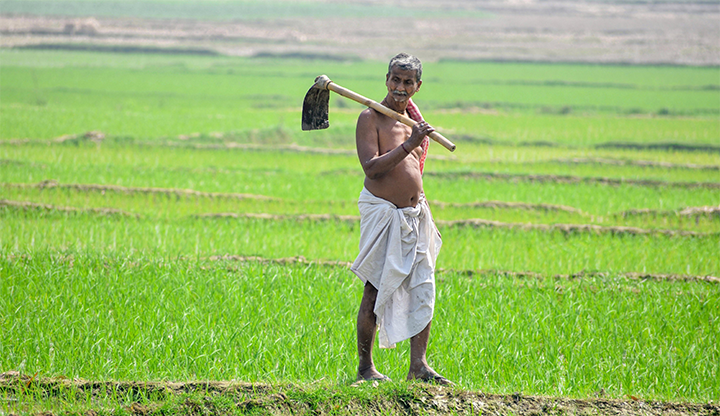
Beyond inflation, a weak monsoon could weigh on rural incomes and consumption, which remain a key pillar of India’s growth story. Agriculture still employs a large share of the workforce, and subdued farm output often translates into weaker demand for consumer goods, tractors, and two-wheelers.
That said, the structural impact of monsoon variability has reduced over time. Irrigation coverage has improved from 49.3 per cent to 55 per cent of the Gross Cropped Area (GCA) between FY16 and FY21, providing a partial buffer against rainfall shocks.
Still, nearly half of India’s farmland remains rain-dependent, leaving large segments of the rural economy exposed to weather volatility. Planning becomes more critical in a below-normal monsoon year, an industry executive noted, adding that crops such as paddy, cotton, pulses, and oilseeds will depend heavily on rainfall distribution rather than just aggregate levels.
Limited buffers
There are, however, some mitigating factors. The IMD expects the Indian Ocean Dipole (IOD) to turn positive toward the latter part of the monsoon season, which could support rainfall and offset some of the impact of El Niño.
Additionally, lower-than-normal snow cover in the Northern Hemisphere during January–March may work in India’s favour. Historically, reduced snow cover has shown an inverse relationship with monsoon intensity, potentially aiding rainfall.
Even so, these supportive factors are uncertain and may only partially counterbalance the broader El Niño effect.
Policy implications
For policymakers, the forecast raises the stakes ahead of the kharif season. A combination of food supply management, buffer stock releases, and import policy adjustments may be required to contain price pressures if rainfall underperforms.
The government may also need to stay vigilant on rural support measures to cushion any hit to farm incomes, particularly if uneven rainfall disrupts sowing patterns.
The IMD is expected to release an updated forecast in late May, including the likely onset date of the monsoon—an event closely tracked by markets, policymakers, and businesses alike.
A fragile balance
India’s economy has become more resilient to monsoon shocks over the years, but it remains far from immune. With inflation risks already sensitive to food prices, a below-normal monsoon could once again test the delicate balance between price stability and growth momentum.
Much will depend not just on how much it rains—but when and where it does.