Sunday, 20 Sep, 2026

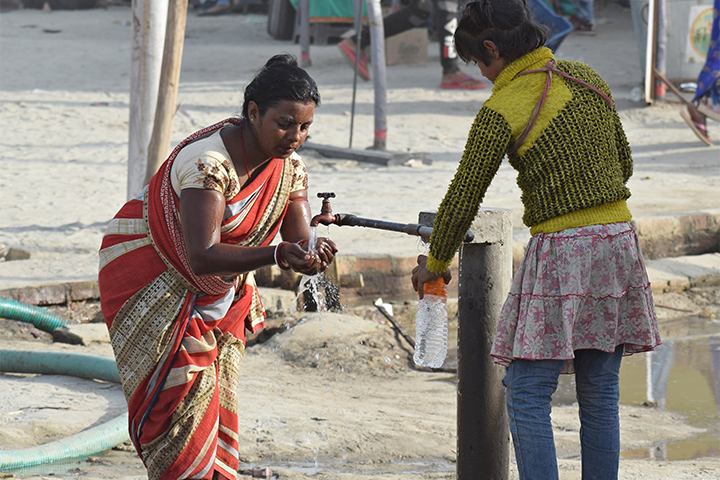
Photo courtesy: Pixabay
Bottled water use has risen, especially in urban and peri-urban areas, reflecting growing concerns over water quality and the reliability of public supply
India has made notable progress in expanding access to safe drinking water over the past decade, but gaps—especially between rural and urban areas—persist even as consumption patterns evolve and expectations rise.
The rural-urban divide has narrowed sharply, falling from 43.2 percentage points in 2014 to 24.5 percentage points in 2024. Urban access, already high, has edged closer to near-universal coverage at around 95 per cent, leaving limited room for further gains. The more meaningful improvement has come from rural areas, where infrastructure expansion, piped supply schemes and policy interventions have gradually improved availability.
Safe drinking water, as defined by the World Bank, refers to water from an improved source that is available on premises, accessible when needed, and free from faecal and chemical contamination. By this measure, overall access stood at 76.44 per cent in 2024. While this marks a significant rise over the decade, it also means that roughly one in four people still lack reliable access to safe water.

Among BRICS nations, India recorded the highest improvement in access between 2014 and 2024, with an increase of 16.86 percentage points. This is notable given that the country began the period as the weakest performer in the group, highlighting both the scale of the initial deficit and the pace of subsequent gains.
Much of this progress has been driven by changes in rural water access. Rural households are slowly transitioning towards piped water, with access to tap water rising by 7.4 percentage points between 2012 and 2023. This reflects sustained investments in water supply infrastructure and the expansion of government-led schemes aimed at improving household-level access.
However, the transition remains incomplete. Nearly half of rural households continue to rely on tube wells as their primary source of drinking water, underscoring a persistent dependence on groundwater. This reliance raises concerns over long-term sustainability, particularly in regions facing groundwater depletion or contamination.
At the same time, consumption patterns are undergoing a shift. The use of bottled water has risen, particularly in urban and peri-urban areas, pointing to growing concerns about water quality and the reliability of public supply systems. While this trend reflects rising incomes and changing preferences, it also highlights disparities, as bottled water remains a costlier alternative that is not accessible to all.
The narrowing rural-urban gap, while encouraging, still reflects structural challenges. Issues such as last-mile connectivity, quality assurance, and infrastructure maintenance continue to constrain progress. Urban systems, though more developed, are not immune to supply disruptions and quality concerns, while rural areas face additional challenges linked to seasonal variability, uneven distribution networks and contamination risks.

Policy focus on water security is also intensifying. Union Minister for Jal Shakti CR Patil recently launched the ninth edition of India International Water Week, scheduled from September 22 to 26, with a theme centred on climate-resilient water management. The emphasis signals a broader shift in approach, recognising that water access is increasingly intertwined with climate risks, sustainability concerns and long-term resource management.
Overall, the trajectory is positive but uneven. The expansion in access and the narrowing of disparities point to tangible progress, yet significant gaps remain in both coverage and quality. With nearly 25 per cent of the population still without dependable access to safe drinking water, the challenge is no longer just about extending reach.
The next phase of progress will depend on improving the reliability, safety and sustainability of supply systems. Ensuring that water is consistently available, free from contamination and equitably distributed across regions will be critical to translating these gains into lasting public health improvements and broader economic benefits.