Sunday, 15 Nov, 2026

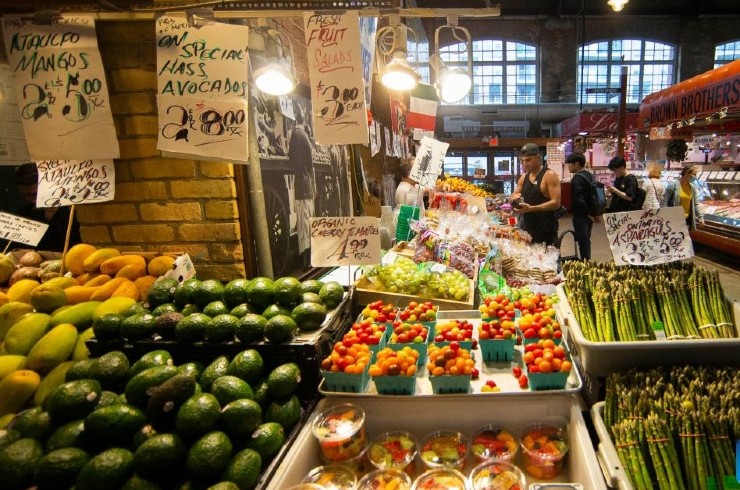
Retail inflation, which stood at 2.74 percent in January 2026, climbed to 5.54 percent in September before reaching 6.09 percent in October. Image Source: IANS
The CPI measures changes in the retail prices of a weighted basket of goods and services commonly consumed by households, covering categories such as food and beverages, housing, clothing, transportation, healthcare and education.
India’s retail inflation, measured through the Consumer Price Index (CPI), accelerated to 6.09 percent in October 2026, crossing the Reserve Bank of India’s (RBI) upper tolerance threshold of 6 percent for the first time this year. According to data released by the Ministry of Statistics and Programme Implementation (MoSPI), the latest reading marks the highest level of retail inflation recorded in 2026, signalling renewed price pressures on households despite a gradual moderation in the pace of monthly price increases.
The rise in headline inflation reflects a sustained upward trajectory over the past several months. Retail inflation, which stood at 2.74 percent in January 2026, climbed to 5.54 percent in September before reaching 6.09 percent in October. This marks a considerable increase from the beginning of the year and suggests that the decline in inflationary pressures witnessed earlier has gradually given way to renewed price escalation.
However, a closer examination of the data reveals an interesting divergence between annual and monthly inflation trends. While year-on-year inflation has continued to increase, the pace at which consumer prices are rising month-on-month has moderated for four consecutive months. The all-India CPI increased by 0.51 percent between September and October 2026, lower than the 0.69 percent increase recorded between August and September. Monthly price growth had peaked at 1.03 percent in June, before moderating to 0.89 percent in July, 0.73 percent in August, 0.69 percent in September and 0.51 percent in October.
This apparent contradiction can largely be explained by the base effect. Year-on-year inflation compares the current month's price level with that of the corresponding month in the previous year, whereas month-on-month inflation captures changes relative to the immediately preceding month. In October 2025, the all-India CPI remained virtually unchanged from September, at 103.74. Consequently, even a relatively modest increase in consumer prices during October 2026 translated into a higher annual inflation rate because the corresponding period last year had recorded almost no monthly price movement. In other words, the acceleration in headline inflation does not necessarily indicate that prices increased more sharply during October than in the preceding months; rather, the relatively low base of October 2025 also contributed to the higher year-on-year reading.
The CPI measures changes in the retail prices of a weighted basket of goods and services commonly consumed by households, covering categories such as food and beverages, housing, clothing, transportation, healthcare and education. The current CPI series uses 2024 as its base year, with individual categories assigned different weights according to their share in household consumption expenditure. As a result, movements in categories with higher weights, particularly food, have a greater influence on the overall inflation rate.

Source: Ministry of Statistics and Programme Implementation
One of the most significant contributors to October's inflationary pressures was the food and beverages segment, where inflation accelerated to 8.51 percent from 7.36 percent in September. Given that this category accounts for 36.75 percent of the overall CPI basket, the increase in food prices has a substantial bearing on headline retail inflation. Higher food inflation is particularly consequential for household budgets as it directly affects essential consumption expenditure and can disproportionately impact lower-income households, which typically devote a larger share of their income to food.
The geographical distribution of inflation also highlights an uneven impact across the country, with rural India continuing to experience higher price pressures than urban areas. Rural retail inflation rose to 6.63 percent in October, compared with 5.41 percent in urban India. The difference between the two stood at 1.22 percentage points, marginally wider than the 1.20 percentage-point gap recorded in September.
A longer-term assessment indicates that the rural-urban inflation differential has widened progressively throughout 2026. In January, rural inflation was recorded at 2.73 percent, marginally lower than the urban rate of 2.75 percent. However, from February onwards, rural inflation consistently remained above its urban counterpart, with the gap widening over subsequent months. This suggests that the prices of goods and services consumed by rural households have been increasing at a faster rate than those consumed by urban households. Nevertheless, higher rural inflation does not necessarily imply that the absolute cost of living in rural areas is greater than in urban centres; it indicates a faster rate of price escalation relative to the corresponding period last year.
The monthly data further reinforce this trend. Consumer prices in rural India increased by 0.56 percent between September and October, compared with a 0.47 percent increase in urban areas. Although the pace of monthly inflation moderated in both segments, the relatively higher increase in rural areas points towards continued pressure on rural household expenditure. The divergence is particularly relevant given the sensitivity of rural consumption to food prices, agricultural input costs and fluctuations in the prices of essential commodities.
October's inflation reading also brings monetary policy considerations into sharper focus. Under India's flexible inflation-targeting framework, the RBI is mandated to maintain CPI inflation at 4 percent, with a permissible tolerance band of 2–6 percent. Although the October reading of 6.09 percent breached the upper limit, a single month's deviation does not amount to a formal failure to meet the inflation target. Under the framework, the target is considered to have been missed only when average inflation remains above 6 percent or below 2 percent for three consecutive quarters.
Nevertheless, the latest figures could complicate the central bank's efforts to balance price stability with economic growth. Aditi Nayar, Chief Economist at ICRA, indicated that retail inflation could remain above the RBI's 6 percent upper tolerance threshold over the next couple of months. She also observed that with India's GDP growth expected to remain above 7 percent in the second quarter of FY2026-27, the possibility of a further 25-basis-point increase in the repo rate at the RBI's next Monetary Policy Committee (MPC) meeting, scheduled for December 2–4, appears almost certain.
The repo rate, which is the rate at which the RBI lends money to commercial banks, serves as a key instrument of monetary policy. An increase in the rate generally raises borrowing costs for banks, businesses and consumers, potentially moderating credit demand and overall spending. By making borrowing more expensive, the RBI seeks to contain demand-driven inflationary pressures. However, the effectiveness of monetary tightening can be limited when inflation is primarily driven by supply-side factors, such as higher food prices or disruptions in commodity supply.
Nayar further highlighted that the trajectory of international crude oil prices would be an important determinant of the RBI's subsequent policy decisions in 2027. Although crude prices have moderated in recent trading sessions, any renewed increase could exert additional pressure on domestic inflation through higher fuel, transportation and logistics costs. Given India's dependence on imported crude oil, fluctuations in international energy prices also have implications for the country's import bill, current account balance and overall macroeconomic stability.
Overall, October's inflation data point towards a growing challenge for India's price stability outlook. While the moderation in month-on-month price increases offers some indication that the immediate pace of price escalation is easing, the acceleration in annual inflation, particularly in food and beverages, suggests that underlying household cost pressures remain significant. The widening rural-urban inflation gap adds another dimension to the challenge, highlighting the uneven distribution of inflationary pressures across the economy. Going forward, the trajectory of food prices, crude oil markets and domestic consumption demand will be crucial in determining whether inflationary pressures persist and how the RBI calibrates its monetary policy response in the coming months.