Thursday, 12 Nov, 2026

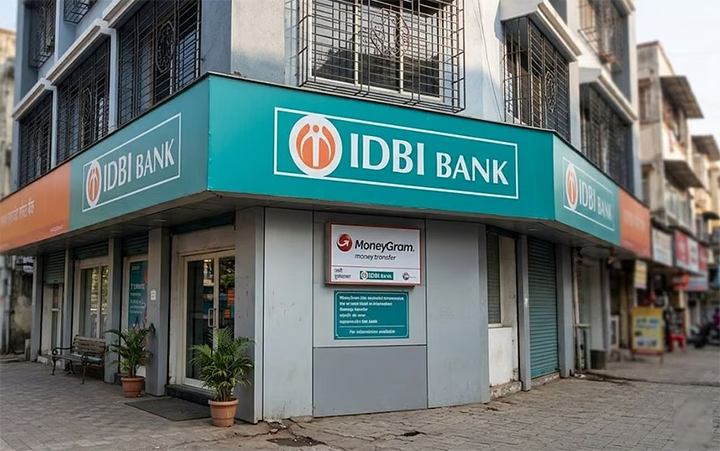
Photo courtesy: (Social media)
The IDBI Bank sale could add Rs 25,000 crore to government receipts, easing pressure on the fiscal deficit and borrowing needs. But the gains hinge on completing the sale, while further asset monetisation remains uncertain.
The proposed sale of a 30.48 per cent stake in IDBI Bank to Canada’s Fairfax Financial Holdings has revived interest in the Centre’s disinvestment programme. Approved by the Cabinet Committee on Economic Affairs (CCEA), the deal is set to be the largest foreign direct investment (FDI) in India’s financial sector. It also raises a larger question: can the government turn a promising sale into a sustained revival of a programme that has repeatedly missed its targets?
The record offers little room for complacency. Between 2016-17 and 2024-25, when the Union Budget provided separate estimates for disinvestment receipts, collections exceeded the targets in only two years—2017-18 and 2018-19. At least four financial years—2016-17, 2020-21, 2023-24 and 2024-25—saw no strategic stake sales.
Disinvestment receipts peaked at just over Rs 1 lakh crore in 2017-18, beating the budget estimate of Rs 72,500 crore by about 38 per cent. In 2018-19, the government raised around Rs 95,000 crore, about 18 per cent more than the target of Rs 80,000 crore. The performance deteriorated sharply thereafter.

Receipts fell to Rs 50,304 crore in 2019-20, 52.1 per cent below the budget estimate of Rs 1.05 lakh crore. The following year was worse. Against a target of Rs 2.10 lakh crore in 2020-21, the government collected only Rs 32,896 crore, a shortfall of 84.3 per cent. In 2021-22, receipts fell 92.3 per cent short of the target.
The gap persisted in the next two years. Collections in 2022-23 were 29.18 per cent below the budget estimate, while those in 2023-24 fell short by 35.06 per cent. The pattern points to a basic weakness in the programme: ambitious targets have not been matched by the timely completion of sales.
Comparisons have become harder since 2024-25, when the Union Budget began combining disinvestment receipts with money raised through the sale or monetisation of government-owned assets. Collections stood at Rs 17,201 crore in 2024-25, around 66 per cent below the combined target. They rose to Rs 59,139 crore in 2025-26, exceeding the estimate by 26 per cent. But the combined figures make it difficult to judge how much progress the government is making through disinvestment alone.
The current financial year, ending in March 2027, looks more promising. Figures published by the Department of Investment and Public Asset Management (DIPAM) show that the government had raised about Rs 56,000 crore from stake sales by August 2026. This included Rs 31,514.89 crore from a follow-on public offer by the Life Insurance Corporation of India. The proceeds already account for a substantial part of the Rs 80,000 crore budgeted from disinvestment and asset monetisation together.
The proposed IDBI Bank sale could bring in a further Rs 25,000 crore, taking receipts beyond the budget estimate. Any additional money raised through asset monetisation would add to the total. In May 2026, the government also sold more than 98.11 per cent of Indian Medicines Pharmaceutical Corporation for Rs 118.73 crore.

Yet the value of disinvestment cannot be judged by receipts alone. A strategic sale transfers management control, generally through the sale of a majority stake of at least 51 per cent. It can therefore reduce the government’s role in running commercial enterprises while bringing in private capital and management. A minority stake sale may raise money, but it does not necessarily achieve the same change in ownership or control.
The record on strategic sales is particularly weak. Receipts from such transactions peaked at Rs 36,915 crore in 2017-18. They fell 56.9 per cent to Rs 15,913.8 crore in 2018-19 and declined further to Rs 13,883 crore in 2019-20. In 2021-22, they amounted to just Rs 2,700 crore. Although they recovered to Rs 12,100 crore in 2022-23, receipts fell to a mere Rs 320 crore in 2025-26.
The IDBI Bank transaction could mark a change in direction, but one large sale does not establish a lasting revival. The government needs a steady pipeline of transactions, clear timelines and greater transparency about what it intends to sell and when. It must also report strategic sales separately from minority stake sales and asset monetisation so that progress can be judged fairly.
For years, disinvestment targets have proved easier to announce than to meet. The IDBI sale could help the government improve its performance this year. The real test, however, is whether it can turn an exceptional transaction into a regular and credible policy—rather than rely on a handful of large deals to disguise years of missed targets.