Friday, 23 Oct, 2026

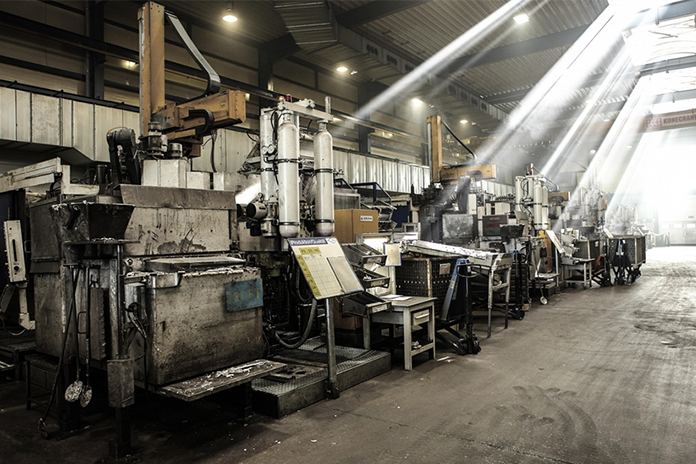
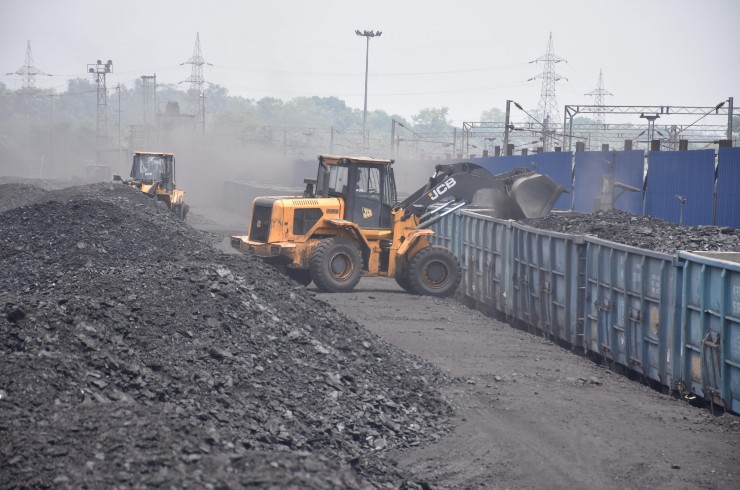
Among the eight core industries, iron ore production recorded the highest year-on-year growth at 18.4 per cent in September, followed by electricity at 11.4 per cent, coal at 10.7 per cent and refinery products at 10.3 per cent. Image Source: IANS
The Index of Core Industries tracks the performance of eight sectors: coal, crude oil, natural gas, refinery products, fertilizers, steel, cement and electricity.
The Index of Core Industries (ICI) registered a year-on-year growth of 7.9 per cent in September 2026 (Provisional), accelerating from the 5.9 per cent growth recorded in August 2026 (Final) and significantly higher than the 3.1 per cent expansion observed in September 2025. According to data released by the Ministry of Commerce and Industry on October 21, 2026, the improvement was driven by robust performance across six of the eight core sectors, particularly iron ore, electricity, coal and refinery products. The latest figures indicate strengthening momentum in key infrastructure-linked industries, following the relatively modest growth recorded during the first half of the previous financial year.
Among the eight core industries, iron ore production recorded the highest year-on-year growth at 18.4 per cent in September, followed by electricity at 11.4 per cent, coal at 10.7 per cent and refinery products at 10.3 per cent. Cement production increased by 9.8 per cent, while steel output registered a growth of 4.9 per cent. In contrast, fertilizer production contracted by 11.7 per cent, natural gas output declined by 4.6 per cent and crude oil production fell by 1.4 per cent. The divergence in sectoral performance highlights the uneven pace of recovery across the country's energy, mining and industrial segments.
The strong performance of iron ore production is particularly significant for the steel industry, as iron ore serves as a key raw material for steel manufacturing. Similarly, higher cement and steel output can reflect increased activity in construction, housing and infrastructure development. The expansion in electricity generation and coal production also points to stronger activity across the power and energy sectors. However, these increases alone do not establish the precise causes of higher output, which can also be influenced by seasonal conditions, production capacity and changes in demand.
The contribution of individual sectors to overall growth also depends on their respective weights in the index. Electricity carries the largest weight at 30.932 per cent, followed by refinery products at 22.572 per cent and steel at 17.584 per cent. Coal accounts for 5.596 per cent of the index, while iron ore has a weight of 4.905 per cent. Consequently, growth in electricity, refinery products and steel can have a substantial influence on the overall index, while a sharp increase in a smaller-weight sector such as iron ore may have a comparatively limited direct effect. Coal, refinery products, steel and iron ore have remained the principal drivers of core-sector growth in recent months.
The improvement was also reflected in the cumulative performance of the index. During April–September 2026, the ICI recorded provisional growth of 5.1 per cent, more than double the 2.5 per cent expansion registered during the corresponding period of the previous financial year. Sector-wise data show that iron ore production grew by 21.2 per cent during the six-month period, followed by electricity at 10.2 per cent and cement at 10.1 per cent. Steel output increased by 4.3 per cent, while refinery products registered growth of 1.0 per cent. In comparison, coal production declined by 1.0 per cent, natural gas by 4.4 per cent, crude oil by 3.7 per cent and fertilizers by 7.6 per cent. These figures suggest that the improvement in the overall index has been supported primarily by mining-related activity, electricity generation and construction-linked industries, despite persistent weakness in parts of the energy and fertilizer segments.

The latest data also reflect an upward revision in August's performance. The final index for August 2026 was revised to 120.4 from its provisional level of 119.2, raising the year-on-year growth estimate from 4.8 per cent to 5.9 per cent. The September figures, however, remain provisional and may be revised as additional data become available.
The Index of Core Industries tracks the performance of eight sectors: coal, crude oil, natural gas, refinery products, fertilizers, steel, cement and electricity. These industries form the foundation of a wide range of economic activities, supplying essential inputs for manufacturing, transport, construction, power generation and agriculture. Together, they account for 40.27 per cent of the weight of the Index of Industrial Production (IIP), making the ICI an important indicator of industrial performance. Nevertheless, the core-sector index should be interpreted alongside other economic indicators, as it captures only a specific set of industries rather than the entire industrial economy.
Overall, the acceleration in core-sector growth during September 2026 and the improvement in cumulative growth during April–September point to stronger industrial momentum compared with the previous financial year. Sustaining this trajectory will depend on whether growth broadens across sectors, particularly crude oil, natural gas and fertilizers, while the stronger performance of electricity, cement, steel, coal and iron ore continues to support industrial and infrastructure-related activity. The Ministry of Commerce and Industry is scheduled to release the provisional ICI figures for October 2026 on November 20, 2026, which will provide a further indication of the durability of this growth momentum.