Thursday, 12 Nov, 2026


Photo courtesy: Pixabay
India’s industrial slowdown is deepening, with growth losing momentum and investment and festive demand yet to provide a broad-based lift
India’s industrial expansion is losing momentum just as the festive season should be supporting demand. Output growth slowed to 6.7 per cent in September, as mining contracted, manufacturing lost pace and production of consumer durables nearly halved its growth rate. The figures point not to an industrial downturn, but to an uneven recovery increasingly dependent on a handful of strong manufacturing segments, with investment-linked production and consumer demand showing signs of moderation.
The Index of Industrial Production (IIP) grew at its slowest pace since May, when it rose 5 per cent, according to data released by the National Statistics Office (NSO) on Wednesday. August growth was revised down to 7.8 per cent from 8 per cent, while September’s reading compared with 6.1 per cent a year earlier. The index itself rose to 124.3 from 123.1 in August, showing that output increased month on month even as annual growth moderated.

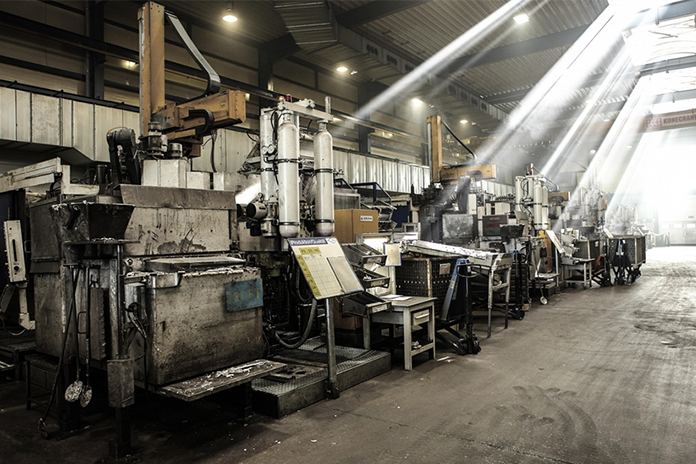
Manufacturing is central to the slowdown. The sector, which accounts for about 76 per cent of the IIP, grew 7.6 per cent, down from a revised 8.6 per cent in August. An unfavourable base partly explains the moderation, but September also ended a three-month run of growth above 8 per cent. The trend warrants attention because manufacturing carries the greatest weight in the industrial index and has a significant bearing on production, employment and business investment.
The underlying picture, however, is not one of across-the-board weakness. Seventeen of the 23 manufacturing industry groups recorded positive growth, with eight expanding by double digits. Electrical equipment output rose 33.9 per cent, motor vehicles, trailers and semi-trailers grew 19 per cent, and rubber and plastics products expanded 19.9 per cent.
But six industry groups contracted, including wood and wood products, down 10.5 per cent; pharmaceuticals, down 8.9 per cent; and wearing apparel, down 5.2 per cent. The contrast suggests that industrial growth is being carried by selected sectors rather than shared evenly across manufacturing. Strong vehicle and electrical equipment output is encouraging, but it does not establish that smaller producers or labour-intensive industries are enjoying the same conditions.
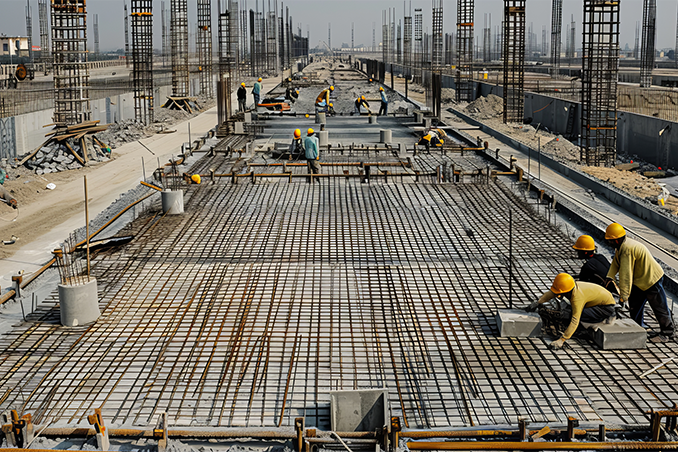
The more revealing signal comes from the use-based classification, which tracks production according to its economic purpose. Capital goods growth fell to 10.4 per cent from 15.9 per cent in August, its slowest pace in FY27 so far. Capital goods are an indicator of investment-related activity, so the deceleration raises a question about the strength of the expansion in productive capacity. It is not proof that investment is weakening, but it makes subsequent readings important.
Consumer durables growth nearly halved to 6 per cent from 10.5 per cent, reaching its lowest rate since April. The timing matters: the festive season is a key selling period for electronics, appliances and other discretionary goods.

Consumer non-durables were the exception, expanding 1.4 per cent after two consecutive months of contraction. The return to growth is a modest improvement, not yet evidence of a decisive recovery in demand for everyday goods. Taken together, the consumer categories offer little basis for concluding that household demand is strengthening uniformly.
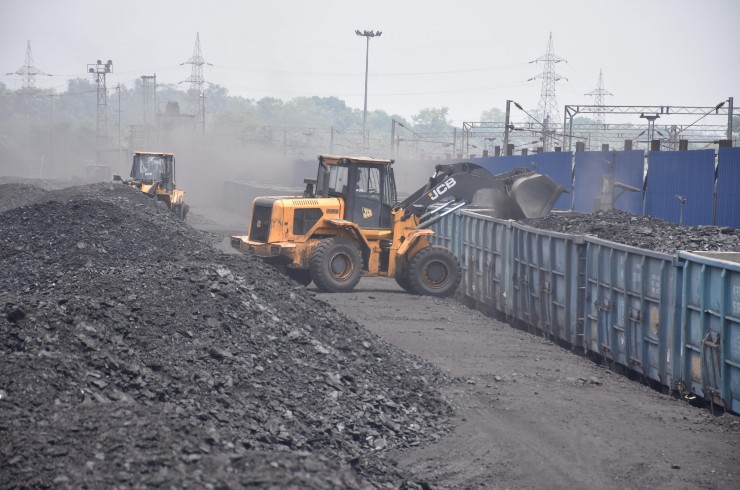
Mining and quarrying remains the clearest weakness. Output contracted 6.2 per cent in September, the third consecutive monthly decline and the steepest fall since September 2023, when it shrank 17 per cent. The weakness can weigh on the wider industrial chain by limiting the supply of raw materials and adding to pressure on industries that depend on them.
Electricity and gas supply continued to grow fastest among the broad sectors, but growth eased to 11.2 per cent from 12.3 per cent in August. Non-renewable electricity generation rose 16.5 per cent, while renewable generation growth slowed sharply to 4.3 per cent from 15.4 per cent.
The key test is whether September proves a temporary pause or the start of a broader loss of momentum. A sustained recovery would require mining to stabilise, investment-linked production to hold up and consumer goods to regain pace. Until then, the headline growth rate should be read alongside the uneven sectoral performance: India’s industrial engine is still expanding, but its strength is concentrated, and the latest figures offer less assurance that investment and festive demand are gathering pace together.