Monday, 21 Sep, 2026

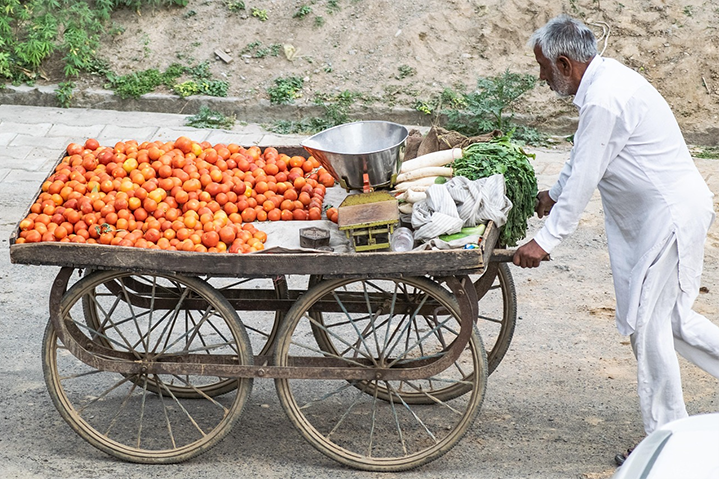
Food inflation was reported to be -4.05 percent in rural areas and -3.60 percent in urban areas. Image Source: IANS
Higher prices in important categories like vegetables, eggs, meat and fish, spices, fuel, and light contributed significantly to the month-long increase in headline and food inflation.
In November 2025, the Consumer Price Index inflation rate increased significantly from 0.25 percent in October 2025 to 0.71 percent. This indicates a slight increase in overall price pressures following a comparatively muted reading in the preceding month, with headline inflation rising by 46 basis points over the course of the month. Regarding food, the All India Consumer Food Price Index reported a provisional year-over-year inflation rate of -3.91 percent in November 2025 as opposed to November 2024. Food inflation was reported to be -4.05 percent in rural areas and -3.60 percent in urban areas.
Food inflation rose by 111 basis points between October 2025 and November 2025, indicating a moderation in deflationary trends even though it was still in negative territory. Higher prices in important categories like vegetables, eggs, meat and fish, spices, fuel, and light contributed significantly to the month-long increase in headline and food inflation.
In November 2025, inflationary pressures increased in rural India. On a provisional basis, headline inflation changed from -0.25 percent in October 2025 to 0.10 percent. According to the CFPI, food inflation in rural areas decreased from -4.85 percent in the previous month to -4.05 percent in November 2025. This change points to a slow firming up of prices in rural consumption baskets, especially for necessities like food and energy. Over the course of the month, urban inflation also increased more sharply. Urban headline inflation increased from 0.88 percent in October 2025 to 1.40 percent on a provisional basis in November 2025. From -5.18 percent in October 2025 to -3.60 percent in November 2025, food inflation in urban areas improved, showing a notable decrease in food price deflation and a convergence towards more stable price conditions.

Source: Ministry of Statistics and Programme Implementation
Housing inflation in urban areas stayed relatively stable within certain components, with a provisional year-over-year rate of 2.95 percent in November 2025, which was slightly less than the 2.96 percent recorded in October 2025. In November 2025, education inflation in both rural and urban areas decreased to 3.38 percent year over year from a rate of 3.54 percent in October 2025, indicating a slight easing of the pressure on educational service costs.
Inflation in the health sector, covering both rural and urban regions, moderated to a provisional rate of 3.60 percent year-on-year in November 2025, down from 3.81 percent in the previous month, suggesting a slight easing in medical and healthcare-related expenses. Transport and communication inflation also declined marginally, registering 0.88 percent year-on-year in November 2025 compared to 0.94 percent in October 2025.
In contrast, fuel and light inflation across rural and urban sectors increased to a provisional rate of 2.32 percent year-on-year in November 2025, up from 1.98 percent in October 2025. This rise in energy-related prices contributed to the overall increase in headline inflation during the month, reinforcing the role of fuel costs in shaping short-term inflation dynamics.
Talking about the wholesale price inflation, it remained negative for the second consecutive month in November 2025 with the annual rate easing to -0.32 percent, according to the data released by the Department for Promotion of Industry and Internal Trade (DPIIT) on Monday.
On a year-on-year basis, the moderation in wholesale prices was primarily attributable to a broad-based decline in key input categories, including food articles, mineral oils, crude petroleum and natural gas, basic metals, and electricity. This easing in prices across several core commodities helped contain overall wholesale inflation during the period. Reflecting these movements, the Wholesale Price Index for all commodities was recorded at 155.9 in November, marking an increase from 154.8 in October, indicating some firming in price levels on a sequential basis.
In contrast to the year-on-year trend, wholesale prices showed a clear increase on a month-on-month basis. The WPI rose by 0.71 percent in November compared to October, signalling short-term upward pressure in wholesale markets. Primary articles registered a notable increase of 2.07 percent during the month, driven largely by higher prices of minerals, food articles, and non-food articles. This rise occurred despite a continued decline in prices of crude petroleum and natural gas, underscoring divergent price trends within the primary articles category and contributing to the overall monthly increase in wholesale prices.
The Wholesale Price Index for food items rose from 192.0 in October to 195.0 in November, indicating a sequential increase in food prices at the wholesale level. Despite this rise, food inflation remained in negative territory at -2.60 percent, though it showed a marked improvement compared to -5.04 percent recorded in October, suggesting a moderation in the pace of deflation.
The final Wholesale Price Index for September 2025 was placed at 155.0, with an associated inflation rate of 0.19 percent. According to the Department for Promotion of Industry and Internal Trade, the WPI data for November are provisional in nature and have been compiled based on a weighted response rate of 82 percent, and are therefore liable to revision as more comprehensive information becomes available.