Thursday, 17 Sep, 2026

Photo courtesy: Pixabay
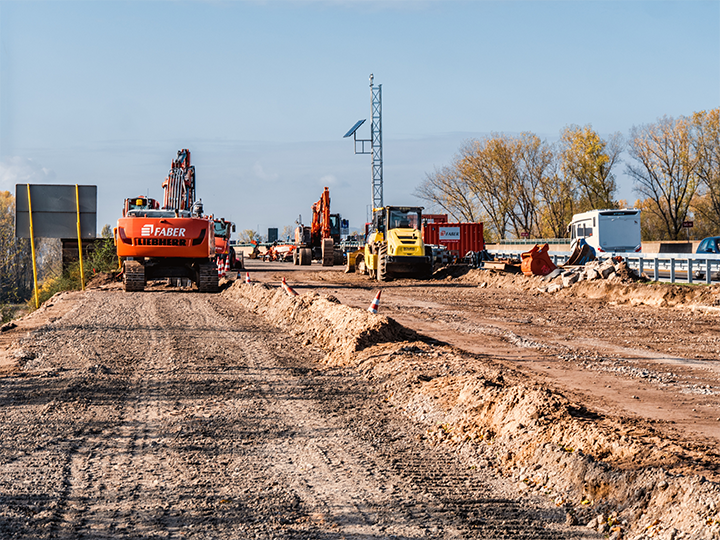
Capital spending on infrastructure will rise to Rs 12.2 lakh crore in FY27, marking a sharp step-up. The push includes high-speed rail links in the south, new freight corridors, expanded coastal shipping and 20 new national waterways
The Union Budget for 2026-27 arrives at a moment when the global economy feels unusually unsettled. Trade rules are fraying, supply chains are less reliable and geopolitical tensions are reshaping capital flows. Against this backdrop, India’s domestic picture looks reassuringly strong. Growth in real terms is estimated at 7.4 per cent this year, up from 6.5 per cent in 2024-25, achieved with relatively low inflation and steady fiscal consolidation. The Economic Survey has also lifted the estimated potential growth rate to 7 per cent from 6.5 per cent three years ago.
The challenge for the Budget is not to kick-start growth, but to sustain it in an environment where external shocks are increasingly likely. The government’s response remains familiar: lean heavily on public investment.
Capital spending on infrastructure will rise to Rs 12.2 lakh crore in 2026-27, a sizeable step-up. This includes an ambitious new pipeline of projects—high-speed rail links connecting major growth hubs in southern India, new east-west freight corridors, expanded coastal shipping to ease pressure on roads and railways, and 20 new national waterways to move minerals from the interior to ports. A significant share of this spending will come via higher interest-free loans to states, pushing them to invest more themselves.
This approach has helped keep overall growth strong. But its limits are becoming clearer. Private investment in new factories and projects has not responded meaningfully, and job creation remains modest. Manufacturing success stories exist— the Budget announced a second phase of the India Semiconductor Mission and raised the outlay for the Electronics Components Manufacturing Scheme to Rs 40,000 crore from Rs 23,000 crore—yet the broader “Make in India” push continues to face headwinds from trade tensions, tariff barriers and uncertain export markets.

It is telling, therefore, that this Budget places greater emphasis on services. Finance Minister Nirmala Sitharaman proposed a high-powered standing committee on education, employment and enterprise to boost output and jobs across services, with an explicit ambition to raise India’s global services share to 10 per cent by 2047. Budgetary support was extended to sectors such as IT-enabled services, tourism, healthcare, veterinary services, social care and the creative industries, through measures ranging from new centres of excellence to institutional subsidies.
The shift reflects realism. Services do not face the same market access barriers as manufactured goods, nor do they require the heavy capital investment that modern factories increasingly demand. The trade-off is skills. Many of the new measures are aimed at closing gaps between education and employability. Still, there is an open question hovering over this strategy: how rapidly artificial intelligence may disrupt job creation in precisely those white-collar services now being promoted.
Alongside capital spending, fiscal restraint remains the second pillar of government policy, though the signals this year are mixed. For the first time, the Budget formally shifts the policy anchor from the fiscal deficit to the debt-to-GDP ratio. This makes economic growth assumptions more consequential. The Budget projects nominal GDP growth of 10 per cent next year, implying slightly higher inflation than this year.
On that basis, the government expects the debt-to-GDP ratio to edge down to 55.6 per cent in 2026-27 from 56.1 per cent this year. The fiscal deficit will narrow only marginally, from 4.4 per cent of GDP to 4.3 per cent. These are modest moves, and mark a clear slowing in the pace of consolidation.

Whether this caution is justified is debatable. On one side, global uncertainty is high and some domestic indicators, including goods and services tax receipts, are showing strain. On the other, debt dynamics are becoming less forgiving. While net borrowing rises only slightly, gross market borrowing will jump sharply to Rs 17.2 lakh crore, from Rs 14.6 lakh crore this year, as past borrowings mature. That increase is likely to weigh on bond markets and keep interest rates structurally higher.
For households, small businesses and investors, the most tangible parts of the Budget lie elsewhere — in governance and compliance. The government promised to expand the use of the trade receivables discounting system for smaller firms, decriminalise several tax offences, grant immunity for certain reporting lapses including foreign assets, move towards a trust-based customs regime and revise duty-free allowances for travellers.
One area where policy tightened was financial markets. Securities transaction tax on futures will rise to 0.05 per cent from 0.02 per cent, while tax on options premiums and exercises will increase to 0.15 per cent from 0.1 per cent and 0.125 per cent respectively. Markets reacted negatively, with the Sensex ending the day down 1.88 per cent. Some fear lower liquidity, but the government appears determined to curb excessive retail speculation in complex derivatives.
The Budget also accepted the Sixteenth Finance Commission’s recommendation to retain vertical devolution to states at 41 per cent, allocating Rs 1.4 lakh crore as grants in 2026-27.
In essence, the government is betting that slower fiscal consolidation, higher state-led capital spending and a strategic pivot towards services will keep growth on track despite a hostile global environment. It is a pragmatic bet — but one that depends increasingly on factors beyond India’s control.