Wednesday, 23 Sep, 2026

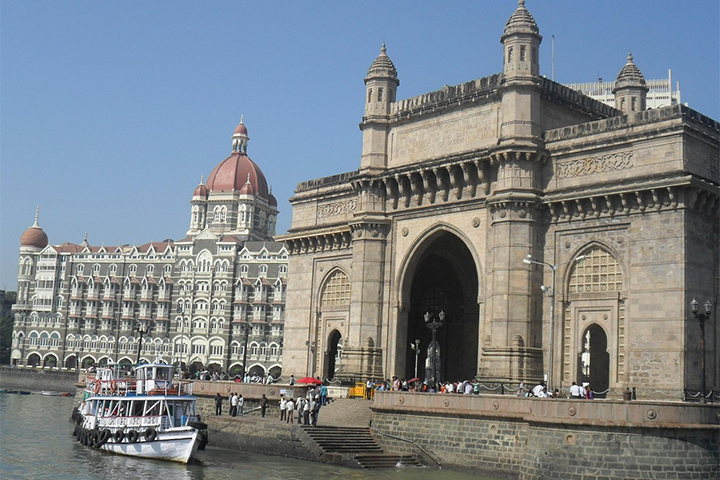
Photo courtesy: Pixabay
Exports are being pitched as a fourth growth engine alongside consumption, investment and public spending. Building an $8–10 trillion export economy by 2047 is an ambitious goal, especially amid a volatile global backdrop
Maharashtra’s rise to the top of NITI Aayog’s Export Preparedness Index (EPI) for 2024 highlights both the progress and the persistent fragilities in the country’s export-driven growth strategy. By narrowly overtaking Tamil Nadu, India’s long-time manufacturing and export powerhouse, Maharashtra has signalled its growing institutional strength. But the latest rankings also reveal how uneven and vulnerable state-level export performance remains.
The index, released last week, shows considerable churn among leading states. Gujarat consolidated its position in third place, while Uttar Pradesh and Andhra Pradesh climbed rapidly into the top five. These gains reflect years of investment in industrial corridors, logistics and targeted policy support. At the same time, Karnataka and Haryana dropped out of the top tier, underlining how quickly competitiveness can slip when costs rise or growth becomes narrowly concentrated.
The government’s apex think tank classifies states and Union Territories (UTs) by size and then ranks them as leaders, challengers or aspirers. This approach recognises that economic endowments differ widely across India. Rankings are based on four broad pillars: export infrastructure, the business ecosystem, policy and governance, and export performance. Maharashtra outperformed Tamil Nadu across three of these four pillars, falling behind only on export infrastructure, yet still securing the top position overall.

However, the headline ranking obscures a key concern. Maharashtra’s exports contracted by 7.3 per cent in FY24, slipping to Rs 5.6 lakh crore from Rs 6.1 lakh crore a year earlier. The decline was largely driven by weakness in gems and jewellery, a sector that has long dominated the state’s export profile. This dependence exposes Maharashtra to global demand cycles and price swings, raising questions about the resilience of its export base despite strong institutional scores.
Karnataka’s experience offers a different cautionary tale. The report flags high operating costs—particularly wages, land prices and energy—as a growing drag on export competitiveness, especially in Bengaluru. For small and medium-sized enterprises, these costs squeeze margins and make it harder to compete internationally. They also discourage fresh investment when firms can relocate to lower-cost states without sacrificing market access.
Compounding the problem is Karnataka’s geographic concentration. Export activity is heavily clustered in a few districts, leaving large parts of the state underutilised. Such concentration increases exposure to local disruptions—whether infrastructure bottlenecks, labour shortages or regulatory delays—and limits inclusive growth. Expanding export activity beyond established hubs is essential if the state is to regain momentum.
The 2024 edition of the EPI is more granular than earlier versions. It evaluates states across 70 indicators, including logistics quality, MSME participation and trade diversification, while also incorporating newer dimensions such as cost competitiveness, human capital, access to finance and macroeconomic stability. The aim is to assess not just export volumes, but the underlying conditions that determine long-term performance.
The index also draws attention to smaller states and UTs. Several, including Uttarakhand and Jammu and Kashmir, emerged as leaders within their category, underscoring that export readiness is not the preserve of large industrial economies. NITI Aayog has emphasised that such states face unique constraints, making direct comparisons with larger states misleading.
Exports, the government argues, represent India’s fourth engine of growth alongside consumption, investment and public spending. The ambition to build an $8–10 trillion export economy by 2047 is bold, particularly in a volatile global environment. Achieving it will depend less on national slogans and more on how effectively states reduce costs, diversify exports and spread growth beyond a few urban centres.