Wednesday, 23 Sep, 2026

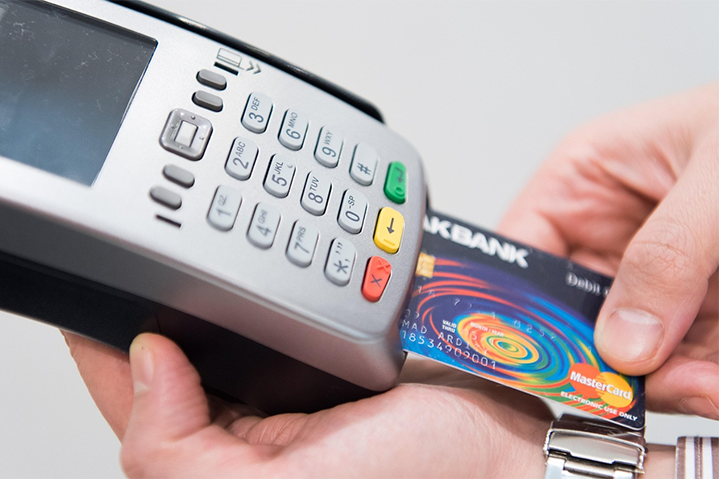
Photo courtesy: Pixabay
India’s digital payments model nonetheless stands out globally. Few countries have built a real-time system that is interoperable, near-universal and virtually free at the point of use
Prime Minister Narendra Modi earlier this month described India’s growth trajectory as a success story of the “Reform, Perform and Transform” mantra, pointing to the rise of the Unified Payments Interface (UPI) as one of its clearest symbols. Few developments capture the scale of India’s economic transformation as vividly as the rapid digitisation of its payments system, which has altered how money moves across households, businesses and the state.
Today, digital transactions account for more than 97 per cent of both the volume and value of total payments in India. For a country that relied heavily on cash barely a decade ago, this represents a structural shift rather than a technological upgrade. Digital payments are no longer a parallel system serving urban elites; they have become the default mode of exchange across income groups and geographies.
The transition began before 2016 but gathered momentum after demonetisation forced individuals and firms to adopt non-cash alternatives. While cash eventually returned to circulation, behaviour did not fully revert. Once users experienced instant transfers and low-cost transactions, digital payments became embedded in daily life. Over time, this behavioural change proved more durable than the policy shock that triggered it.
UPI has been central to this transformation. By FY25, it handled 84 per cent of all digital transactions by volume, up from just over a third in FY20. The acceleration after the pandemic was especially sharp, as lockdowns pushed even the smallest merchants and informal workers to accept QR-based payments. This mass adoption lowered transaction costs across the economy and reduced the frictions traditionally associated with cash handling.

However, UPI’s dominance in volume masks a more nuanced economic reality. Despite accounting for the vast majority of transactions, it represents less than a tenth of the total value of digital payments. High-value transfers remain concentrated in systems such as RTGS, which are used by banks, corporates and government entities. This split reflects a maturing payments ecosystem, where different platforms serve distinct economic functions rather than competing directly.
For the Indian economy, the implications are significant. First, digital payments improve efficiency. Faster settlements reduce working capital needs for businesses, particularly small firms that operate on thin margins. For households, instant transfers have reduced dependence on cash intermediaries and informal channels. At a macro level, smoother money flows enhance the transmission of monetary policy and reduce leakages in government transfers.
Second, the spread of digital payments supports formalisation. Every digital transaction leaves a data trail, gradually pulling economic activity into the formal system. This has implications for tax compliance, credit assessment and policy design. While digitalisation alone does not eliminate informality, it lowers the barriers to entry into the formal economy, especially for micro and small enterprises.
Third, the rise of merchant payments on UPI marks an important shift. Person-to-person transfers still dominate, but merchant usage is steadily increasing. As more small businesses accept digital payments, they begin to generate verifiable transaction histories. This opens the door to formal credit, insurance and other financial services that were previously out of reach. Over time, this could help address one of India’s chronic constraints: limited access to affordable credit for small enterprises.
The changing composition of card payments adds another layer to the story. Credit card transactions overtook debit cards by volume in FY24, while their value has risen sharply since FY21. This points to growing consumer confidence, rising incomes in urban areas and a gradual deepening of retail credit. While this supports consumption-led growth, it also underscores the need for careful monitoring of household leverage.

There are, however, challenges ahead. The overwhelming reliance on low-value UPI transactions raises questions about the financial sustainability of payment service providers, many of whom operate with thin or zero margins. Cybersecurity risks grow with scale, and system outages—though infrequent—carry economy-wide consequences. There is also the risk that innovation slows if incentives remain misaligned.
Even so, India’s digital payments revolution stands out globally. Few countries have built a real-time payments system that is interoperable, near-universal and virtually free at the point of use. More importantly, it has delivered tangible economic benefits by lowering costs, improving efficiency and expanding access.
The next phase will determine whether this infrastructure can be leveraged more deeply—to expand credit, strengthen small businesses and support sustained growth. If that happens, digital payments may prove to be not just a symbol of reform, but one of its most enduring economic legacies.