Tuesday, 29 Sep, 2026

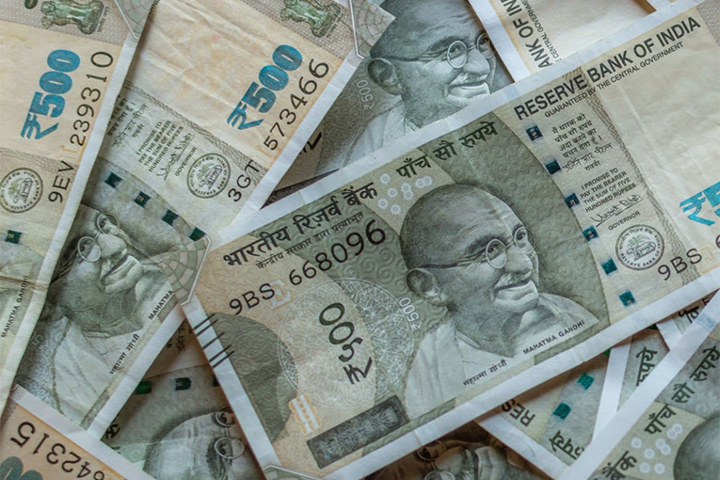
Photo Courtesy: Pixabay
The government could still resort to supplementary borrowing if needed. The final requirement will depend on tax and non-tax revenues, disinvestment receipts and the pace of spending.
The Centre is set to borrow less from the market this financial year than it had planned in the Budget. But the reduction is not a sign that the government suddenly needs less money. The government will raise Rs 7.86 lakh crore through dated securities between October 2026 and March 2027, the second half of financial year 2026-27. With about
Rs 8.14 lakh crore raised in the April-September first half, gross market borrowing for the year will come to Rs 15.99 lakh crore, around Rs 1.2 lakh crore below the Rs 17.2 lakh crore Budget estimate.
The reason lies largely in how the government has managed its repayments.
In February, it switched securities worth Rs 1.11 lakh crore, effectively rolling over part of the debt that was due for repayment. That reduced the estimated redemption burden for FY27 to Rs 4.36 lakh crore from Rs 5.47 lakh crore in the Budget. The government had consequently already lowered its expected gross borrowing to Rs 16.09 lakh crore before announcing the latest October-March calendar.
The important number for the fiscal deficit, however, has not changed. Net market borrowing remains at Rs 11.73 lakh crore, broadly the Budgeted amount. That is the portion of market borrowing that goes towards financing the deficit.
So the headline reduction in borrowing is not really a fiscal tightening. It is, for the most part, a debt-management exercise.
The timing is also significant. The borrowing programme for the second half comes as bond yields face pressure from global rates and domestic liquidity conditions. The 10-year government bond yield closed at 7.12 per cent on Friday, while the benchmark yield had already risen for five consecutive weeks before the latest borrowing calendar was announced.

The Centre is responding by changing the shape of its borrowing.
It plans to issue more long-term debt in the six months to March. The share of 15-year bonds will rise to 17.6 per cent from 14.5 per cent in the first half. The allocations for 30-year, 40-year and 50-year securities will also increase.
The shorter end will get less weight. Five-year securities will account for 12.1 per cent of H2 borrowing, against 15.4 per cent in H1. The share of 10-year paper will fall to 26.3 per cent from 29 per cent. Three-year securities will decline to 6.9 per cent from 8.1 per cent, while seven-year paper will rise to 9.1 per cent from 8.1 per cent.
There is a simple reason for the shift. Borrowing for longer means fewer large chunks of debt have to be refinanced in the near term. That reduces rollover risk and helps extend the government’s weighted average maturity.
It is particularly relevant when borrowing costs are already elevated. The government does not want a large amount of debt coming due just when interest rates are high and investors are demanding higher returns.
Debt switches and buybacks will remain part of the strategy. They allow the Centre to spread repayments more evenly instead of letting large amounts of government debt mature in the same period.
The October-March borrowing programme will be spread across 23 weekly auctions, with securities ranging from three years to 50 years. The government will also raise Rs 15,000 crore through sovereign green bonds.
There is a separate short-term borrowing programme. Between October and December, the third quarter of FY27, the Centre plans to raise Rs 2.99 lakh crore through Treasury bills, or Rs 23,000 crore a week over 13 auction weeks. The Reserve Bank of India has fixed the Ways and Means Advances limit at Rs 50,000 crore for the second half of the financial year to deal with temporary mismatches between government receipts and spending.
The debt strategy fits into a wider change in the government's fiscal framework. The Centre has shifted its long-term fiscal anchor towards the debt-to-GDP ratio and wants to bring central government debt down to 49-51 per cent of GDP by 2030-31. The Budget had put the FY27 debt-to-GDP ratio at 55.6 per cent.
But the lower gross borrowing figure should not yet be treated as a permanent saving.
Experts said the government could still undertake supplementary borrowing if conditions warrant it. Much will depend on tax and non-tax revenues and whether the Centre meets its disinvestment targets.
That leaves the final borrowing requirement open until the numbers on revenues and expenditure become clearer.
For now, the message from the borrowing calendar is fairly straightforward. The Centre has reduced gross borrowing mainly because it has reduced the amount of debt that needs to be repaid and refinanced in FY27. It has not reduced the net borrowing earmarked for financing the fiscal deficit.
The bigger change is therefore in the maturity of the debt, not the size of the fiscal hole.
More long-term bonds, fewer near-term maturities and continued debt switches should give the government more room to manage repayments. But the Rs 16-lakh-crore borrowing figure is a plan, not a guarantee. The final test will come from revenues, expenditure and the government's ability to keep the fiscal deficit on its projected path.