Wednesday, 23 Sep, 2026

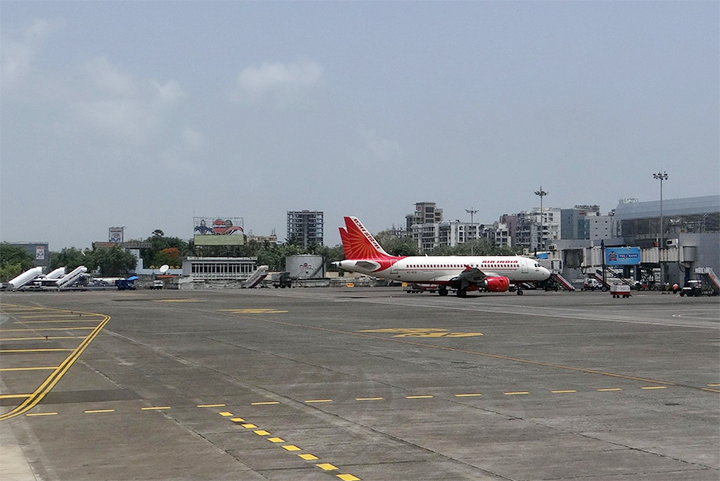
Photo courtesy: Pixabay (Representational image)
Economy fares rose sharply on several major routes, while business fares fell. The divergence points to a widening pricing gap between constrained economy capacity and more competitive business-class supply
The domestic air traveller in economy is being squeezed. The business-class passenger is, rather unusually, getting some relief. That is the striking divide emerging in India’s aviation market. Economy fares have risen sharply across the country’s busiest domestic routes in 2026, even as business-class fares have fallen on most of them. The change is the sharpest since the Covid-era fare caps were removed in August 2022.
Cirium data reviewed by Business Standard show that average economy fares rose year-on-year on 18 of India’s 20 busiest domestic routes in June 2026. On 17 routes, the increase was the biggest of the three-year period. Fares rose by more than 15 per cent on 11 routes, and by more than 30 per cent on five.
This is a marked reversal.
In June 2024, economy fares had fallen on 17 of the 20 routes. In June 2025, the market was evenly split, with fares rising on 10 routes and falling on 10.
Airfares on the Mumbai-Bengaluru route show the reversal clearly. Economy fares fell 15.1 per cent year-on-year in June 2024 and 1.3 per cent in June 2025. In June 2026, they jumped 38.8 per cent.
The immediate reason is fairly straightforward: capacity has not kept pace with demand. Airlines also appear less inclined to fill seats with bargain fares. They are willing to lose some price-sensitive passengers who travelled when tickets were cheaper, judging that essential travellers have both the need and the means to pay more.
Jet fuel has made matters worse, but it did not start the process.
Prices rose only 0.75 per cent between September 2025 and February 2026. They then jumped 32.7 per cent between February and September, after the West Asia conflict began on the last day of February with Israeli and US attacks on Iran.
But economy fares were already climbing before that shock. In February 2026, they had risen on 19 of the 20 busiest routes, with only one route recording a fall.
The business-class market was already moving the other way.
Business fares fell on 19 of the 20 routes in February, with only one exception. By June, they had fallen on 16 routes, with declines reaching 49.3 per cent. Only four routes recorded increases.
Competition is part of the explanation. IndiGo entered the domestic business-class market in November 2024 with IndiGoStretch, initially on Delhi-Mumbai. The product has 12 seats in a 2-2 layout, wider seats, a 38-inch pitch, priority services, extra baggage and complimentary meals.
By July 2026, IndiGoStretch had reached 10 domestic routes, besides international services. The domestic routes include Delhi-Mumbai, Delhi-Pune, Mumbai-Hyderabad and Chennai-Mumbai.

Air India has also increased premium capacity on major domestic routes, using former Vistara aircraft and refurbished A320neos.
But it would be too easy to blame IndiGoStretch for the entire fall in business fares.
The product operates on 10 of the 20 busiest routes. On those routes, average business fares fell between 2.9 per cent and 7.5 per cent year-on-year in June 2026.
On the other 10 routes, where IndiGoStretch is absent, fares fell on six, by between 3.9 per cent and 49.3 per cent, while rising on four.
Delhi-Mumbai provides another clue. IndiGoStretch has operated there since November 2024. Yet business fares rose 19.8 per cent year-on-year in June 2025 before falling 6.4 per cent a year later.
The evidence therefore points to a broader correction in premium pricing. Indeed, the steepest falls came on routes without IndiGoStretch.
The contrast is most striking on individual routes.
On Delhi-Srinagar, economy fares jumped 85.1 per cent, while business fares fell 20.1 per cent. That economy increase looks even more dramatic against falls of 20.2 per cent in June 2024 and 35.7 per cent in June 2025.
The Bengaluru-Chennai route saw economy fares rise 34.9 per cent, even as business fares plunged 49.3 per cent.
The gap was also wide on Delhi-Leh, where economy fares rose 50.4 per cent, while business fares fell 8 per cent. Mumbai-Hyderabad recorded a 21.5 per cent rise in economy fares against a 2.9 per cent fall in business fares.
A similar pattern emerged on Mumbai-Chennai, where economy fares rose 17.8 per cent, while business fares fell 4.6 per cent. Delhi-Chennai saw a 20.1 per cent rise in economy fares and a 4.5 per cent fall in business fares.
Air India offers a different picture of its own premium business. The airline said business-class passengers increased in June 2026 from a year earlier. It also said its business fares had risen over the period and during the current financial year so far, citing stronger demand and higher operating costs.
Air India said booking patterns showed continued interest in its premium products, helped by new or substantially upgraded cabins on every metro-to-metro domestic route it serves.
The Ministry of Civil Aviation and IndiGo did not respond to queries from the business publication.
Cirium’s figures are based on the actual base airfare paid to airlines, excluding taxes and fees, averaged for each month.
That caveat apart, the direction of travel is difficult to miss. The economy cabin is becoming a seller’s market, while the business cabin is becoming more competitive. Higher fuel costs may push fares further, but the sharper story is about capacity, demand and where airlines still have room to charge more.