Thursday, 17 Sep, 2026

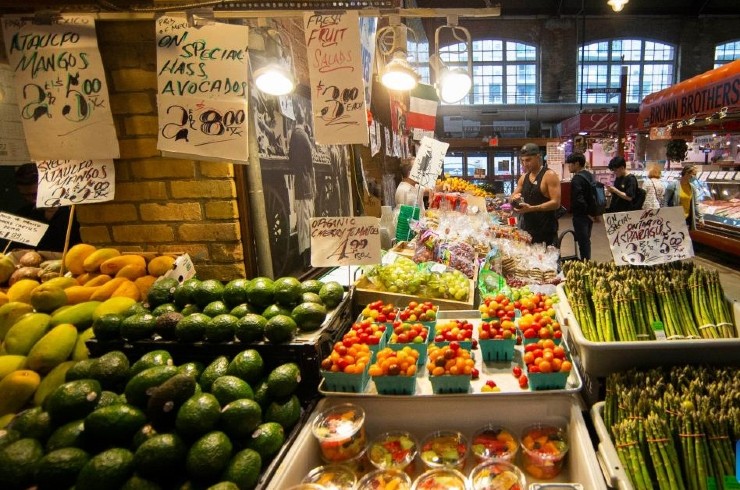
Food inflation also moved higher during the month, increasing to 5.95 per cent from 5.52 per cent in July. Image Source: IANS
Rural retail inflation climbed to 5.23 per cent in August from 4.84 per cent in July, while urban inflation increased from 3.96 per cent to 4.31 per cent.
India’s retail inflation accelerated in August 2026, with food prices emerging as a key driver of the increase and broader signs indicating that price pressures may be gradually spreading across the economy. Consumer Price Index (CPI)-based inflation rose to 4.82 per cent in August from 4.45 per cent in July, according to data released by the Ministry of Statistics and Programme Implementation (MoSPI). Food inflation also moved higher during the month, increasing to 5.95 per cent from 5.52 per cent in July.
The latest reading marks a further movement away from the exceptionally low inflation levels recorded earlier in the year. Shashwat Singh, Fundamental Analyst at Bajaj Broking, noted that the inflation trajectory has moved progressively above the Reserve Bank of India’s 4 per cent target, rising from around 2.7 per cent in January to 4.82 per cent in August. He said the sustained increase keeps the Reserve Bank of India’s cautious policy stance in focus, particularly as the central bank has projected CPI inflation for 2026-27 at 5 per cent.
The increase was visible across both rural and urban India, although rural households continued to face a considerably higher inflation burden. Rural retail inflation climbed to 5.23 per cent in August from 4.84 per cent in July, while urban inflation increased from 3.96 per cent to 4.31 per cent. The widening gap highlights the continued vulnerability of rural consumers to rising prices, particularly when food prices account for a larger share of household expenditure.

Source: Ministry of Statistics and Programme Implementation
Food inflation remained one of the principal sources of upward pressure. The Consumer Food Price Index (CFPI) recorded year-on-year inflation of 5.95 per cent in August, with food inflation reaching 6.13 per cent in rural areas and 5.64 per cent in urban areas. The broader food and beverages category recorded inflation of 5.66 per cent, remaining above the headline CPI rate.
However, the inflationary pressure was not confined to food. Several other consumption categories recorded relatively elevated price increases, suggesting that the latest rise in inflation may have a broader base. Personal care, social protection and miscellaneous goods and services recorded the highest inflation among the major consumption divisions, at 15.17 per cent. Restaurants and accommodation services followed with inflation of 8.38 per cent.
Other categories also witnessed notable price increases. Inflation in paan, tobacco and intoxicants stood at 4.71 per cent, while transport services recorded inflation of 4.60 per cent. Education services registered inflation of 3.73 per cent, and clothing and footwear prices increased by 3.56 per cent. Furnishings, household equipment and routine household maintenance recorded inflation of 2.68 per cent, while housing, water, electricity, gas and other fuels registered inflation of 2.61 per cent.
At the lower end of the inflation spectrum, information and communication recorded inflation of 2.01 per cent, while recreation, sport and culture stood at 1.74 per cent. Health remained the category with the lowest inflation among the tracked divisions, at 1.34 per cent in August.
The August inflation data is based on the All India Consumer Price Index, with 2024 as the base year, and measures the year-on-year change in consumer prices compared with August 2025. The latest figure is provisional.
The inflation print assumes particular significance ahead of the next meeting of the Monetary Policy Committee (MPC), scheduled roughly three weeks after the release of the August data. The prospect of a change in monetary policy has gained attention as inflation has remained above the RBI’s 4 per cent target for three consecutive months, even though it continues to remain within the central bank’s permitted tolerance band.
The RBI is mandated to maintain headline retail inflation at 4 per cent, with a tolerance range of 2 per cent to 6 per cent for the five-year period beginning April 1, 2026. The central bank had kept the policy repo rate unchanged at 5.25 per cent at its previous meeting. However, minutes of that meeting indicated growing concern over the inflation outlook, with Governor Sanjay Malhotra and Deputy Governor Poonam Gupta pointing towards the possibility of higher interest rates.
The policy dilemma has become more pronounced because inflation is rising even as economic growth remains stronger than expected. India’s GDP expanded by a robust 7.8 per cent in the first quarter of 2026-27, highlighting the resilience of domestic economic activity. The combination of stronger-than-anticipated growth and gradually rising inflation has prompted an increasing number of economists to argue that the MPC may need to consider tightening monetary policy to prevent price pressures from becoming entrenched.
The RBI expects CPI inflation to average 4.7 per cent during July-September 2026, before accelerating to 5.9 per cent in October-December, 5.5 per cent in January-March 2027 and 5.3 per cent in April-June 2027. While these projections remain within the RBI’s 2-6 per cent tolerance band, the anticipated persistence of inflation above the 4 per cent target could make the policy trade-off between supporting growth and containing prices increasingly difficult.
One of the more significant signals emerging from the August data is the breadth of price increases across the CPI basket. As many as 314 of the 358 items tracked in the index recorded higher prices in August compared with July. The corresponding figure stood at 310 in July and only 236 in February, before the conflict in West Asia began. The number of items registering inflation above 4 per cent also increased, rising to 110 in August from 101 in July.
The widening spread of price increases has raised concerns that inflation may be moving beyond a temporary food-led phenomenon and becoming more broad-based. If such pressures persist, they could gradually feed into consumer expectations, wages, input costs and ultimately core inflation, making it more difficult for monetary authorities to bring headline inflation back towards the 4 per cent target without a tighter policy stance.
Concerns over the possibility of more persistent inflation are also visible in wholesale price trends. According to Devendra Pant, Chief Economist at India Ratings & Research, there are indications that some of the recent price pressures could be becoming structural. He pointed to wholesale inflation remaining above 10 per cent across seven manufacturing sub-categories: tobacco products, textile products, chemical products, rubber and plastic products, base metals, electrical equipment and other manufacturing.
These seven categories together account for more than a quarter of the manufacturing group, which itself represents almost two-thirds of the Wholesale Price Index (WPI). Persistent inflation across such a significant portion of the manufacturing basket could eventually translate into higher input and production costs, increasing the risk that wholesale price pressures pass through to consumers.
The August inflation data therefore presents a more complicated picture for policymakers. Headline CPI inflation remains within the RBI’s tolerance band, while economic growth remains resilient. Yet the sharp increase from the low levels seen at the beginning of the year, rising food prices, a widening rural-urban inflation gap and the growing number of CPI items registering price increases indicate that inflationary pressures are becoming broader.
For the MPC, the immediate challenge will be to determine whether the August increase represents a temporary acceleration or the beginning of a more persistent inflationary cycle. With growth providing less justification for maintaining an accommodative stance and price pressures appearing across a wider range of goods and services, the debate over the timing and extent of a possible rate hike is likely to intensify ahead of the next policy review.