Sunday, 13 Sep, 2026

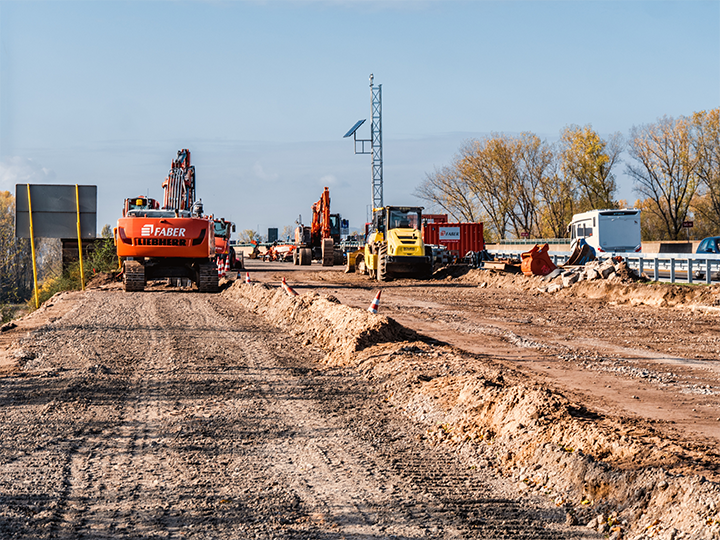
Photo courtesy: Pixabay
Between April and July, the states collected Rs 11.02 lakh crore in tax revenue, or 27.23 per cent of their combined FY27 budget target of Rs 40.48 lakh crore
State governments have made a better start to capital spending this financial year, but it is too early to call it a turnaround. The 22 states for which Comptroller and Auditor General (CAG) monthly accounts are available spent Rs 1.72 lakh crore between April and July — 16.11 per cent of their combined annual capital expenditure allocation of Rs 10.65 lakh crore.
That is up from 15.77 per cent in the corresponding period of FY26 and the highest April-July utilisation rate since FY24. It is an encouraging start, given the substantial role states play in public investment.
But the longer series argues for caution. The four-month utilisation rate has remained within a fairly narrow band since FY22, the earliest year in the CAG monthly accounts series. The weakest performance was in FY25, when states used 14.71 per cent of their annual capex budgets, followed by FY23 at 15.14 per cent.
At 16.11 per cent, this year is therefore ahead of both those years and FY26's 15.77 per cent. But it is still below FY22's 16.99 per cent and well short of the six-year high of 18.88 per cent in FY24.

The message is improvement, not transformation. States are getting capital spending off the ground somewhat faster, but the familiar difficulty of starting investment projects early in the financial year remains.
The state-wise numbers make the divergence clearer. Kerala led, using 42.36 per cent of its annual capital expenditure allocation by July-end. Himachal Pradesh followed at 27.07 per cent, Punjab at 23.39 per cent, Madhya Pradesh at 22.94 per cent and Gujarat at 22.03 per cent.
At the other end, West Bengal had used only 4.04 per cent of its allocation. Tripura, at 5.26 per cent, and Meghalaya, at 5.49 per cent, were also among the weakest performers.
There is a political wrinkle. Kerala and West Bengal, at opposite ends of the capex table, both held Assembly elections during the period and both saw changes in government. Yet their spending records could hardly have been more different. Elections and changes of government can disrupt administrative decisions, but the figures suggest that their effect is far from uniform.
The larger states matter more because of the size of their investment budgets. Uttar Pradesh has the biggest capex allocation, at Rs 1.78 lakh crore, but had spent only 10.15 per cent by July-end. Odisha had used 12.04 per cent, Tamil Nadu 12.97 per cent and Karnataka 14.61 per cent.
This is where the aggregate picture can mislead. When states with large capital budgets spend slowly, national investment suffers. Strong performances by a handful of smaller states cannot by themselves materially alter the investment cycle.
The familiar imbalance in state finances also remains. Capital expenditure continues to trail revenue expenditure. Between April and July, the 22 states spent Rs 13.39 lakh crore on revenue expenditure, or 25.34 per cent of their combined annual budget of Rs 52.83 lakh crore.
Andhra Pradesh recorded the highest revenue expenditure, using 35.50 per cent of its full-year target. Himachal Pradesh followed at 35.20 per cent, Telangana at 33.70 per cent and Kerala at 29.80 per cent.

At the slower end were Bihar, which had used 20.30 per cent of its annual revenue expenditure budget, Maharashtra at 20.50 per cent and Karnataka at 21.80 per cent.
This divergence is structural. Salaries, pensions, subsidies and the routine business of government have to continue. Capital projects need land, approvals, contractors and administrative preparation. Keeping the government machinery running is easier than getting a new road, irrigation scheme or infrastructure project off the ground.
The economic distinction matters. Revenue expenditure largely meets current obligations; capital expenditure creates assets that can expand productive capacity and support growth over time. What states spend on, therefore, matters as much as how much they spend.
There is some fiscal room. Between April and July, the 22 states collected Rs 11.02 lakh crore in tax revenue, or 27.23 per cent of their combined FY27 tax revenue target of Rs 40.48 lakh crore.
Haryana led in tax revenue realisation, achieving 32.47 per cent of its annual target. Gujarat followed at 31.91 per cent, Maharashtra at 30.84 per cent and Karnataka at 30.43 per cent.
At the other end, Bihar had realised only 19 per cent of its target, Tripura 22.23 per cent and Rajasthan 24.21 per cent.
The broad message is significant: revenue mobilisation, for the states as a group, is running ahead of capital expenditure. The constraint may therefore increasingly be less about money and more about the capacity to turn budgetary allocations into actual projects.
That is the number to watch in the months ahead. The Centre has carried much of the burden of public investment in recent years. A sustained rise in state capital expenditure would give the investment cycle a wider and stronger base.
For now, the verdict is modest. States have made a better start, and tax revenues offer some support for further spending. But four months do not make a year. The real test is whether 16.11 per cent becomes the start of sustained acceleration — or another early-year number before capital spending once again slips behind revenue expenditure.