Friday, 23 Oct, 2026

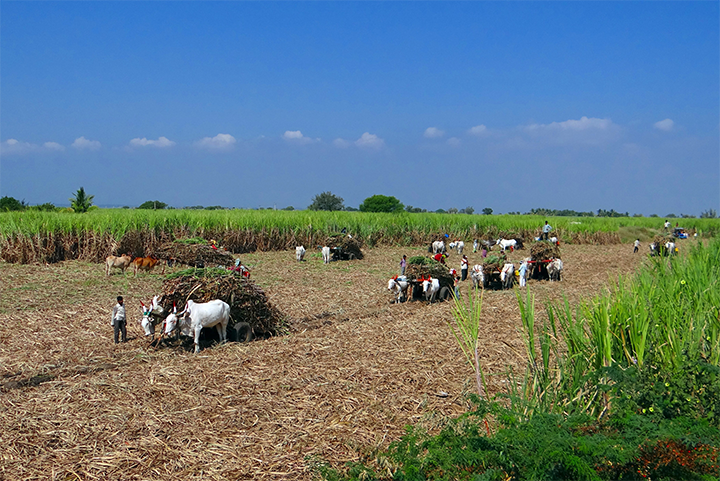
The food economy faces a growing squeeze: demand is rising, farm output remains weather-dependent and crops are being diverted to ethanol. When supplies tighten, the pressure soon reaches the kitchen
The food economy faces a growing squeeze: demand is rising, farm output remains weather-dependent and crops are being diverted to ethanol. When supplies tighten, the pressure soon reaches the kitchen
The sugar price rise is beginning to look less like a temporary spike and more like a sign of a tighter food economy. Prices are no longer just a problem for the household grocery bill. A rise of nearly 39 per cent in a widely used food item adds to pressure on consumer inflation, squeezes household purchasing power and raises costs for food and beverage companies. If the increase persists into the festive season, when demand for sweets and other processed foods rises, it could make the recent easing in food inflation less secure. It also exposes a wider problem: India’s domestic demand for sugar is catching up with, and now slightly exceeding, what the country produces.
The all-India average retail price of sugar was Rs 64.24 a kg on August 30, up 38.63 per cent from a year earlier. It had risen 1.77 per cent in just a week, from Rs 63.12, and was 30 per cent higher than a month earlier.
Prices above Rs 60 a kg are now common across most retail markets. The maximum recorded price was Rs 74 and the minimum Rs 40. In Delhi, sugar was selling at Rs 62 a kg, compared with Rs 66 in Mumbai, Rs 63 in Chennai and Rs 68 in Ranchi.
Wholesale prices are telling the same story. At Rs 59.73 a kg, they were 31 per cent higher than a month earlier and 38.63 per cent higher than a year earlier, up from Rs 58.66 a week ago.
The immediate reasons are familiar: lower domestic production, weather-related crop damage, stronger festive demand and higher world prices. But the more important point is that India's sugar market has less room than before to absorb a supply shock.

Domestic consumption is rising towards the level of production. Sugar consumption as a share of output increased from 93 per cent in 2019-20 to 100.3 per cent in 2025-26. In other words, India is now consuming slightly more sugar than it produces in a normal sugar season.
That helps explain why a relatively modest squeeze in production can translate into a sharp rise in retail prices.
The trade numbers reinforce the change. India’s sugar trade surplus rose from $1.6 billion in 2019-20 to $5.4 billion in 2022-23, but fell sharply to just $775 million in 2025-26. African countries remain the principal destination for Indian sugar exports, with Somalia, Sudan and Libya together accounting for 36% of shipments.
India is therefore exporting less of its previous surplus while facing stronger domestic demand. The old assumption that a large domestic sugar industry automatically means ample supplies for consumers is becoming less reliable.
There is another complication: sugarcane is no longer used only to produce sugar. The share of sugarcane syrup in ethanol feedstock rose from 20 per cent in 2019-20 to 51 per cent in 2023-24, before falling to 41 per cent in 2025-26. Corn kernels accounted for 25 per cent and rice for 12 per cent, showing that the ethanol programme is gradually diversifying its feedstock.
The global picture offers little comfort. Apart from Brazil and Thailand, the leading sugar-producing countries consumed between 93 per cent and 125 per cent of their output in the 2024-25 sugar season. India is therefore not alone in operating with limited room between production and consumption.

The striking feature of the current episode is that prices have risen even though ex-mill sugar prices have fallen by nearly 20 per cent. That decline followed the government's decision to allow duty-free imports of 1 million tonnes of raw sugar.
The measure should help ease supply pressures, but it has not yet translated into lower retail prices. The gap between ex-mill and retail prices also suggests that the problem is no longer simply one of production at the factory gate.
The broader economic concern is inflation. Sugar alone will not alter the inflation outlook. But when several food items become more expensive at the same time, the pressure moves from individual commodities to household budgets.
The sugar market also illustrates a larger policy dilemma. India wants higher farm incomes, a viable sugar industry, more ethanol for blending and affordable food prices. These objectives can coexist when production is rising faster than demand. They become harder to reconcile when supplies tighten.
For now, the government has responded with imports. But the longer-term answer lies in raising productivity and managing the competing uses of sugarcane, rather than relying repeatedly on trade measures after prices have already risen.
The lesson from sugar is broader than the price of a kilogram. India’s food economy is becoming more demanding: domestic consumption is rising, agricultural output remains vulnerable to weather, and crops are being diverted to new uses such as ethanol.
When supply is plentiful, that creates little difficulty. When it is not, the pressure reaches the kitchen surprisingly quickly.