Friday, 16 Oct, 2026

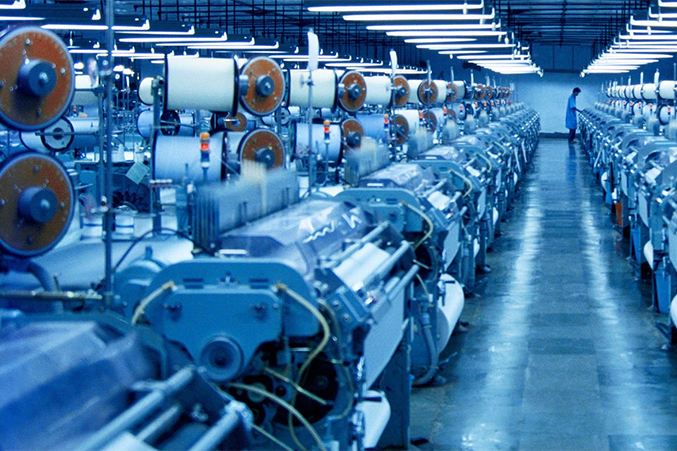
Photo courtesy: Pixabay
What matters is not whether industrial output rises by another percentage point or two next month, but whether the recovery spreads from factories making machines and cars to households buying more of the everyday goods they consume
Industrial growth slowed in July, but the bigger story is not the fall in the headline number. It is the growing divide beneath it. Factories are producing more machinery, cars and electrical equipment. Investment is holding up. Consumers are buying vehicles and appliances. But demand for many everyday goods remains weak.
Industrial output, measured by the Index of Industrial Production (IIP), grew 6.7% in July, after an upwardly revised 8.8% in June. The IIP stood at 124.8, compared with 117 a year earlier. For the first four months of 2026-27, factory output grew 6.3%, against 4% in the same period last year.
That is a strong beginning to the financial year. It is also better than many had expected, given concerns that tensions in West Asia could affect economic activity. A favourable base has helped, but the numbers leave little doubt that industrial activity remains healthy.
Manufacturing continues to do most of the work. Output rose 7.3% in July, slower than June’s 9.5%, but 19 of the 23 industry groups still recorded growth from a year earlier. Electrical equipment production rose 28.3%, while output of motor vehicles, trailers and semi-trailers increased 22.2%.
The investment numbers are stronger still. Capital goods output rose 16.1%, marking the fourth consecutive month of double-digit growth, though it was lower than June’s 17.9%. Intermediate goods rose 10%, infrastructure and construction goods 6.9%, and primary goods 4.1%.

This is not the picture of an economy in which companies have stopped spending. Demand for machinery and equipment remains strong, while infrastructure and construction continue to support industrial activity.
The more difficult question is on the consumer side.
Consumer durables grew by about 10.5%-11%, led by vehicles and appliances. Consumer non-durables, which include everyday goods such as food and toiletries, fell 1%.
The pattern is repeated across manufacturing. Motor vehicle production rose 22.2% and electrical equipment 28.3%. Food products, by contrast, grew only 2.6%. Wearing apparel fell 0.6%, pharmaceuticals contracted 5.6%, tobacco products declined 12.2%, and chemical products fell 2.7%.
This is the weakness in an otherwise strong set of industrial numbers.
Consumers are spending, but not all consumers are spending in the same way. Big-ticket purchases, often supported by credit, are doing well. Everyday consumption is less buoyant.
That matters because durable goods are bought occasionally. Food, clothing and other daily necessities are bought regularly. An economy in which cars and appliances are selling well but everyday consumption is weak is not experiencing the same kind of broad-based demand recovery as one in which spending is rising across households and income groups.
The gap may reflect the difference between urban and rural demand. It may also reflect the difference between households with access to credit and those dependent largely on current incomes.
Mining was the weakest part of the industrial economy. Output fell 0.9% in July after growing 1.6% in June. Non-metallic minerals declined 12.5% and fuel minerals 1.3%, although metallic minerals rose 24.3%.
For the first four months of the financial year, mining output was down 1.1%, partly because of the monsoon. Rare earth production rose by more than 20%, though from a small base.
Electricity and gas supply remained the fastest-growing major sector, expanding 8.7%. Growth was slower than June’s 11.3%, but remained strong. Electricity generation from non-renewable sources rose 12.5%, while the electricity component increased 9.3%.
Water supply, sewerage and waste management was the exception to the general slowdown, growing 7.4%, its fastest pace in 12 months.
The next few months will provide a clearer test. The festive season could lift demand for cars, appliances and other consumer goods and keep industrial growth in the 7%-8% range for the year. That would also strengthen expectations that the wider economy could grow by around 8%.
The July figures do not signal an industrial slowdown. They point to an economy growing unevenly. Investment is doing the heavy lifting, while discretionary consumption remains healthy. What is still missing is a stronger and broader recovery in everyday demand.
The real test, therefore, is not whether industrial output rises a percentage point or two in the next month. It is whether the recovery moves from the factory producing a new machine or car to the household buying more of the goods it uses every day.