Monday, 05 Oct, 2026

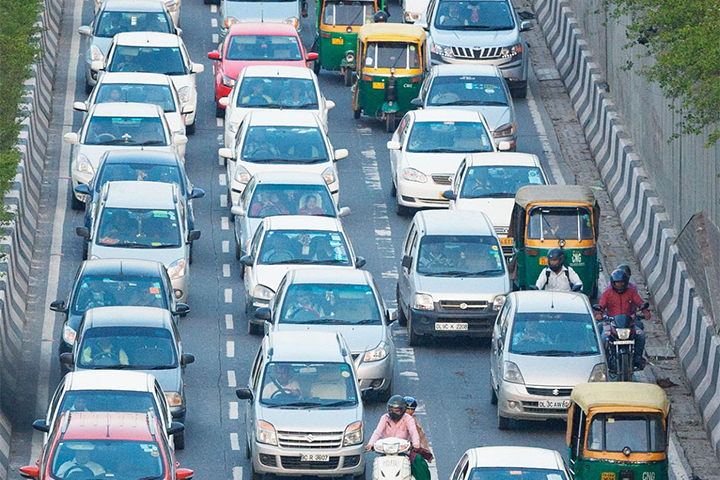
Photo courtesy: Pixabay
September investment hit a two-year high of $6 billion, including 12 mega deals worth $5 billion, adding to evidence of firming activity across taxation, consumption, payments and private capital
The economy closed the first half of the year with several indicators pointing to continued momentum. GST collections crossed ₹2 lakh crore, car dispatches posted double-digit growth and digital payments remained strong, suggesting that domestic demand has held up despite a turbulent global environment.
However, the numbers also carry a warning. Part of the strength in tax collections is coming from higher import costs, which could squeeze businesses if commodity prices remain elevated and the rupee stays weak.
GST collections rose 14.7 per cent in September to more than Rs 2 lakh crore. The data, based on transactions in August, show a particularly sharp increase in integrated GST on imported goods. IGST on imports rose 26 per cent to Rs 65,525 crore, helped by higher commodity prices and a weaker rupee that pushed up the import bill.
That is not entirely a demand story. When imported goods become more expensive in rupee terms, the tax collected on them rises as well. For companies dependent on imported raw materials and components, however, the same trend means higher costs.
The more encouraging signal came from domestic collections. These rose at a double-digit pace to Rs 1,37,996 crore. With total refunds falling 3 per cent, net GST collections jumped 18 per cent to Rs 1,76,520 crore.
The strength was also visible across several major states. Gujarat recorded 17 per cent growth, Uttar Pradesh 11 per cent, Telangana 18 per cent and Karnataka 12 per cent.

The festival season should provide another test of consumption. GST collections typically benefit from higher spending across product categories during this period, and there is an expectation that collections could exceed the annual target for the current year. Whether that happens will depend on how much of the present momentum survives the pressure from higher import costs.
The automobile market offers a more direct reading of consumer demand.
The five leading carmakers reported double-digit growth in domestic passenger-vehicle dispatches to dealers in September, ahead of the festive season. Maruti Suzuki recorded nearly 37 per cent growth, while Kia posted the fastest increase among the five at 41 per cent.
But dispatches are not retail sales. Carmakers can build dealer inventories ahead of the festive season. Retail registrations will show whether consumers actually absorbed the additional supply.
The composition of Maruti’s growth is worth noting. Utility-vehicle sales rose 62 per cent to 78,911 units and accounted for more than three-fifths of the company’s additional volumes over September last year.
Yet the demand revival was not limited to utility vehicles. Maruti’s combined mini, compact and mid-size passenger-car sales rose 24 per cent to 91,887 units.
Tata Motors remained ahead of Mahindra and Hyundai in domestic passenger-vehicle volumes. Its electric-vehicle sales, including exports, rose 67 per cent to 15,384 units.
The car market therefore shows two things at once: consumers are spending more, and the preference for utility vehicles remains strong. But the increase in smaller and mid-sized passenger-car sales suggests that the improvement is broader than the SUV story alone.
Digital payments tell a similar story, although the monthly numbers need to be read with some care.
UPI processed 2,407 crore transactions in September, down from 2,451 crore in August. Transaction value fell to Rs 29.4 lakh crore from Rs 29.8 lakh crore.
September had fewer days, however. On a daily basis, UPI transactions increased to 80.2 crore from 79.1 crore in August. Average daily transaction value also rose to Rs 97,913 crore from Rs 96,205 crore.
IMPS showed a similar divergence between monthly and daily activity. Daily value increased to Rs 23,530 crore from Rs 22,701 crore, even though the monthly transaction count declined.
The underlying message is therefore stronger than the monthly headline suggests. Digital transactions remain deeply embedded in economic activity, with daily volumes and values continuing to rise.
The investment numbers add another layer.
Private equity and venture capital investment, excluding real estate, rose 21 per cent year-on-year in calendar 2026. During January-September, PE-VC investment reached $31.7 billion, up from $26.2 billion in the corresponding period of 2025.
September was particularly strong. Investment reached $6 billion, including 12 mega deals worth more than $100 million each and totalling $5 billion. It was also the highest monthly investment value recorded in the past two years, according to Venture Intelligence.
These indicators measure different parts of the economy, which is precisely why their convergence matters. GST captures taxable activity; vehicle sales provide a window into discretionary consumption; digital payments show transaction intensity; and PE-VC flows indicate the willingness of investors to put fresh capital into businesses.
None of them should be treated as a stand-alone measure of economic health. GST collections are being lifted partly by higher import values. Car dispatches still need to translate into retail registrations. Monthly UPI volumes fell even though daily activity increased. PE-VC investment can also be volatile and concentrated in a relatively small number of large transactions.
But the direction of travel is difficult to ignore.
India’s domestic economy is continuing to generate activity despite an unsettled global backdrop. The more important question now is whether this resilience can broaden through the festive season and into the second half of the year.
There is a cost-side constraint to watch. Higher commodity prices and a weaker rupee are raising the cost of imports. If that pressure persists, businesses will have to absorb higher input costs, pass them on to consumers, or accept lower margins.
For now, the first-half data show an economy that is still spending, transacting and attracting investment. The next test is whether domestic demand can remain strong enough to offset the pressure coming from the external environment without that resilience being eroded by rising costs.