Tuesday, 29 Sep, 2026

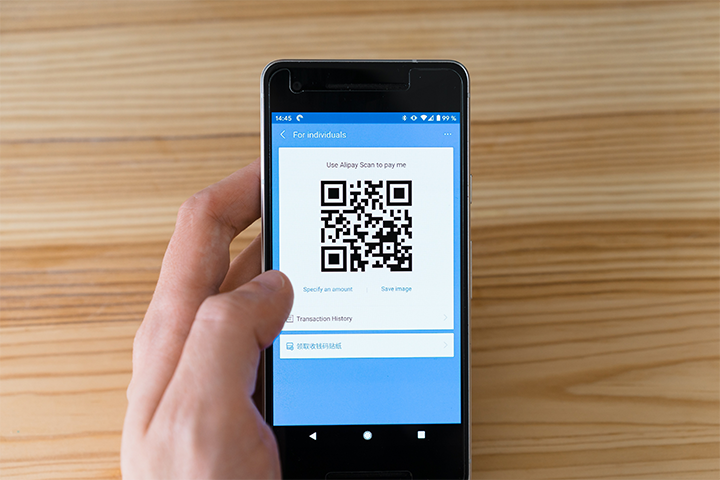
Photo courtesy: Pixabay
UPI’s success was built on free payments; its next challenge is to fund the infrastructure behind them without making digital payments less affordable or accessible
The Unified Payments Interface (UPI) was designed to make digital payments cheap, seamless and universal. It has done that — and created a problem of its own. The network is now so large that the cost of keeping it running cannot be comfortably met by the government subsidies that helped build it.
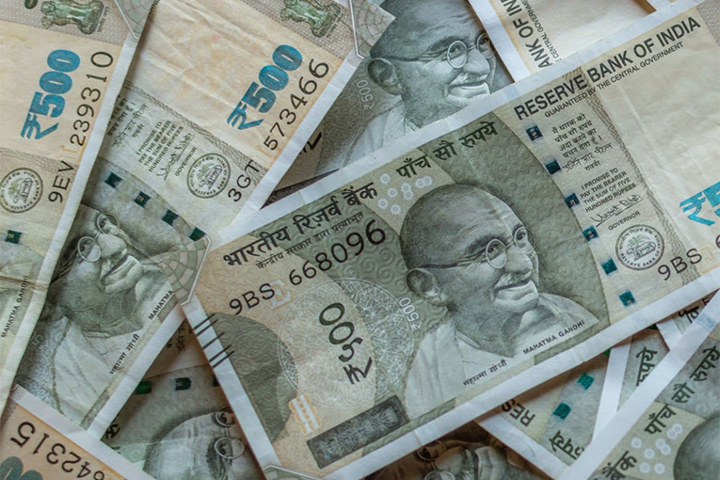
From October 15, merchants will pay a 0.4 per cent Merchant Discount Rate (MDR) on person-to-merchant UPI payments above Rs 2,000. The charge will not go to the exchequer but will be shared among the banks and payment platforms that make the system work. It marks a significant departure from the zero-MDR regime introduced in January 2020 to accelerate digital-payment adoption.
The scale of UPI explains why the financing question can no longer be sidestepped. It processed 2,451 crore transactions worth Rs 29.9 lakh crore in August 2026. By July, it accounted for 87 per cent of digital-payment transactions by volume, although only 10 per cent by value. UPI handles vast numbers of relatively small payments, but the infrastructure supporting them must remain available, secure and reliable around the clock.

That comes at a cost. The National Payments Corporation of India (NPCI), which operates UPI, has put the annual cost of running the network at roughly Rs 20,000 crore, including servers, bandwidth, fraud prevention and technical support from banks. NPCI managing director and chief executive Dilip Asbe separately cited an estimate of about Rs 21,000 crore based on data submitted by the Reserve Bank of India about a year ago.
The Department of Financial Services has also told Parliament’s Standing Committee on Finance that the payments industry spends about Rs 20,700 crore annually on person-to-merchant transactions alone.
Against these sums, government compensation has been relatively small. The highest annual budgetary outgo for compensating banks for UPI and RuPay payments was Rs 3,631 crore in FY2023-24. The Budget Estimate for FY2025-26 was just Rs 437 crore, although the eventual payout rose to about Rs 2,196 crore. The allocation for FY2026-27 is Rs 2,000 crore.
Asbe has acknowledged that a 0.4 per cent fee will not recover the entire cost. But NPCI estimates that Rs 13,000-15,000 crore could be recovered in the first year. The aim is to give banks, fintech companies and other participants an incentive to keep investing in the system.
The revenue will be divided among the participants. Of every Rs 100 collected as MDR, Rs 40 will go to the customer’s bank, Rs 30 to the payment gateway, Rs 20 to the UPI app and Rs 10 to the sponsoring bank of the app.
The pricing structure has been designed to keep small merchants and routine payments largely outside the charging net. A Rs 5,000 merchant payment will attract Rs 20, while a Rs 50,000 payment will attract Rs 200. The charge reaches its ceiling of Rs 300 at Rs 75,000.

Payments to essential-service merchants — railways, telecom, fuel and insurance — will attract a flat Rs 5 fee on transactions above Rs 2,000. Capital-market payments, including mutual funds and stockbroking, will carry a lower rate of 0.02 per cent, also capped at Rs 300.
Small merchants collecting up to Rs 1 lakh a month through UPI QR codes will remain exempt. Officials say this protects about 96 per cent of all merchant transactions. QR payments to merchants in rural and semi-urban areas will also remain free.
That protection matters because UPI’s strength lies in its reach beyond organised commerce. If pricing were to discourage small shopkeepers from accepting digital payments, it could weaken the network effect that made UPI so widely used.
NPCI is also proposing to direct some of the new revenue towards expanding that reach. Five per cent of total MDR collections will go into a fund to promote UPI adoption among small merchants. Asbe said the fund could reach around Rs 3,000 crore over three years. NPCI is working with the RBI and other stakeholders to design the scheme.
The zero-MDR policy served its purpose by helping transform UPI from a promising digital-payment system into the backbone of India’s payments economy. But a network processing 2,451 crore transactions in a single month cannot indefinitely rely on subsidies that cover only a small part of its operating cost.
NPCI has described the annual government incentive as “short-term bridge funding rather than a permanent measure”, warning that dependence on budget allocations creates uncertainty and limits long-term technology investment by banks and fintechs.
The proposed MDR is therefore more than a new charge on selected merchant payments. It is an attempt to shift part of the financial burden of maintaining UPI from the state to the ecosystem that uses and operates it.
That shift will need to be managed carefully. The new revenue must strengthen the network, improve resilience and support expansion without quietly returning the cost to consumers or making digital payments less attractive to smaller businesses.
UPI’s first phase was about making digital payments free. Its next phase is about paying for the infrastructure that made them ubiquitous. The success of that transition will depend on whether UPI can become financially sustainable without losing the affordability and reach that made it indispensable.