Monday, 21 Sep, 2026

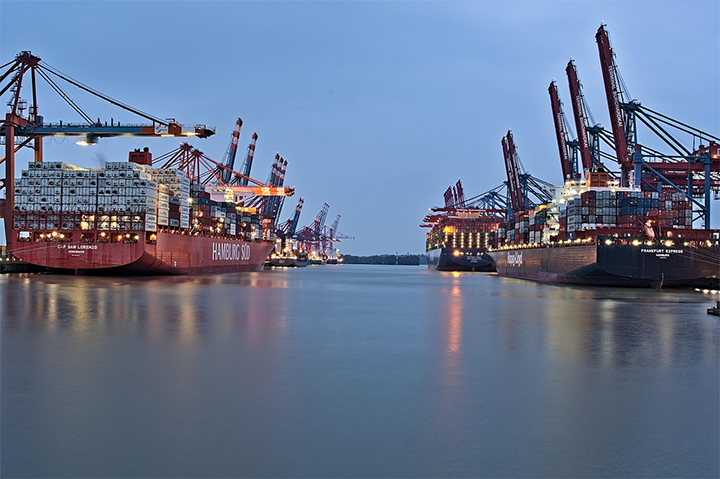
Photo courtesy: Pixabay
Exports hit a record $860.09 billion in FY26, putting India on course for $1 trillion in FY27, despite tariffs and global trade tensions
India’s exports surged 26.1 per cent in August to $43.81 billion, giving external trade a strong lift. Imports fell to $70.67 billion from $76.22 billion in July, narrowing the merchandise trade deficit to $26.86 billion.
The broader export trajectory is also pointing towards the $1 trillion mark. India’s exports of goods and services reached a record $860.09 billion in FY26, up 4.22 per cent from the previous year. The government is targeting $1 trillion in FY27, which will require a faster pace of growth, particularly in merchandise exports. The August jump is encouraging: it suggests that India’s export base is widening despite tariffs, geopolitical tensions and a difficult global trading environment.
The August deficit was lower than the $31.98 billion recorded in July and marginally below $27.22 billion a year earlier. Gold imports nearly halved to $2.3 billion from $4.16 billion in July, providing part of the improvement.
The stronger part of the story, however, is the export performance. Engineering goods, petroleum products, chemicals and textiles were among the main drivers, with shipments gaining across the US, European Union, Brics economies and other emerging markets.

The US remains India’s largest export market, with shipments of $42.79 billion in the first five months of the financial year. But the widening reach into other markets matters as tariffs, geopolitical tensions and supply-chain shifts reshape global trade.
The latest numbers also cannot simply be attributed to a weaker rupee. The Federation of Indian Export Organisations has pointed out that exports have risen in both rupee and dollar terms despite the currency’s depreciation.
Imports present a different picture, but not necessarily a negative one. India continues to buy large quantities of crude oil, machinery, electronic components, metals and other industrial inputs. Stronger domestic growth is lifting demand for energy and critical inputs, contributing to the larger trade deficit in the first five months.
The aim, therefore, cannot be to suppress imports merely to reduce the deficit. A growing economy will need to import goods that it cannot yet produce competitively or in sufficient quantities. The real test is whether those imports feed investment, production and exports, rather than simply consumption.
That makes export capacity the central issue. The government is seeking wider market access through trade agreements. The India-New Zealand FTA, signed in April, is expected to become operational in the latter half of October and will provide duty-free access for 100 per cent of Indian exports to New Zealand.
The India-EU FTA is the bigger opportunity. Negotiations are moving towards approval, with the agreement expected to be signed by the end of the year, subject to clearances from the EU Council and European Parliament.
Market access alone, however, will not guarantee exports. Indian producers will have to meet tougher standards, particularly on carbon emissions.

The EU’s Carbon Border Adjustment Mechanism is already forcing that adjustment. India is seeking recognition for its national accreditation body and domestic verification agencies so that exporters can meet the bloc’s requirements. Indian verification bodies have applied for accreditation, while a government committee is working on export preparedness, including emissions data for steel. Upstream producers are seeking a system for accounting for embedded emissions. Actual CBAM returns begin in September 2027. The UK has already recognised India’s accreditation arrangements.
The US remains another major market and the India-US FTA is likely to figure in discussions when commerce and industry minister Piyush Goyal meets US Trade Representative Jamieson Greer during his visit to the US for the G20 trade ministerial at the end of September.
Talks with Canada are also advancing. The fourth round is under way in New Delhi, involving 50 officials, with two chapters already concluded.
The August figures thus provide some breathing space. Exports are rising sharply and the export base is broadening, even as imports remain high.
The $26.86 billion deficit also points to the next task. India’s import appetite will remain strong as investment, manufacturing and consumption expand. The answer is not less trade but a larger, more competitive export sector, with greater domestic value addition and deeper participation in global supply chains.
The immediate challenge is to turn the 26.1 per cent August surge into a sustained trend rather than a strong month.