Monday, 21 Sep, 2026

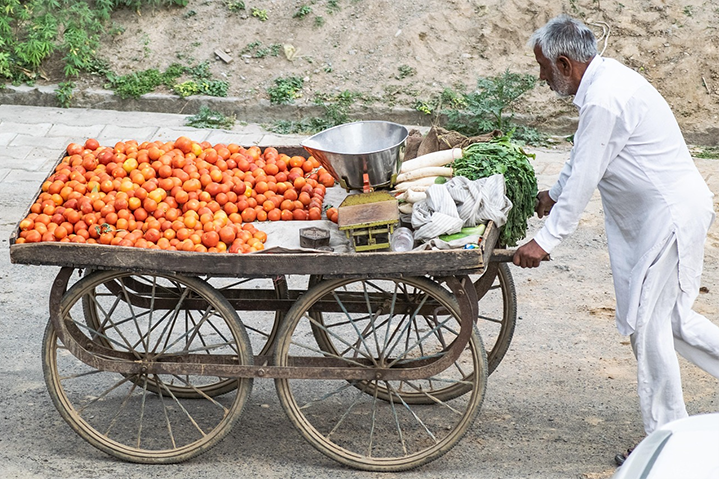
Photo courtesy: Pixabay
For now, caution is better than panic. But inflation is no longer mild, and the central bank cannot afford to assume that it will fade on its own. Waiting too long could make the problem harder to contain
Inflation is beginning to look less like a food-price problem and more like a wider price shock. Retail inflation rose to a 20-month high in August, while wholesale inflation moved close to 10 per cent. Food is driving the rise in household prices; oil, metals and manufactured goods are adding pressure higher up the supply chain.
That is an uncomfortable combination for the Reserve Bank of India (RBI) ahead of its October policy review.
Consumer price inflation rose to 4.82 per cent in August from 4.45 per cent in July, the highest reading in the eight-print 2024 CPI series and, on a back-series comparison, around a 20-month high. It has now stayed above the RBI’s 4 per cent target for three months.
Food has made the sharpest comeback. Consumer food inflation rose to 5.95 per cent from 5.52 per cent in July. A year ago, the same measure was in deflation at 0.64 per cent. Food inflation had remained negative for seven months through December 2025.
The increases are no longer confined to one or two vegetables. Ginger prices were up 73.82 per cent, onions 48.27 per cent and garlic 43.60 per cent. Sugar inflation jumped to 24.20 per cent from 4.92 per cent in July. Chicken prices rose 14.12 per cent and vegetable oils 8.8 per cent. Mustard oil was up 6.92 per cent.

The late and uneven monsoon is part of the explanation. Onion planting was delayed, pushing back the arrival of the new crop. Sugar has a different problem: lower sugarcane yields and greater diversion of cane towards ethanol have tightened domestic supplies.
Rice inflation also accelerated, to 5.88 per cent from 3.3 per cent in July. Paddy sowing has fallen 4 per cent to 42.68 million hectares in the kharif season because of deficient monsoon rains.
The wholesale numbers are more troubling. WPI inflation rose to 9.92 per cent in August from 9.78 per cent in July, its second-highest reading in 29 months. Wholesale prices are therefore rising at more than twice the pace of retail prices.
Food inflation in the WPI climbed to a 20-month high of 7.05 per cent from 6.65 per cent. Manufacturing inflation reached a series high of 8.37 per cent. Fuel and power inflation rose to 22.93 per cent from 20.05 per cent.
This is the part of the inflation picture the RBI will have to watch most closely. A rise in vegetable prices can reverse with the next harvest. Persistent increases in the prices paid by manufacturers are harder to shrug off.
Chemicals, metals and textiles are already showing double-digit inflation. The producer price index rose to 110.8 in August from 109.9, implying producer inflation of about 9.8 per cent, against 9.57 per cent in July. The pressure is spreading through the production chain.
Energy is adding to it. Crude petroleum and natural gas inflation reached 34.41 per cent and mineral oils 38.48 per cent as the West Asia conflict pushed up crude prices and disrupted the Strait of Hormuz, an important route for India’s oil supplies. Electricity prices, however, remained in deflation.
Not all of this has reached the consumer. Retail fuel prices have been cushioned and the CPI contains a large services component. That helps explain why WPI inflation is almost twice CPI inflation.

But producer prices cannot remain detached from consumer prices indefinitely. Some of the pass-through is already visible. Transport inflation rose to 4.6 per cent and restaurants and accommodation to 8.38 per cent. Information and communication inflation also increased to 2.01 per cent from 0.63 per cent, partly reflecting higher global memory-chip costs as artificial-intelligence data centres compete for supplies.
The pressure is also greater in rural India. Rural inflation was 5.23 per cent in August against 4.31 per cent in urban areas. Telangana recorded the highest inflation among states at 6.27 per cent, followed by Tamil Nadu at 5.92 per cent, Madhya Pradesh at 5.55 per cent, Andhra Pradesh at 5.53 per cent and Odisha at 5.52 per cent.
The RBI has so far kept the repo rate unchanged at 5.25 per cent for four consecutive reviews. An immediate rate increase is not a certainty. Much of the current pressure comes from food and energy, neither of which responds quickly to higher interest rates.
But the central bank cannot afford to look only at the headline CPI. The combination of food inflation, a near-10 per cent WPI reading and an 8.37 per cent rise in manufactured-product prices suggests that the shock could become broader.
The RBI may still choose to wait. But waiting will become harder if the next few readings show that the wholesale shock is reaching the household.
For now, the sensible course is caution rather than panic. But inflation has stopped being benign, and the central bank has less room than it did a few months ago to assume that the pressure will simply pass.