Saturday, 26 Sep, 2026

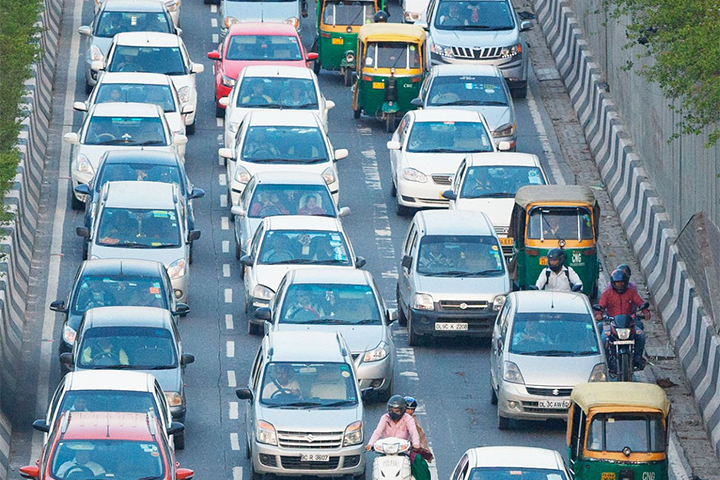
Photo courtesy: Pixabay
The first car is no longer necessarily the smallest. India’s new buyers are increasingly choosing compact SUVs over hatchbacks, challenging the traditional upgrade path
India’s first-time car buyers are returning to showrooms. But they are not necessarily returning to the small car. Lower GST (goods and services tax) has brought new buyers back into the market, yet the bigger change is what they want to drive. Compact and sub-compact SUVs are increasingly becoming the first rung on the car-owning ladder, displacing the small hatchback that once dominated the entry-level market. That makes the latest revival more than a recovery in car sales. It points to a change in the way India is becoming motorised.
The share of first-time buyers is estimated to have risen by about 10 percentage points in the first half of the financial year, the sharpest increase since the pandemic. At Maruti Suzuki, they accounted for 54 per cent of sales in April-August, up from 42 per cent a year earlier.
Tata Motors has seen their share rise by 6-7 per cent over the past year. Mahindra & Mahindra has recorded a 20 per cent increase in sales of entry-level SUVs in the first five months, against about 5 per cent growth in FY26.
The immediate trigger was taxation. The government cut GST on cars shorter than four metres to 18 per cent from 28 per cent, reducing the cost of some of the market’s most affordable models.

The effect has been striking.
Passenger-vehicle sales rose 28 per cent year-on-year in April-August, after falling 0.4 per cent in the first half of FY26. Maruti’s sales rose 36 per cent in the first five months.
Cars in the 18 per cent GST bracket recorded 29 per cent growth, reaching 1.24 million units. The category includes the Maruti Alto and WagonR, Tata Punch and Mahindra Bolero.
Maruti’s Alto and S-Presso sales jumped 96 per cent to 67,334 units in April-August, although the increase was from a low base.
So far, this looks like a straightforward tax-led revival of the small-car market. It is
The old route into car ownership was familiar: buy a small hatchback first, then move up the ladder as income increased.
That ladder is becoming less important.
Swift, Baleno and WagonR remain among the country’s best-selling cars, but SUVs are growing faster and taking an increasing share of passenger-vehicle sales. Vehicles in the 40 per cent GST bracket, including the Hyundai Creta and Kia Carens, rose about 21 per cent during April-August.
Tata Motors says first-time buyers are increasingly opting for compact and sub-compact SUVs. Its SUV segment has grown 67 per cent since the GST change, while sales of the Nexon and Punch together have risen 60 per cent. Both are now among the country’s three best-selling vehicles.
Mahindra & Mahindra is seeing much the same shift. First-time buyers are showing greater interest in entry-level SUVs such as the Bolero Neo and XUV 3XO. Its entry utility-vehicle wholesales rose 19.8 per cent year-on-year to 106,699 units in April-August, compared with 4.7 per cent growth in FY26.
The message from the showroom is therefore more interesting than the headline sales number.
The GST cut has lowered the cost of entering the car market. But buyers are using that lower entry price to reach for something more aspirational.
The compact SUV has become an attractive compromise: larger and more imposing than a hatchback, but still within reach of households entering the car market. The result is a market in which the first car need no longer be the smallest car.
This matters for India's automobile industry because first-time buyers provide the next large pool of demand. Carmakers are not simply gaining customers; they are seeing the preferences of those customers change at the point of entry.
Maruti Suzuki describes the return of first-time buyers as fresh momentum for India's “journey towards mass motorisation”. That may be right, but the nature of that journey is changing.
The GST cut has revived affordability. It has also exposed a stronger consumer preference for SUVs.
For years, India’s car market was built on the idea that ownership began small and became bigger with rising incomes. The latest data suggest that some buyers are skipping the first step.
The important story, therefore, is not merely that first-time buyers are back. It is that they are arriving with different expectations.
India’s next wave of car ownership may be driven less by the humble hatchback and more by the compact SUV.