Friday, 25 Sep, 2026

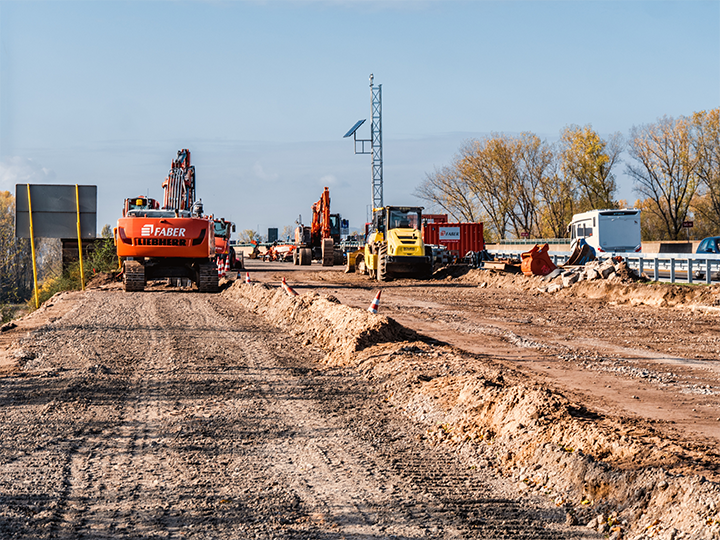
The performance of crude oil, natural gas and coal also deserves attention because these sectors form an important part of India's domestic energy supply. Image Source: PixaBay
The weakness in the energy segment is perhaps the most important aspect of the August data. Coal production declined 3.8 percent, crude oil output fell 3.6 percent and natural gas production contracted 4.9 percent.
India’s core industrial sector continued to expand in August 2026, but the latest data present a more mixed picture beneath the headline growth number. The Index of Core Industries (ICI) increased 4.8 percent year-on-year in August, according to provisional data released by the Ministry of Commerce and Industry. While the expansion remains positive, it moderated from the revised 5.0 percent growth recorded in July. More significantly, the August performance was driven largely by cement, electricity and iron ore, while several energy-intensive and strategically important sectors, including coal, crude oil, natural gas and fertilisers, contracted.

The moderation is relatively small in numerical terms, but the composition of growth warrants closer attention. Cement production expanded 12.5 percent year-on-year, electricity generation increased 11.6 percent, iron ore production grew 5.5 percent and steel output rose 3.4 percent. Refinery products recorded more modest growth of 2.6 percent. These numbers point to continued activity in infrastructure, construction, power generation and metals. Cement, in particular, has remained a strong performer, suggesting that infrastructure and construction-related demand continues to support industrial activity.
Electricity is particularly important when assessing the overall result because it carries the largest weight in the revised ICI at 30.932 percent. Refinery products account for another 22.572 percent, while steel has a 17.584 percent weight. Consequently, movements in these sectors can have a significant impact on the headline index. The strong 11.6 percent growth in electricity generation therefore provided substantial support to the August reading. However, strong electricity generation should not automatically be interpreted as evidence of equally broad-based industrial expansion, particularly when several other energy-producing sectors registered declines.
The weakness in the energy segment is perhaps the most important aspect of the August data. Coal production declined 3.8 percent, crude oil output fell 3.6 percent and natural gas production contracted 4.9 percent. Fertiliser production recorded an even sharper decline of 12.4 percent. The contraction in these sectors contrasts sharply with the strong performance of electricity and highlights an uneven pattern within India's industrial energy ecosystem.
The fertiliser numbers are particularly noteworthy. According to reports analysing the data, fertiliser production has now contracted for the sixth consecutive month. This suggests that the weakness is not simply a one-month fluctuation and merits monitoring in the context of agricultural input availability and the broader manufacturing cycle.
The performance of crude oil, natural gas and coal also deserves attention because these sectors form an important part of India's domestic energy supply. Their contraction does not necessarily imply an immediate shortage, as domestic consumption can be met through imports and inventory adjustments. However, sustained weakness in domestic production can increase dependence on external supplies and expose the economy to international commodity-price and geopolitical risks. This is particularly relevant at a time when global energy markets remain sensitive to geopolitical developments. Recent government data, for instance, showed India's crude oil imports falling more than 11 percent month-on-month in August, although imports were also around 3 percent lower than a year earlier.
Iron ore provides another interesting dimension to the data. Production grew 5.5 percent year-on-year in August, making it one of the contributors to overall core-sector expansion. However, this represents a considerable moderation from the exceptionally strong 21.8 percent cumulative growth recorded during April-August. The iron ore index also fell from 104.8 in July to 96.1 in August. This suggests that although the sector remains significantly stronger over the financial year so far, its monthly momentum has moderated.

The cumulative picture is nevertheless more encouraging. During April-August 2026, the ICI expanded 4.3 percent, compared with just 2.4 percent during the corresponding period of the previous year. The improvement has been supported particularly by iron ore, cement and electricity. During the first five months of FY2026-27, iron ore output increased 21.8 percent, cement 10.3 percent and electricity 9.6 percent. Steel grew 4.1 percent.
However, the cumulative numbers also reinforce the argument that India's core-sector recovery remains uneven. Coal contracted 3.2 percent during April-August, natural gas declined 4.4 percent, crude oil fell 4.1 percent, refinery products declined 1.4 percent and fertiliser production dropped 6.7 percent. Thus, five of the nine components of the revised ICI recorded negative cumulative growth during the first five months of the financial year. The 4.3 percent overall expansion is therefore being generated disproportionately by a smaller group of sectors.
This distinction is important because the core sector is often viewed as an early indicator of broader industrial activity. The eight industries in the traditional core-sector basket account for 40.27 percent of the weight of items included in the Index of Industrial Production. The current series has also incorporated iron ore into the core-sector basket following the shift to the 2022-23 base year.
Another reason for caution is that the broader manufacturing environment has shown signs of moderation. India's manufacturing Purchasing Managers' Index indicated that factory activity expanded at its slowest pace in five years in August, with weakening domestic and international demand contributing to the slowdown. The survey also pointed to the first decline in manufacturing employment in more than two years. While PMI and ICI measure different aspects of industrial activity and should not be treated as interchangeable, the divergence suggests that the strength visible in selected core industries may not yet be translating uniformly across the wider manufacturing economy.
The revision to July's numbers also illustrates why the latest figure should be interpreted with some caution. The July ICI was initially estimated at 121.2, corresponding to a year-on-year growth rate of 5.4 percent. The final index was subsequently revised down to 120.8, reducing the growth rate to 5.0 percent. The August figure itself is provisional and could similarly undergo revisions as additional data become available.
There is therefore a significant difference between saying that India's core industries are growing and concluding that industrial momentum is broad-based. The former is clearly supported by the data; the latter requires greater qualification. Cement, electricity, iron ore and steel are providing meaningful support, but the simultaneous contraction in coal, hydrocarbons and fertilisers points to weaknesses in several foundational sectors.
The August numbers also underline an important structural issue for the Indian economy: stronger infrastructure-linked activity is coexisting with weakness in parts of the domestic energy and input-production chain. If this divergence persists, the headline core-sector growth rate could continue to mask significant differences between sectors. Conversely, a recovery in coal, crude oil, natural gas and fertilisers alongside continued strength in construction and electricity would provide a much broader base for industrial expansion.
For now, the 4.8 percent August growth rate can be viewed as evidence of continued industrial expansion, but not necessarily accelerating or broad-based expansion. The cumulative growth of 4.3 percent in April-August is clearly better than the 2.4 percent recorded a year earlier, yet the sectoral distribution of that growth remains uneven. The next set of industrial production data will therefore be important in determining whether the resilience of the core sector is translating into wider manufacturing momentum or whether India's industrial recovery continues to depend disproportionately on a handful of infrastructure-linked sectors.