Friday, 16 Oct, 2026

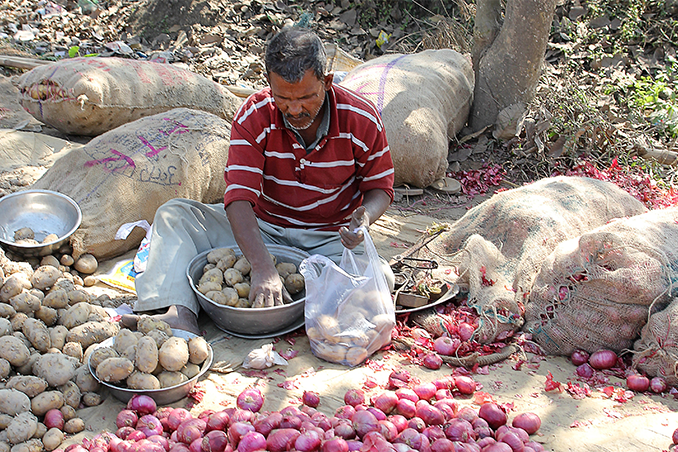
Photo courtesy: Pixabay
For households, inflation is not an index figure but the cost of the weekly shop. When several basic foods rise in price at the same time, the pressure on family budgets is quickly felt
Food inflation is beginning to show up where it matters most — in the household kitchen. The cost of putting together an ordinary meal is rising again, with onions, sugar, cooking oils, vanaspati and eggs all becoming dearer just as festival-season demand starts to pick up.
The increase in some items is substantial. The all-India average retail price of onions was Rs 46.80 a kg on August 27, against Rs 28.70 a year earlier, a rise of 63.07 per cent, according to the Department of Consumer Affairs. Sugar was selling at Rs 65.10 a kg, compared with Rs 46.30 a year ago, up 40.6 per cent.
The pressure is broader than these two items. Packed mustard oil was selling at an average Rs 200.40 a kg, up 6.4 per cent from a year earlier. Groundnut oil rose 10.6 per cent to Rs 208 a litre, soya oil 12.1 per cent to Rs 165.20, and sunflower oil 18.05 per cent to Rs 191.05. Palm oil was 13.9 per cent costlier at Rs 150.10, while vanaspati rose 6.4 per cent to Rs 166.30.
Egg prices have also moved up. The average price reached Rs 84.20 a dozen on August 27, against Rs 77.10 a year earlier, an increase of 9.2 per cent. Higher feed costs are adding to poultry producers’ expenses, with stronger demand for maize from the ethanol industry contributing to the increase.
The significance lies not merely in the size of individual price rises, but in how widespread they have become. More than one-third of the commodities for which the government tracks daily retail prices are now recording annual increases of more than 6 per cent.

A household can adjust to a sharp increase in the price of one item. It can buy less onions, switch between cooking oils or substitute one food for another. But the scope for adjustment narrows when several essentials become more expensive at the same time. Food is not a discretionary purchase that can simply be postponed.
Onions are also a reminder of the political economy of food inflation in India. When supplies tighten and prices rise, the government is expected to respond. The Centre has begun releasing onions from its buffer stocks and selling them at Rs 35 a kg through designated outlets, seeking to contain the seasonal rise before the festival period.
Sugar is a somewhat different case. There is no immediate indication of a nationwide shortage, yet prices have risen sharply, helped by festive demand and speculative buying. The government has responded by allowing duty-free imports of 1 million tonnes of raw sugar.
The timing is significant. The festival season typically brings stronger demand for food, particularly sugar and cooking oil. That can amplify price pressures just when households are already facing higher costs across several parts of their food basket.
Weather could make matters worse. Rainfall has been weak in several parts of the country, raising concerns about crop output and the soil moisture needed for the next round of sowing. A poor monsoon can push prices higher through lower supplies, while also affecting production in the following season.
Global factors are adding to the uncertainty. The crisis in West Asia has raised energy and shipping costs, which can feed through into transport, fertiliser and imported commodity prices. India is particularly exposed in edible oils because of its heavy reliance on imports. Domestic prices are therefore influenced not only by local supplies but also by global prices and movements in the rupee.
This is where the distinction between headline inflation and the inflation experienced by households becomes important. The headline rate is an average across a broad consumption basket. Prices can fall in some categories even as they rise sharply in others, leaving the overall number relatively benign.
Households, however, do not consume the average.
They notice what happens to the price of onions, cooking oil, sugar and eggs. When several of these rise together, the effect on the monthly budget can be considerably greater than the headline inflation rate suggests.
The burden is heavier for lower- and middle-income families, for whom food takes up a larger proportion of household expenditure. More money spent on essentials means less available for everything else.
The government's measures — releasing onions from buffer stocks and permitting additional sugar imports — can help contain some of the immediate pressure. But they cannot by themselves address the wider risks from weak rainfall, higher global costs, expensive freight and stronger seasonal demand.
India may have succeeded in bringing down headline inflation. The latest movement in food prices is a reminder, however, that low inflation on paper does not necessarily mean that households are feeling little pressure.
For the consumer, inflation is not an index number. It is the bill at the grocery shop. And when several basic food items become dearer together, that is where the squeeze becomes visible.