Friday, 16 Oct, 2026

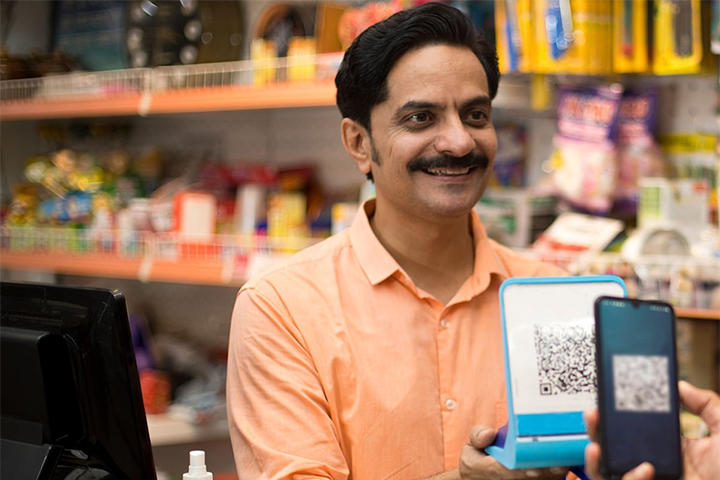
Photo courtesy: Pixabay
Digital payments show little sign of slowing. UPI transactions crossed 2,300 crore for the first time in May 2026 and rose to a record 2,366 crore in July, taking the daily run rate to more than 66 crore payments
A decade ago, paying a shopkeeper in India usually meant reaching for cash. Today, a roadside tea seller can display a QR code, and money can move between bank accounts in seconds. Few changes in India’s economic life have been as rapid or as widely felt as the rise of the Unified Payments Interface, or UPI.
The numbers show the scale of that transformation. Annual UPI transactions rose from just 1.78 crore in 2016-17 to more than 24,162 crore in 2025-26, while the value of transactions jumped from Rs 0.07 lakh crore to about Rs 314 lakh crore. In 10 years, transaction volumes have increased almost 13,000-fold and their value more than 4,000-fold, turning what began as a payments experiment into the backbone of India’s digital economy.
The growth continues to accelerate. Monthly transactions crossed 2,300 crore for the first time in May 2026, reaching 2,320 crore. The record was broken in July, when UPI processed 2,366 crore transactions. More than 66 crore transactions are now processed every day.

The foundations for this were laid well before UPI was launched on August 25, 2016. The system was developed by the RBI-regulated National Payments Corporation of India (NPCI) and the Indian Banks’ Association (IBA), with work beginning around 2012-13.
India was then heavily dependent on cash. The RBI’s payments vision document noted that nearly one-third of e-commerce purchases were made through cash on delivery. An RBI committee examining financial services for small businesses and low-income households had also identified the potential of the Immediate Payment Service, or IMPS, and envisaged a network of individuals and merchants using mobile phones for purchases, remittances and cash transactions.
UPI built on that groundwork, though adoption was initially slow. Demonetisation in November 2016 gave digital payments a temporary boost, but monthly UPI transaction value remained below Rs 10,000 crore until December 2017. It took another year for monthly value to cross Rs 1 lakh crore.

The subsequent acceleration was driven by UPI’s basic advantage: it was simple and interoperable. Users could send money instantly across banks through a common interface, while merchants could accept payments without investing in expensive card infrastructure.
The network expanded rapidly. The number of banks live on UPI rose from 44 in 2016-17 to 703 by 2025-26. By FY26, the 24,162 crore transactions reflected UPI’s deep integration into daily payments, particularly among merchants.
The platform has become a central part of India’s digital public infrastructure, providing a common system for peer-to-peer and peer-to-merchant transactions. It has also widened access to digital financial services and brought individuals, small businesses and merchants more deeply into the formal economy.
Its scale has now drawn global attention. The International Monetary Fund (IMF) has recognised UPI as the world’s largest real-time payment system by transaction volume. In 2025, it accounted for nearly 49 per cent of global real-time payment transactions.
UPI is also moving beyond India. It is operational in 11 countries: the UAE, France, Bhutan, Sri Lanka, Nepal, Singapore, Mauritius, Qatar, Cambodia, Greece and the Maldives. Cross-border use remains small compared with its domestic business, but its international expansion marks a significant shift for a platform originally designed for India’s domestic payments needs.
The next phase will bring a different set of challenges. As transaction volumes rise, maintaining reliability at a scale of more than 66 crore transactions a day will become increasingly demanding. Fraud prevention, cyber security and bringing new users and merchants into the system will also determine how far UPI can expand.
UPI is free for ordinary users and small merchants and works across banks and platforms seamlessly. Those features helped make it a mass-market system rather than a collection of closed networks. The next test is whether India can extend that success beyond payments — by strengthening financial inclusion, security and resilience while taking UPI to more overseas markets.