Thursday, 17 Sep, 2026

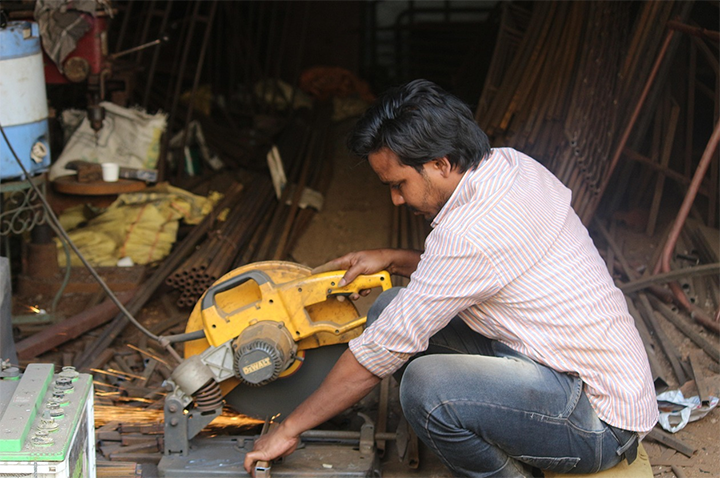
Photo courtesy: Pixabay
India’s labour market is full of contrasts: productivity is rising rapidly, yet wages inch forward. Long working hours, uneven job quality, pressure on urban women, and persistent inequality highlight the human cost of growth
The Centre has pushed through its most sweeping labour overhaul in decades. From November 21, four new labour codes—governing wages, industrial relations, social security and workplace safety—have come into effect, replacing 29 legacy laws that businesses long viewed as outdated, overlapping and hard to navigate. The government says the new system will protect workers better, expand benefits to women and gig workers, and make Indian industry more competitive. But the latest data shows an economy where the labour market is changing unevenly, with gaps that new laws alone may not fix.
Productivity rises faster than pay
One of the clearest trends is the growing gap between how much factories produce and how much workers earn. Between 2018 and 2023, annual wages per worker rose from Rs 168,581 to Rs 216,487—an increase of about 30 per cent. Over the same period, factory output per worker climbed much faster, rising from Rs 57 lakh to nearly Rs 99 lakh.

That discrepancy suggests workers are contributing more to the economy than they are receiving in wages. Labour income, including social security and self-employment earnings, has inched up to 60.4 per cent of GDP in 2024, but that improvement partly reflects the expansion of schemes like Ayushman Bharat rather than higher pay.
For the new wage rules to matter, India will need not just compliance but stronger wage growth that keeps pace with productivity.
India works long weeks
Workers today are spending fewer hours on the job than before the pandemic. Average weekly working hours have steadily declined from late 2019 through mid-2024. The shift reflects changes in job patterns, greater movement into services, and a softer manufacturing cycle.
But India still ranks 21st among 190 countries in terms of longest average workweeks. Nations such as Jordan, Sudan and Lesotho report shorter hours. In other words, even with the recent decline, Indian workers still put in some of the longest weeks anywhere, highlighting the country’s dependence on long, low-productivity work.

Labour relations in flux
Another striking trend is the jump and fall in union registrations. Trade unions rose sharply from 12,392 in 2016 to 37,638 in 2021, then dropped back to 27,586 in 2022. The swings point to unsettled labour relations, as formal jobs expand, gig work grows, and more people move into warehousing, logistics and smaller manufacturing units.
The Industrial Relations Code aims to simplify how disputes are handled and how firms hire and fire workers. But critics argue some provisions may weaken workers’ bargaining power. Much still depends on how states draft and enforce their own rules, since labour is a shared responsibility between the Centre and the states.
Urban women still losing out
PLFS data shows women in cities continue to face higher unemployment than men. Even as female labour force participation rises, joblessness among urban women remains stubbornly high. Safety concerns, a shortage of affordable childcare and gender biases in hiring all play a part.

The new Codes promise better conditions for women, but these structural issues go far beyond legal reform.
Inequality widening
Wealth concentration remains one of India’s biggest challenges. The top 10 per cent of households own more than 65 per cent of all wealth, while the bottom half holds just 6.4 per cent. Labour reform cannot directly correct this imbalance, but the numbers highlight the need for stronger social protection and better quality jobs—both central goals of the new Codes.
Reform needs big execution
The four labour Codes are a major legislative clean-up and a long-awaited attempt to simplify how India regulates work. But for now, the reforms are more visible on paper than in practice. Each Code still requires detailed rules and forms from both the Centre and the states before they can be fully implemented.
India’s labour market remains a mix of progress and pressure: wages rising slowly, productivity rising fast, long workweeks, uneven job quality, stressed urban female employment, and deep inequality. The new Codes aim to improve this landscape, but their impact will depend on how faithfully they are implemented—and whether India can create more stable, better-paying jobs.