Thursday, 17 Sep, 2026

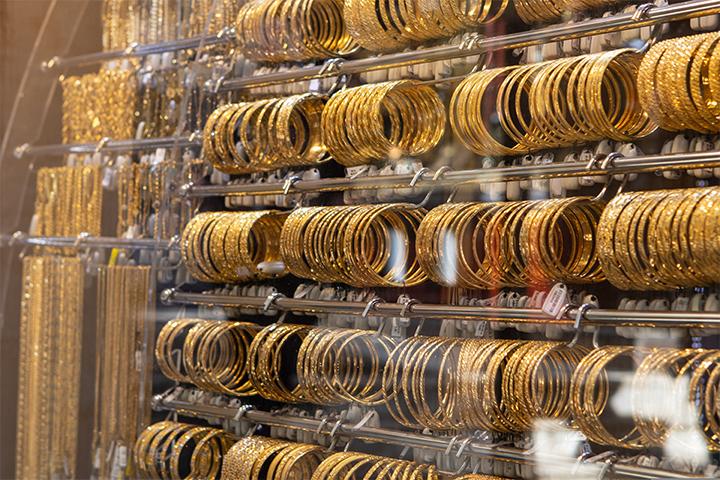
Photo courtesy: Pixabay
Gold ETFs offer liquidity, easy portfolio integration and quick response to market moves—flexibility that has proved valuable amid volatility and geopolitical uncertainty
Through much of FY26, two numbers began to dominate Rumi Mazumder’s (name changed) smartphone screen—and her thinking: gold prices and fund flows. A 51-year-old tuition teacher in Garia, she had always followed markets with quiet discipline. But this year felt different. On most mornings, with a cup of tea by the window before work, she found herself scrolling a little longer than usual, watching those numbers move—one climbing steadily, the other signalling where investors like her were heading.
Her investment habits were once routine—monthly SIPs in equity funds, some savings in fixed deposits. But FY26 disrupted that rhythm.
“It wasn’t one big fall,” she says. “It was the uncertainty that kept building.”
By the end of the year, the Sensex had declined about 5 per cent. On paper, that may not seem alarming. But beneath the surface, volatility told a different story. In the fourth quarter alone, the index fell nearly 15 per cent, shaking investor confidence and prompting a reassessment of risk.
At the same time, gold was moving in the opposite direction. Prices surged about 63 per cent during FY26, climbing to nearly Rs 1.5 lakh by March 31, 2026. The rally was fuelled by global safe-haven demand amid geopolitical tensions, reinforcing gold’s traditional role as a hedge in uncertain times.

The shift was not just visible in prices, but also in where investors were putting their money. Net inflows into gold exchange-traded funds (ETFs) surged to a record Rs 68,867 crore during FY26. This figure far exceeded the earlier annual range of Rs 700 crore to Rs 15,000 crore, making it an exceptional year for the category.
In proportional terms, the change was just as striking. Gold ETFs accounted for nearly 10 per cent of total mutual fund inflows, sharply higher than the historical share of 1–3 per cent. Growth was equally dramatic—net inflows jumped 364 per cent year-on-year, or more than four-and-a-half times compared with the previous year, marking the fastest expansion across all mutual fund categories, including equity, debt and hybrid.
For many investors, these numbers reflected a broader shift in sentiment.
The turning point came toward the end of the year. As equity markets weakened sharply, the March quarter alone recorded net inflows of Rs 31,561 crore into gold ETFs—the highest quarterly inflow of the year. The timing suggests a decisive move by investors to rebalance portfolios in response to heightened volatility.
Equally notable was the scale of incremental money entering the segment. Additional inflows rose by Rs 54,015 crore in FY26 over the previous year, far exceeding the earlier annual incremental range of Rs 2,500 crore to Rs 10,000 crore. This was not a marginal adjustment; it was a significant reallocation of capital.
Other segments of the mutual fund industry presented a mixed picture. Debt funds saw an 84 per cent decline in net inflows, while equity funds recorded a 17 per cent drop. Index funds, often preferred for passive exposure, registered a steep 56 per cent fall. In contrast, hybrid funds and other ETFs reported increases of 30 per cent and 65 per cent, respectively—though these gains were modest compared with the surge in gold ETFs.
For Rumi, the decision to invest in gold ETFs came late in the year, prompted by experience rather than theory.
Instead of buying physical gold, she opted for a financial instrument—a choice that reflects a broader shift among Indian investors. Traditionally, gold purchases were tied to jewellery, festivals or weddings. But rising prices and changing preferences are pushing savers towards ETFs, which offer exposure without concerns about storage, purity or making charges.

This trend aligns with a long-observed pattern in the gold market. When prices rise sharply, jewellery demand tends to weaken, while investment demand strengthens. FY26 followed that trajectory, with investors favouring liquidity and convenience over physical ownership.
The appeal is straightforward. Gold ETFs allow investors to buy and sell easily, integrate the asset into diversified portfolios, and respond quickly to market movements. In a year marked by volatility and geopolitical uncertainty, that flexibility has proven valuable.
“You still need equities for growth,” she says. “Also, you need something that balances the risk.”
That balancing act captures the essence of FY26. For many investors, the surge in gold ETFs was less about chasing extraordinary returns and more about managing uncertainty. It reflects a shift in priorities—from maximising gains to preserving stability.
Whether this trend sustains will depend on how markets evolve. A recovery in equities or easing global tensions could temper the appeal of gold. But if uncertainty persists, its role within portfolios may remain elevated.
For now, the year stands as a reminder that in times of disruption, investor behaviour can change quickly—and decisively.