Thursday, 17 Sep, 2026

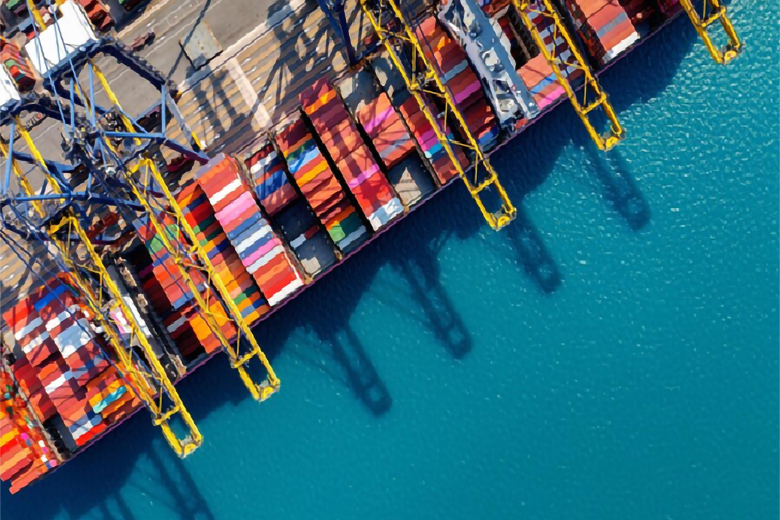
According to central government estimates, total exports of goods and services rose to US$860.09 billion, marking a 4.22 percent increase over the previous fiscal year’s US$825.26 billion. Image Source: IANS
While the widening trade deficit underscores structural dependencies, the broader trajectory suggests an economy in transition, one that is gradually positioning itself for a more balanced and resilient role in global trade.
India’s external trade landscape in FY 2025–26 reflects a complex mix of resilience, imbalance, and gradual structural change, as the country navigates shifting global demand and domestic growth priorities. According to central government estimates, total exports of goods and services rose to US$860.09 billion, marking a 4.22 percent increase over the previous fiscal year’s US$825.26 billion. However, imports expanded at a faster pace, climbing 6.47 percent to US$979.40 billion. This sharper rise in inbound trade pushed the overall trade deficit to US$119.30 billion, significantly wider than the US$94.66 billion recorded a year earlier, underlining the persistent gap between India’s consumption needs and export capacity.
India's Trade in FY2025-26

Source: Ministry of Commerce & Industry
A closer look reveals that merchandise exports remained relatively subdued, growing just 0.93 percent to US$441.78 billion. This modest uptick points to continued headwinds in global goods trade, including uneven demand and ongoing commodity price volatility. In contrast, merchandise imports surged to US$774.98 billion from US$721.20 billion, deepening the merchandise trade deficit to US$333.19 billion. The data highlights India’s continued reliance on imports, particularly for energy resources and critical industrial inputs that sustain its expanding economy.
March 2026 offered a snapshot of these dynamics in motion. Total exports for the month stood at US$74.11 billion, reflecting a 4.58 percent decline compared to March 2025, while imports fell even more sharply by 5.76 percent to US$76.55 billion. Despite the contraction in overall trade volumes, the monthly trade deficit narrowed to US$2.44 billion from US$3.55 billion a year earlier, suggesting some easing in external pressures, likely driven by softer global prices and moderated demand.
India's Trade in March 2026

Source: Ministry of Commerce & Industry
Sectorally, several export categories demonstrated pockets of strength during March. Petroleum product shipments grew by 5.88 percent to US$5.18 billion, while engineering goods, a cornerstone of India’s export basket, posted a modest 1.13 percent increase. Mineral exports, including coal, mica, and processed ores, registered a robust 11.27 percent rise, and cereals saw an exceptional surge, albeit from a low base. Handicrafts, excluding handmade carpets, also recorded a healthy 8.51 percent growth, signaling resilience in specialized and niche segments. On the import side, the trend was broadly downward, with declines observed across petroleum products, gold, cotton, project goods, chemicals, metals, and transport equipment. This contraction reflects a combination of lower global prices, inventory adjustments, and possibly cautious domestic demand.
Amid these mixed signals, India’s services sector once again emerged as the anchor of its external trade performance. Services exports were estimated at US$418.31 billion for the fiscal year, registering a strong 7.94 percent growth, while imports rose more modestly to US$204.42 billion. This resulted in a substantial services trade surplus of US$213.89 billion, which played a crucial role in offsetting the large merchandise deficit and stabilizing the overall external balance. The dominance of services, particularly in IT and digital domains, continues to be a defining feature of India’s trade profile, though it also introduces exposure to regulatory shifts and demand cycles in advanced economies.
At the same time, India’s trade relationships are undergoing a noticeable evolution. Export growth in March was particularly strong in markets such as Singapore, Malaysia, China, Tanzania, and Sri Lanka, while annual trends showed rising shipments to countries including China, Spain, Hong Kong, Vietnam, and Sri Lanka. On the import front, key contributors to increased inflows included China, the United States, Hong Kong, Peru, and the United Kingdom. These patterns indicate a gradual diversification of both export destinations and sourcing strategies, reflecting a more multi-polar trade engagement.
Taken together, the data points to a deeper structural shift rather than a temporary fluctuation. India continues to function as a demand-driven economy with strong consumption and investment dynamics, making it an attractive destination for global businesses. However, the gap between import intensity and export scalability remains a critical challenge. The growing dependence on services exports, while advantageous in the short term, also raises concerns about concentration risks, particularly in the face of evolving global regulatory and economic conditions.
Encouragingly, there are early signs of a transition toward more value-added exports beyond traditional commodities, although scaling these segments remains a hurdle. At the same time, rising imports of intermediate and capital goods suggest an ongoing investment cycle, opening opportunities for domestic manufacturing expansion, import substitution, and supply chain localization.
As India continues to recalibrate its trade strategy, the path forward will depend on strengthening manufacturing competitiveness, diversifying export offerings, and sustaining the momentum of its high-performing services sector. While the widening trade deficit underscores structural dependencies, the broader trajectory suggests an economy in transition, one that is gradually positioning itself for a more balanced and resilient role in global trade.