Saturday, 17 Oct, 2026

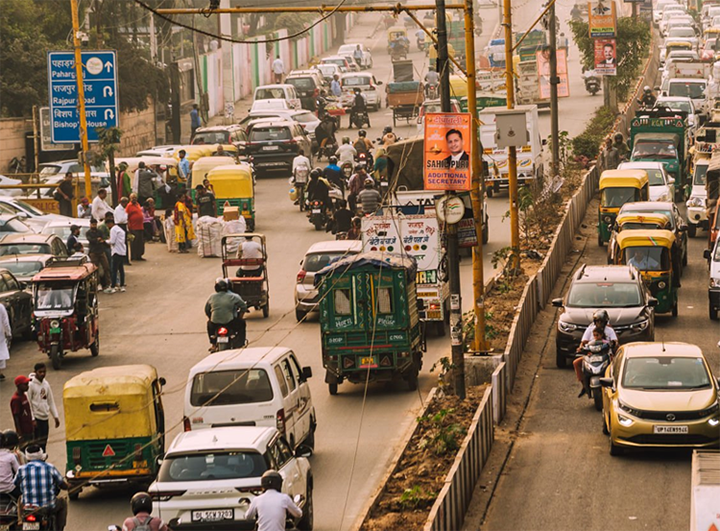
Photo courtesy: Pixabay
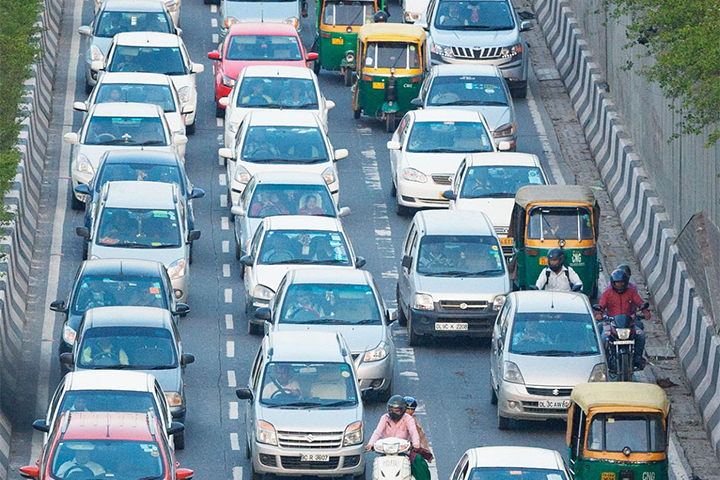
The trend points to a broad, resilient demand recovery, supported by improving affordability, rising mobility needs across urban and rural markets, and a gradual shift in fuel and powertrain choices
The automobile market delivered its strongest performance in FY26, underscoring a broad-based recovery in consumption that now appears more structural than cyclical. Retail sales in FY26 rose 13.3 per cent to an all-time high of 29.6 million units, bringing the industry within reach of the 30-million mark—a milestone that would have seemed distant just two years ago.
Data from the Federation of Automobile Dealers Associations (FADA) show that five of six vehicle segments posted record annual sales. Passenger vehicles crossed 4.7 million units for the first time, growing 13 per cent. Two-wheelers, the backbone of mass mobility, reclaimed their pre-pandemic peak with sales of over 21.4 million units, up 13.4 per cent. Commercial vehicles also hit a new high, crossing the 1-million mark with growth of 11.74 per cent.
Three-wheelers continued their steady expansion, registering a third consecutive annual record with growth of 11.68 per cent. Tractors emerged as the standout performer, surpassing 1 million units for the first time with a sharp 18.95 per cent increase. The only weak spot was construction equipment, where sales declined 11.70 per cent, weighed down by project delays and a high base.

Taken together, the performance points to a demand recovery that is both wide-ranging and resilient. Growth has been supported by improving affordability, rising mobility demand across both urban and rural markets, and a gradual diversification in fuel and powertrain choices.
A key trigger for the acceleration came in the second half of the year. The first five months, from April to August, were marked by moderate growth of 2–5 per cent as the market worked through excess inventory, selective financing constraints and cautious consumer sentiment. Buyers remained in a wait-and-watch mode, partly due to expectations of policy changes.
The inflection point arrived in September with the rollout of GST 2.0. The rationalisation of tax rates lowered the effective burden on mass-market two-wheelers, small cars, three-wheelers and certain commercial vehicle segments. This provided a direct boost to affordability at a time when underlying demand was already building.
The timing proved critical. October saw the convergence of major festivals such as Navratri and Diwali, driving record monthly retail sales of over 4 million units. More importantly, the momentum sustained beyond the festive period. January, February and March 2026 each recorded strong double-digit year-on-year growth, suggesting that the upturn was not merely seasonal but reflected a deeper shift in demand.
Alongside volume growth, the industry is undergoing a gradual transition in powertrains. Electric vehicles (EVs) continued to gain share across segments. EV penetration in two-wheelers rose to 6.54 per cent, while passenger vehicle EV share reached 4.25 per cent. In commercial vehicles, EV adoption nearly doubled to 1.83 per cent.
Compressed natural gas (CNG) also strengthened its position, particularly in passenger vehicles where it accounted for 21.98 per cent of sales, and in commercial vehicles at 11.79 per cent. This suggests that the shift towards cleaner fuels is not confined to electric mobility alone but includes a broader mix of alternatives.
Overall EV retail sales stood at 2.45 million units for the year, marking a 24.63 per cent increase. The pace of growth indicates that the transition towards alternative powertrains is gaining substance, even if internal combustion engines continue to dominate overall volumes.
The industry body expects double-digit growth to continue, though the trajectory may not be linear. The experience of FY26 shows that policy support, particularly on taxation, can act as a powerful catalyst when combined with improving consumer fundamentals.
At the same time, the divergence within segments highlights underlying risks. The decline in construction equipment sales points to uneven momentum in infrastructure execution, while the earlier slowdown in the first half of the year underscores the sensitivity of demand to financing conditions and inventory cycles.
Even so, the broader trend is clear. India’s automobile market is moving closer to a new scale, driven by a combination of policy support, rising incomes and evolving mobility needs. Crossing the 30-million mark now appears less a question of possibility and more one of timing.
The more important question is whether this growth can be sustained without creating imbalances. For now, the evidence suggests that demand is broad-based and supported by fundamentals rather than excess leverage or one-off factors. That, more than the headline numbers, marks a turning point for the industry.