Friday, 16 Oct, 2026

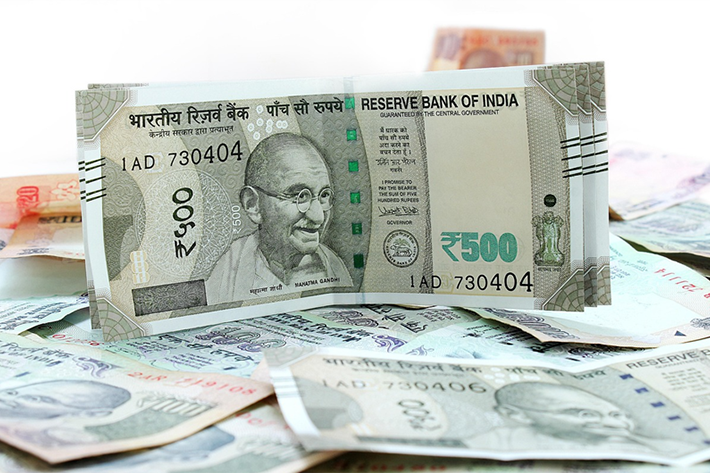
Photo courtesy: Pixabay
Fiscal pressures are mounting again. Crude prices have surged amid the war in Iran, fertiliser and fuel subsidies are set to overshoot targets, and tax collection growth is slowing alongside uneven consumption demand
The Reserve Bank of India’s (RBI’s) decision to transfer a record Rs 2.87 lakh crore surplus to the Centre for FY26 is more than an accounting milestone. It is a reminder of how deeply India’s fiscal stability now depends on the central bank at a time when the economy faces slowing revenue growth, geopolitical uncertainty and rising subsidy pressures.
The transfer, 7 per cent higher than last year’s Rs 2.69 lakh crore payout, comes as the RBI’s balance sheet expanded 20.61 per cent to Rs 91.97 lakh crore and its gross income rose 26.42 per cent. Net income before risk provisioning climbed sharply to Rs 3.96 lakh crore from Rs 3.13 lakh crore a year earlier. Robust earnings from government securities and large-scale foreign exchange sales helped swell the central bank’s income.
Yet beneath the headline bounty lies a more complicated story about the Indian economy’s vulnerabilities.
The RBI has simultaneously reduced the contingent risk buffer (CRB) ratio to 6.5 per cent from 7.5 per cent, although it still transferred Rs 1.09 lakh crore into the contingency reserve—more than double the previous year’s Rs 44,861 crore. Economists point out that despite the lower CRB ratio, provisioning surged because the RBI’s balance sheet itself ballooned by more than one-fifth during the year.
That matters because the central bank is effectively preparing for a more volatile future even while handing the government an unprecedented windfall. The RBI’s revised Economic Capital Framework now allows the CRB to range between 4.5 per cent and 7.5 per cent of the balance sheet, giving policymakers flexibility during turbulent times. The decision to keep the buffer at 6.5 per cent suggests the central bank sees elevated risks but also recognises the Centre’s urgent fiscal needs.
This transfer arrives at a politically and economically sensitive moment.

India’s fiscal arithmetic is worsening again. Crude oil prices have risen sharply because of the West Asia conflict. Fertiliser and fuel subsidies are expected to overshoot budget targets. Tax collections are losing momentum amid uneven consumption demand. Dividend expectations from oil marketing companies are weakening. Economists at Icra estimate that the Centre may overshoot its FY27 fiscal deficit target of 4.3 per cent of GDP by as much as 40 basis points if crude averages $95 per barrel.
In that context, the RBI’s transfer has become less of a bonus and more of a fiscal lifeline.
Experts noted that the surplus transfer amounts to 90.8 per cent of the Centre’s budgeted non-tax revenue. That single statistic reveals the scale of the government’s dependence on the central bank. Without this transfer, the pressure to either borrow more aggressively or cut expenditure would have intensified sharply.
This also reflects a broader structural issue within the Indian economy: the growing gap between political spending commitments and sustainable revenue generation.
India’s governments—both at the Centre and in the states—are increasingly locked into large welfare commitments, subsidies and capital expenditure plans simultaneously. But tax buoyancy has weakened compared with the post-pandemic recovery years. Private consumption remains uneven, rural demand fragile and global trade conditions uncertain. Under such conditions, extraordinary transfers from institutions like the RBI help postpone difficult fiscal choices.
The irony is that this record payout comes during a period when the RBI itself is confronting rising financial-market risks. The central bank reportedly absorbed mark-to-market losses and volatility linked to currency management operations. It sold nearly $180 billion in foreign exchange reserves during FY26, generating substantial income but also exposing itself to valuation risks amid global uncertainty.
This is where the surplus transfer becomes economically significant beyond the budget math.
The RBI’s forex interventions were not merely profit-making exercises; they were stabilisation measures aimed at defending the rupee, controlling imported inflation and preventing disorderly market conditions. In effect, the central bank earned more because the external environment became more unstable. India is therefore benefiting fiscally from global turbulence even as that same turbulence threatens its macroeconomic stability.
There is another political economy dimension to this transfer. Large RBI payouts often create the illusion of fiscal comfort. Governments gain temporary breathing room without immediately confronting hard reforms related to subsidies, tax administration, disinvestment or expenditure rationalisation. But central bank transfers are inherently cyclical and volatile. They cannot substitute for durable fiscal capacity.
Moreover, repeated reliance on such transfers raises questions about institutional balance. The RBI’s credibility rests partly on its ability to prioritise financial stability over fiscal convenience. While the current transfer remains within the revised Economic Capital Framework, the broader trend of increasingly large payouts inevitably revives concerns about whether the boundary between monetary prudence and fiscal dependence is gradually narrowing.
For now, the government has secured valuable breathing space. Bond markets may remain calmer. Borrowing pressures could ease marginally. The fiscal deficit may appear more manageable than feared.
But the deeper message from the RBI’s record surplus is not one of economic abundance. It is a warning that India’s public finances are becoming more vulnerable to oil shocks, geopolitical disruptions and slowing revenue momentum. The central bank has once again acted as the system’s shock absorber. The real question is how long it can continue doing so without the broader economy undertaking harder structural adjustments.