Friday, 16 Oct, 2026

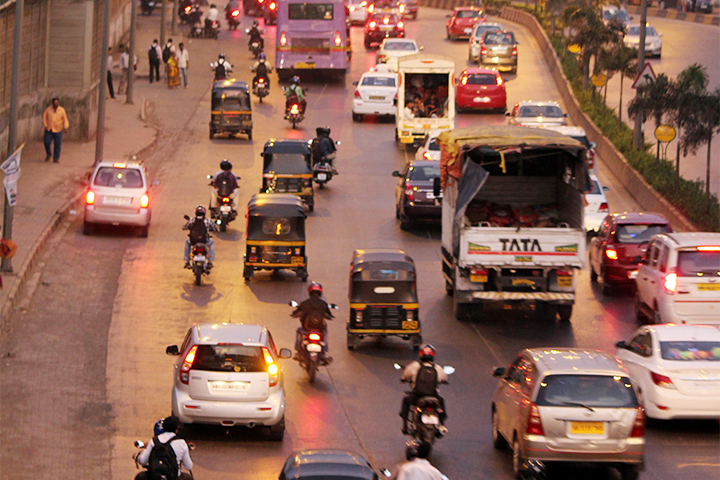
Photo courtesy: Pixabay
Domestic demand continues to anchor India’s economy, with resilient consumption, investment and tax revenues helping offset global headwinds.
Higher crude oil prices, geopolitical tensions in West Asia and slowing global trade would normally weigh on consumer demand. Instead, the latest auto sales and tax data suggest households are still spending—and that domestic demand continues to cushion the economy against external shocks.
June delivered two encouraging signals. Passenger vehicle sales climbed nearly 25 per cent from a year earlier to around 400,000 units, while goods and services tax (GST) collections stayed close to the Rs 2 lakh crore mark despite tax rate cuts introduced last year. Together, the numbers paint a picture of an economy where consumption remains resilient, even as the global environment becomes increasingly uncertain.
The automobile industry offers perhaps the clearest evidence.
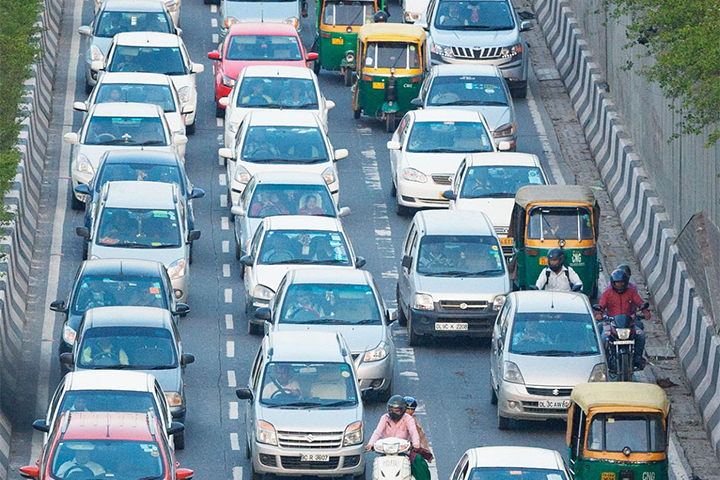
The passenger vehicle market recorded one of its strongest June performances on record, driven by a combination of income-tax relief, lower borrowing costs and improving rural demand. Maruti Suzuki, the country’s largest carmaker, reported domestic wholesale sales of 147,187 vehicles, up 23.8 per cent from a year earlier despite a planned production shutdown during the month.
Dealer inventories also fell to around 75,000 vehicles, or roughly two weeks of stock, indicating that retail demand exceeded wholesale dispatches. That is generally regarded as one of the healthiest signals for the industry because it reflects genuine consumer purchases rather than inventory accumulation.
Demand has become increasingly broad-based.

Rural markets, which had lagged urban demand for much of the past two years, are now contributing strongly to growth. Maruti Suzuki reported a 45 per cent increase in rural sales, with villages accounting for more than half of its domestic volumes. Better farm incomes, easing inflation and successive reductions in interest rates have all supported household purchasing power.
Tax policy has also played a role. Income-tax relief for individuals earning up to Rs 12 lakh, along with GST rationalisation and lower repo rates, has boosted discretionary spending. Even higher fuel prices resulting from the West Asia conflict have so far failed to derail demand.
The strength is even more visible in electric vehicles.
Tata Motors reported domestic passenger vehicle sales of more than 62,000 units in June, an increase of over 67 per cent from a year earlier. Its electric vehicle sales reached a record 14,800 units, almost three times last year’s level, allowing the company to expand its share of the electric passenger vehicle market to 39 per cent despite an influx of new competitors.
The rapid growth suggests that India’s electric vehicle market is entering a new phase. Consumers are no longer merely experimenting with EVs. They are increasingly adopting them as mainstream alternatives, encouraged by falling ownership costs and expanding product choices.
The tax data reinforce the consumption story.
Gross GST collections rose 13.9 per cent year-on-year to Rs 1.95 lakh crore in June, while net collections increased 11.2 per cent to Rs 1.62 lakh crore after refunds. Considering that GST rates were reduced under the GST 2.0 reforms last year, maintaining such robust collections suggests that higher transaction volumes are offsetting lower tax rates.
However, the details also reveal an economy with two distinct speeds.

Domestic GST collections grew only 6.5 per cent before refunds and just 2.6 per cent after adjusting for refunds. By contrast, GST revenue from imports surged nearly 35 per cent, with net collections on imports jumping more than 42 per cent.
The divergence indicates that imports are contributing disproportionately to tax growth. Strong imports of capital goods, electronics and industrial inputs point to continued investment and manufacturing activity. At the same time, softer domestic GST growth suggests consumption, while healthy, is not accelerating uniformly across sectors.
The trend is worth watching because import-led tax growth cannot indefinitely substitute for stronger domestic production. Policymakers will likely monitor whether higher imports reflect expanding industrial capacity or increasing dependence on overseas supplies.
Even so, the broader message remains encouraging.
Despite geopolitical uncertainty, elevated oil prices and slower global demand, India's domestic economy continues to display remarkable resilience. Lower inflation, tax relief and easier monetary policy are supporting household spending, while businesses continue investing in vehicles, machinery and productive assets.
There are risks ahead. A prolonged spike in crude oil prices could eventually raise vehicle prices, fuel inflation and squeeze disposable incomes. The progress of the southwest monsoon will also determine rural purchasing power during the festive season. Likewise, stronger import growth than domestic production may eventually widen trade imbalances.
For now, though, India’s growth story remains firmly anchored in domestic demand. Consumers continue to spend, companies continue to invest and tax collections continue to surprise on the upside. In an increasingly fragile global economy, that combination has become one of India’s biggest competitive strengths.