Saturday, 17 Oct, 2026


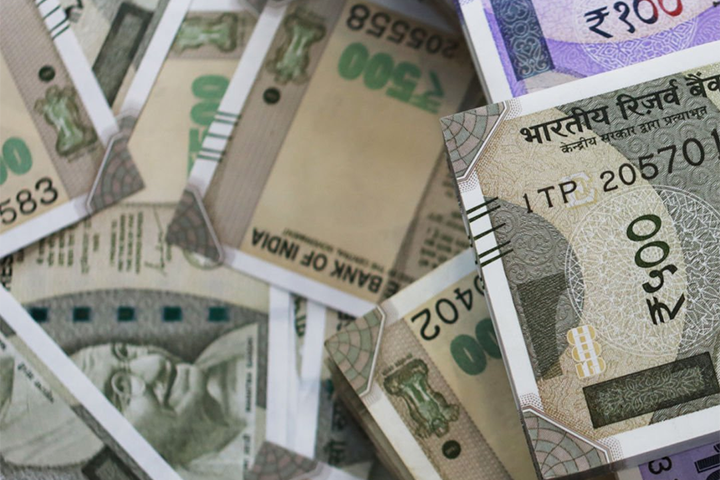
Photo courtesy: Pixabay
A stable rupee helps contain imported inflation, lowers the cost of essential imports, and reduces the risk of exchange-rate weakness spilling over into broader price pressures, supporting the RBI's inflation objective
The Reserve Bank of India (RBI) ended May with its largest-ever net short forward position in the foreign exchange market, highlighting the extent to which it intervened to shield the rupee during a period of intense global volatility.
Data released by the central bank showed the net short forward position widened to $106.6 billion in May, up sharply from $95 billion in April. The increase coincided with a month in which the rupee repeatedly came under pressure amid uncertainty triggered by the West Asia conflict, forcing the RBI to step up intervention to smooth excessive currency movements.
The forward book has become one of the most closely watched indicators of the RBI’s currency management strategy because it reveals intervention that is not immediately visible through headline foreign exchange reserve numbers. A larger net short forward position typically indicates that the central bank has sold dollars in the forward market to supply liquidity and temper depreciation pressures without drawing down reserves as aggressively in the spot market.
May was one of the toughest months for the rupee this year.
The currency touched a record low of 96.96 against the US dollar on May 20, with traders estimating that the RBI conducted multiple rounds of intervention to prevent the rupee from breaching the psychologically significant 97-per-dollar mark. While the central bank does not target any specific exchange rate, preventing disorderly market conditions has long been a key element of its exchange rate policy.
The intervention appears to have worked.
The rupee has since recovered a part of those losses and closed at 94.66 per dollar on Tuesday, compared with 94.54 in the previous session. Traders attributed Tuesday's modest weakness to a stronger dollar index and mild foreign portfolio outflows rather than renewed pressure on domestic fundamentals.
The sharp expansion in the RBI's forward book also illustrates the trade-offs involved in currency management.
Using forward contracts allows the central bank to influence market expectations and provide dollar liquidity without immediately reducing its foreign exchange reserves. However, these positions eventually mature, requiring the RBI either to deliver dollars or roll over contracts. As the forward book grows larger, future intervention commitments also increase, making it an important indicator of potential balance-sheet risks.
The outlook, however, has improved significantly over the past few weeks.

The rupee’s appreciation from record-low levels has been supported by expectations of sizeable capital inflows after the RBI and the government unveiled coordinated measures to attract overseas funds. Market participants estimate that the enhanced External Commercial Borrowing (ECB) framework and incentives for Foreign Currency Non-Resident (Bank) [FCNR(B)] deposits could together bring in $40-70 billion in fresh inflows over the coming months.
Those expected inflows could fundamentally alter the RBI's intervention strategy.
Market consensus is that the central bank is likely to use a substantial part of the incoming dollars to unwind its record net short forward position. Reducing the forward book would lower future delivery obligations, improve balance-sheet flexibility and reduce the need for repeated rollovers of large forward contracts.
The remaining inflows could be used to rebuild India's foreign exchange reserves, which have declined to around $672 billion from a record $728 billion reached in late February after months of sustained intervention to cushion the rupee from external shocks.
For financial markets, that carries important implications.
A gradual reduction in the forward book would signal that the RBI is shifting from a defensive posture to rebuilding policy buffers. Stronger reserves enhance the country's ability to absorb future global shocks, reassure foreign investors and reduce concerns about external vulnerability during periods of geopolitical or financial market stress.
The move could also improve liquidity conditions in the foreign exchange market. With a smaller forward overhang, market participants may face lower uncertainty about future dollar supply, helping stabilise currency expectations. For importers and exporters, reduced volatility lowers hedging costs and improves planning for trade and investment.
For the broader economy, a more stable rupee offers several benefits. It helps contain imported inflation by limiting the rise in the cost of crude oil and other essential imports, reducing pressure on domestic prices. Currency stability also supports the RBI's inflation management framework by lowering the risk that exchange-rate depreciation feeds into broader inflation expectations.
Yet the record forward position also serves as a reminder that India's external sector remains vulnerable to global shocks. Geopolitical tensions, shifts in US monetary policy and sudden reversals in capital flows can quickly alter currency dynamics, requiring active central bank intervention.
The expected wave of foreign inflows therefore presents the RBI with a rare opportunity—not only to reverse the extraordinary measures taken during the recent bout of volatility but also to strengthen India’s external buffers. If those inflows materialise as anticipated, the central bank could simultaneously retire a record forward position and replenish reserves, leaving the economy better placed to weather the next episode of global market turbulence.